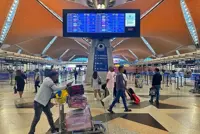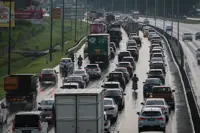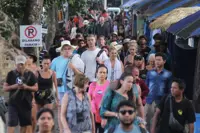
Drive to work and get stuck in traffic. Take the train and squeeze into an overcrowded carriage. For Klang Valley commuters, neither option feels appealing. On Oct 30, The Star reported that Prime Minister Datuk Seri Anwar Ibrahim called for immediate action over overcrowded trains, with Rapid KL working to address technical challenges. The objective is straightforward: helping commuters reach destinations without delays.
Imagine arriving at an LRT station at 7.30am. A train pulls in on schedule, but it is packed. You step aside. The next train is full too. Fifteen minutes later, there is finally room to board. The trains may be punctual, but you are late. What good is an on-time train if you cannot get on it?
The obvious answer is more trains. But before spending more money, shouldn’t we understand what is causing the congestion? A crowded platform tells us where passengers are waiting, not necessarily why. Are there too few serviceable trains? Are passengers arriving faster than the system can accommodate them?
Think of a supermarket with five checkout counters but only two cashiers. Installing another counter will not shorten the queue if nobody operates it. The same principle applies to railways: find what is holding the system back before deciding how to fix it.
On Oct 13, The Star reported that Prasarana was strengthening maintenance on the Kelana Jaya Line and ordering 26 new train sets for delivery by March 2029. These are encouraging developments, but 2029 feels a long way off to someone standing on a crowded platform tomorrow morning.
That raises a bigger question: are we planning tomorrow’s transport system using yesterday’s assumptions? Railway projects take years to build, yet cities keep changing. New homes appear, offices relocate and travel patterns evolve. Forecasts are estimates, not promises; we must revisit them as circumstances change.
Good planning should not end when a railway opens. Capacity and demand need regular reassessment before overcrowding becomes an everyday complaint. Could better maintenance keep more trains available at peak hours? Could clearer platform guidance or live crowding information help commuters? Not every improvement requires a billion-ringgit project.
Another trap is that improving one part of a journey does not necessarily improve the whole. A commuter might save five minutes on the train, only to lose 10 waiting at an interchange. One station becomes less crowded while another becomes a new bottleneck. We have moved the queue, not solved the problem. A railway is a connected journey, not a collection of isolated stations.
In its Sept 12 report on the Shah Alam Line, The Star highlighted concerns about connecting stations and limited feeder services. Better links give passengers genuine alternatives, provided those routes have capacity to spare. Otherwise, congestion merely shifts elsewhere.
This brings us to the most important question: how should we measure success? We often celebrate kilometres of track, new train sets and improved punctuality. These are worthwhile, but they tell only part of the story. A new train is something we deliver. Passengers should receive a shorter, safer and more predictable journey.
Why not also measure how many full trains commuters must let pass before boarding, or which stations have the longest waits? These measures would help identify priorities and show whether investments make a meaningful difference. Malaysia has invested substantially in expanding its urban rail network, and that deserves recognition. This is about learning from today’s experience.
Five minutes may look trivial on a timetable, but multiplied across thousands of commuters, the difference becomes substantial: less anxiety, more predictable journeys and extra time with family. We cannot recover lost minutes, but we can stop planning tomorrow’s journeys with yesterday’s assumptions. A train arriving on time is good operational performance. A passenger who can board without unnecessary delay is what makes that punctuality meaningful. The real measure of success is not how many trains we move, but how many precious minutes we give back.
PROF DR JEFFREY YAP
Lee Kong Chian Faculty of Engineering and Science
Universiti Tunku Abdul Rahman
Already a subscriber? Log in
Get 20% OFF The Star Digital Access
Cancel anytime. Ad-free. Unlimited access with perks.