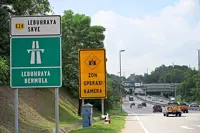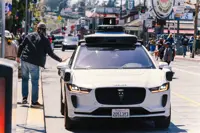
MALAYSIA has invested in automated traffic enforcement, particularly through cameras that detect speeding and red-light violations.
That’s a good start. But are we making full use of this technology? I believe it’s time to think bigger.
Anyone who regularly uses Malaysian roads and highways knows the problems: motorists abusing emergency lanes to beat traffic jams; drivers of heavy vehicles ignoring travel restrictions; and groups of irresponsible drivers turning public highways into their personal racing circuits.
These are not just traffic offences. They are dangerous behaviours that put innocent lives at risk.
Take the restrictions on heavy vehicles as an example. These rules exist for a reason: to manage traffic flow and improve road safety, particularly during peak hours and festive seasons.
Yet, some drivers and logistics operators seem willing to take their chances whenever enforcement officers are not around.
Should compliance with the law depend on whether a driver sees a police or Road Transport Department (JPJ) officer on the ground?
This is where AI-powered CCTV cameras can make a difference. Imagine having strategically positioned cameras at designated heavy vehicle restriction zones, equipped with Automatic Number Plate Recognition (ANPR) and AI technology. They could identify vehicle types, capture registration numbers and flag violations based on the applicable restriction hours.
There’s no need to station enforcement officers at every location around the clock. Enforcement becomes more consistent while officers can concentrate on inspections and other duties that require their physical presence.
There is another issue worth considering. Roadside enforcement operations, while necessary, can sometimes contribute to congestion when vehicles are stopped along busy roads and highways. Technology could help reduce dependence on continuous roadside operations without compromising enforcement.
The same approach should apply to emergency lane misuse. Emergency lanes are meant for emergencies, not for impatient motorists looking to cut queues.
AI cameras could detect vehicles travelling illegally along these lanes, provided the system can distinguish genuine emergencies and officially activated SmartLane operations.
And what about illegal racing? Our highways are not racing circuits. AI video analytics, supported by ANPR and coordinated camera monitoring, could help identify suspected racing activities and provide evidence for further investigation.
Speeding alone should not be treated as proof of racing, but technology can help enforcement agencies identify dangerous patterns.
Of course, AI is not infallible. There must be proper verification, reliable evidence, privacy safeguards and a fair appeals process before enforcement action is taken.
My point is simple. We should stop thinking of traffic cameras merely as speed traps and red-light detectors. Their potential is much greater.
Malaysia already has an extensive CCTV network and Traffic Management Centres. Why not explore upgrading selected infrastructure and integrating it with JPJ, the police and highway concessionaires?
Technology should not just help us catch offenders. It should also help prevent dangerous behaviour in the first place.
ALEX LEE
Seremban
Already a subscriber? Log in
Get 20% OFF The Star Digital Access
Cancel anytime. Ad-free. Unlimited access with perks.