KUALA LUMPUR: About 66% of road accident fatalities recorded last year involved motorcyclists and pillion riders, the Dewan Rakyat was told.
Transport Minister Anthony Loke said this accounted for 4,452 of the 6,581 road accident deaths recorded in police road accident statistics last year.
He said the ministry was focusing on several key risks contributing to fatal accidents, particularly speeding, overloaded commercial vehicles, motorcycle safety and accident hotspots.
"Based on the current situation, efforts to prevent fatal accidents must be intensified to achieve the targets set.
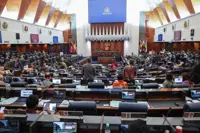
"Our main challenge is not merely the number of traffic offences, but how government interventions can prevent fatal accidents," he said during the question-and-answer session in the Dewan Rakyat on Wednesday (Oct 21).
Pang Hok Liong (PH-Labis) had asked why road fatalities remained high despite several amendments to the Road Transport Act 1987 and increased enforcement.
Loke said interventions to improve motorcycle safety also focused on formal rider education and training, vehicle safety technology and infrastructure improvements at locations posing high risks to motorcyclists.
The MyLesen B2 and B2S programmes, which provide riding training and education, including for students, would continue this year with an allocation of nearly RM30mil, involving 80,648 participants, he said.
To address speeding, Loke said the ministry was expanding the use of the Automated Awareness Safety System (Awas), alongside automatic number plate recognition technology, to enable more consistent, technology-driven enforcement.
"Locations for new installations are also assessed based on accident data and the level of risk at each location.
"The implementation of speed limitation devices for commercial vehicles is being carried out in stages to ensure they are not driven above the prescribed speed limits.
"The ministry is also developing Phase Two of the 2022-2030 Malaysian Road Safety Plan.
"In this phase, performance measurement will be strengthened so that progress is no longer assessed solely by the number of enforcement operations conducted or summonses issued, but by actual outcomes, namely the prevention of fatal accidents and serious injuries, including by state, road user category and high-risk location," he said.