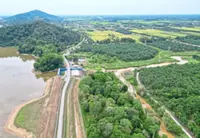
THE insights shared by Prof Datuk Dr Ramzah Dambul of Universiti Malaysia Sabah (UMS) serve as a timely reminder that climate resilience can no longer be treated as a reactive exercise, “Sabah must act early as El Nino risks grow, says climatologist” (The Star, June 30).
Climate change is shifting agriculture from being primarily a production challenge to a resilience challenge. The question now is whether our farming systems are sufficiently prepared for when that happens.
For agriculture, the greatest cost of El Nino is not simply lower rainfall. It is the compounding effect of heat stress, reduced photosynthetic efficiency, increased evapotranspiration and declining crop productivity.
By the time crops begin to show visible signs of stress, much of their yield potential has already been compromised.
Preparedness should begin long before drought conditions become severe.
Climate adaptation today is about enabling crops to remain productive under increasingly unpredictable weather rather than merely responding after the damage has occurred.
Malaysia has traditionally focused on irrigation infrastructure, water management and emergency response, all of which remain essential.
However, as climate variability intensifies, we should also accelerate the adoption of technologies that strengthen crop resilience at the plant level.
Plants are remarkably adaptive organisms. With the right innovations, they can utilise available water more efficiently, maintain photosynthetic activity during periods of environmental stress, and recover more effectively from prolonged heat exposure.
These innovations should complement existing efforts in climate forecasting, precision agriculture and farmer education as part of a broader national adaptation strategy.
For Sabah, where agriculture remains an important contributor to livelihoods and food production, early intervention is particularly critical. Whether it is rice, oil palm, fruits or vegetables, every growing season affected by prolonged heat or water stress represents reduced incomes for farmers and greater pressure on national food security.
One area that deserves greater attention is the role of photosynthesis-enhancing technologies. By improving the efficiency with which plants convert sunlight into energy, these innovations can help crops better tolerate environmental stress, make more effective use of available water, and sustain productivity during periods of heat and drought.
Among the emerging approaches are nanotechnology-based solutions developed in line with circular economy principles in which agricultural waste is transformed into high-value materials that enhance crop performance.
While no single technology can eliminate the impact of extreme weather, evidence from field trials and commercial deployments shows that photosynthesis-enhancing nanotechnology can meaningfully contribute to crop resilience.
Depending on the crop, environmental conditions and farming practices, yield improvements ranging from 10% to over 60% have been observed.
More importantly, these technologies demonstrate how science can complement good agronomic practices and existing climate adaptation measures rather than replace them.
The warning on El Nino should therefore be viewed not only as a climate forecast but also as an opportunity to strengthen Malaysia’s agricultural preparedness. Alongside investments in water infrastructure, forecasting capabilities and farmer education, we should continue exploring innovations that enable crops to perform better under increasingly challenging conditions.
By combining scientific advancement, sustainable farming practices and proactive planning, Malaysia can better safeguard farmer livelihoods, strengthen food security and build a more resilient agricultural sector for the future.
CHOR CHEE HOE
Puchong, Selangor
Already a subscriber? Log in
Get 20% OFF The Star Digital Access
Cancel anytime. Ad-free. Unlimited access with perks.