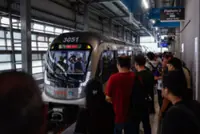
WHILE we continue expanding public transportation connectivity, as seen with the recent opening of the LRT Shah Alam Line (LRT3), equal emphasis should be placed on improving operational efficiency, particularly by increasing train frequency and reducing waiting times.
As a regular public transport user in the Klang Valley, I was not surprised to learn that the LRT3 operates at an eight-minute frequency during peak hours and off-peak services stretching to a 15-minute interval.
Unfortunately, long waiting times have become a frustrating reality that most public transport users have to reluctantly accept.
One example is the interchange between the Putrajaya Line and Kajang Line at MRT Kwasa Damansara.
Passengers travelling on the Putrajaya Line (or Kajang Line) often arrive at the station just as the other connecting train closes its doors.
It is frustrating to watch your connecting train depart at the exact moment your current ride reaches the platform, leaving passengers to wait another eight minutes – or up to 10 minutes during off-peak hours and weekends – for the next service.
Surely, better coordination between the two lines is possible. Timetables should be synchronised so that connecting passengers are given sufficient time to transfer without unnecessarily missing their train and adding to their travel time.
These repeated inefficiencies accumulate over time and significantly reduce the convenience of using public transport. This is precisely one of the reasons many remain reluctant to switch from driving, alongside the persistent challenge of limited last-mile connectivity.
The waiting time of eight minutes and more is widely regarded as excessive for a modern urban “rapid” transit system. In Singapore, MRT trains typically arrive every two to three minutes during peak hours and every five to seven minutes during off-peak periods.
As such, the off-peak frequency of the newly-launched Shah Alam Line extending to 15 minutes falls short of what commuters should reasonably expect on a high-demand urban rail network.
Expanding rail infrastructure is an important step forward, but building more lines alone is not enough. A truly attractive public transport system must also provide reliable, frequent and well-coordinated services that minimise waiting times and make transfers at interconnections as seamless as possible.
JASMINE SINGH
Kuala Lumpur
Already a subscriber? Log in
Get 20% OFF The Star Digital Access
Cancel anytime. Ad-free. Unlimited access with perks.