Prime Minister Anwar Ibrahim visited Tokyo this week at a moment when Japan is looking south with greater urgency. China has pushed into industries where Japanese firms once seemed almost unassailable. Its navy and coast guard operate more often in nearby waters. While America remains an indispensable ally geopolitically, in trade, it is at best transactional and on a cloudy day, capricious. In Takaichi Sanae, Japan has a prime minister who sees engagement with Southeast Asia as a strategic imperative.
Malaysia owes much of its modern industry to Japan. Malaysia’s electronics base and decades of Japanese investment all left their mark. For years, the bargain was easy to understand: Japan brought capital, technology and manufacturing know-how; Malaysia offered a platform for export production. That bargain still matters. But Tokyo now wants more: markets as well as partners whose diplomatic and security roles carry weight in the region. But it’s a fool’s errand to imagine there are free lunches in trade deals. Both sides will attempt to squeeze every last drop of value from the deals, and it’s fine if the outcome is mutually beneficial.
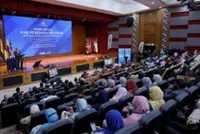
Prime Minister Anwar, for his part, worked the full circuit. He lectured at the University of Tokyo, met corporate leaders, spoke at the Nikkei Forum on the Future of Asia and held talks with Takaichi. Trade was present throughout, but it was no longer the whole story.
At the university, the Prime Minister treated artificial intelligence as a human question before an economic one. Most debates cast AI as a contest between firms and states. Fair enough. But a technology that rewrites work, knowledge and war will also unsettle judgment, trust and the dignity human beings owe one another.
The Prime Minister was also clear about Malaysia’s concern over the power now concentrated in AI. A small number of firms control many of the models, chips and standards on which others must depend. Some now speak of AI in the language of strategic competition and civilisational struggle. He doubled down on this at the Nikkei Forum, using even stronger language: “Whether it be in the guise of a new 'civilising mission' or 'digital colonisation', we must reject any new-fangled manifestation of technological fascism.”
The corporate roundtable gave the visit its industrial edge. Japanese firms still care about cost. They care just as much about whether a partner will be reliable in ten years. They have reason to ask. Corporate Japan is under pressure from Chinese competitors with speed, scale and better software, including in Southeast Asia’s car market, long a Japanese stronghold.
Malaysia’s old draw was land and labour. Its newer pitch is as a place where Japanese firms can build the capacity and supplier base they need to stay competitive. For Malaysia, the prize is better jobs, greater skills, and a bigger place in high-value manufacturing.
Chips are the sharpest case. Malaysia already handles about 13 per cent of the world’s semiconductor assembly, testing and packaging. The National Semiconductor Strategy aims to push the country further up the value chain. Japan, strong in materials, equipment and precision work, fits the gap.
But strategy is the easy part. Delivery is harder. Malaysia must turn out more engineers, build supplier networks that meet global standards, keep the lights reliably on and steady its policy. The Japanese capital can wait for a sound case. It can also leave quickly once that case frays.
Energy was another serious theme. Japan imports most of what powers it. Malaysia produces energy but uses more at home and feels every jump in world prices. Both want to cut emissions without stalling industry or leaving households poorer, and no slogan does that for you. The real work lies in hydrogen and ammonia, batteries, waste-to-energy and cleaner industrial plants, and in the costly, unglamorous business of paying for change when no two countries begin in the same place.
At the Nikkei Forum, the Prime Minister reached for the larger question of what Asia becomes once openness can no longer be assumed. Nobody in the room needed telling that the world had turned rough. But Anwar left nothing to chance on how he sees it as being adrift in a sea of strategic uncertainty. Leaders are still incarcerated within the old paradigm in geopolitics, where the dictates of hegemony goad them “to strive for power, constantly building up their military and economic might in the name of strategic security.” Clinging to it as tenaciously as a lobster, Anwar blamed it on the zero-sum power game where the strong continue to be invested in suppressing the weak.
Gaza and Ukraine, tariff fights, export bans, industrial subsidies and the rush over AI now land on every serious government’s desk. Asia developed by keeping its doors open, letting trade and money cross borders until its factories were stitched into one another and millions climbed out of poverty.
That openness is now being weaponised. Supply chains, money and technology have turned into levers. What passes for statecraft in the great-power capitals registers in smaller ones as exposure. Openness still matters, the Prime Minister argued, but the machinery built for it must answer to economic security and great-power rivalry as well. Middle powers grasp this better than most. They have gained from being connected and paid for it when connection became coercion.
The meeting with Prime Minister Takaichi was the strategic heart of the trip. Defence, maritime security, energy, finance and people-to-people links all came up, as did the South China Sea, Myanmar, and the Middle East. A relationship built largely around commerce now has to carry more weight.
That is clearest at sea. Malaysia’s trade and much of its energy arrive by ship. It's fishers and offshore platforms work in waters that are busier, harder to police and complicated by overlapping claims. Malaysia, therefore, needs maritime forces with real capability. The memorandum signed by the Malaysia Maritime Enforcement Agency and the Japan Coast Guard is modest in wording: joint drills, training and information sharing. But modest things can become vital quickly.
Finance has its part too. More than a quarter of Malaysia-Japan trade now settles in ringgit and yen rather than dollars. The two central banks are working to renew their currency-swap arrangement. In normal times, this sounds technical. In a crisis, it helps companies keep trading and secure supplies. Both sides recognise that resilience depends on payment systems as much as ships at sea.
More memoranda of understanding followed, on the environment, medical devices, energy and academic exchange. None will command headlines. But useful diplomacy often begins in such unglamorous places: a regulator who knows who to call, a university programme that survives the launch ceremony, a company that sees enough stability to plan a decade in Malaysia.
For Malaysia, the task is to see Japan plainly: a country of real strengths and real anxieties, and a partner with which to build a more strategic relationship in Southeast Asia.
Datuk Prof Dr Mohd Faiz Abdullah is Executive Chairman of the Institute of Strategic and International Studies (ISIS) Malaysia.
Already a subscriber? Log in
Get 20% OFF The Star Digital Access
Cancel anytime. Ad-free. Unlimited access with perks.