
I am a product of the Malaysian “triple stream.” My identity was forged in the disciplined, high-pressure halls of an SJKC, tempered in a Chinese Independent High School, and polished in the national SMK system. On paper, the system “worked” for me. But today, I don’t just look at our education system through the eyes of a lawyer or a teacher; I look at it through the eyes of a mother.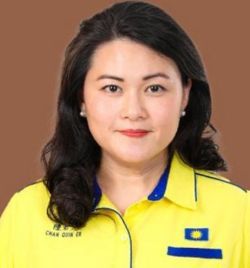
As I watch my own three children grow, I am struck by a terrifying realisation: the “success machine” that produced my generation has become a treadmill that is breaking the next one.
The recent 2026 reforms—the reintroduction of Year 4 standardised assessments and the push for earlier school entry—are being framed as “raising standards.” But as a mother and an educator, I see them for what they truly are: a theft of childhood and a fundamental misunderstanding of the human soul. We are losing our children to a system that prioritises data over development. We need a pivot toward Conscious Education.
1. The Theft of the “Slow” Years
The first flaw is our refusal to respect what Martyn Rawson calls “Readiness and Time.” As a mother, I know that children don’t grow on a linear schedule. There are rhythms of ripening that cannot be forced.
When the Education Ministry pushes formal academic demands onto five and six-year-olds, they are violating the biological “temporal structure” of the child. We are asking children to perform intellectual “mind tricks” before they have even developed the “Self” to ground them. When we rush the foundation, we don’t get smarter adults; we get “hollow” ones, individuals who can pass a test but lack the inner vitality to innovate or lead.
2. Generalists in a Specialist’s Trap
In his book Range, David Epstein argues that while our world is increasingly “Wicked” (complex and unpredictable), our schools are still designed for “Kind” environments (orderly and rule-based).
The Malaysian obsession with the “Answer Scheme” is a perfect example of a “Kind” trap. We are training specialists in a world that demands generalists. As a parent, I don’t want my children to be “experts” at age ten; I want them to have a “sampling period.” I want them to explore, fail, and connect disparate ideas. By forcing early specialization and rigid testing, we deny our children the very “Range” they need to survive a 21st-century economy that values judgment over rote memorization.
3. The Architecture of Anxiety
The most heartbreaking aspect of the 2026 landscape is what Jonathan Haidt calls the “Great Rewiring of Childhood.” We have effectively replaced a play-based childhood, where children learn anti-fragility and social negotiation, with a phone-based and exam-based existence.
In Malaysia, we are guilty of a strange “Cognitive Safetyism.” We overprotect our children from the “danger” of a wrong answer or a missed mark on a Year 4 assessment, yet we underprotect them from the soul-crushing fragmentation of constant academic surveillance. As a mother, I see the “Anxious Generation” unfolding in real-time. By removing “Free Play” and replacing it with “Standardised Metrics,” we have stripped away the primary tool children use to overcome anxiety and build resilience.
A Mother’s Manifesto: The Conscious Pivot
A truly conscious education system would stop asking, “Is the child meeting the national standard?” and start asking, “Is the school meeting the human being?”
To protect our children’s futures, we must:
- Prioritise the Phenomenological: Let children move from direct, lived experience to concepts. Let them feel the world before they have to define it.
- Embrace Artistic Teaching: Education must engage the Head, Heart, and Hands. If we only teach the head, we are only teaching a machine.
- Protect the “Sampling Period”: Stop the rush to specialise. Let children be “generalists” long enough to discover their true calling. My journey through SJKC and SMK taught me how to work hard, but it was my own “Range”, my exposure to different languages, cultures, and ways of thinking, that taught me how to be a human being. We cannot keep relying on the accidental resilience of our children to make up for a broken system.
It is time to stop treating our children as “human capital” to be harvested for the GDP and start seeing them as the spiritual and emotional core of our nation’s future. The 2026 reforms shouldn’t be about more exams; they should be about more presence. As a mother, I am not asking for a “better” system; I am demanding a more conscious one.
CHAN QUIN ER
Lawyer, mother of three and Wanita MCA Secretary-General