COMMUTING by public transport is a daily ritual for many of us. We wake up, get ready for the day and hop onto a train or bus to get where we need to go.
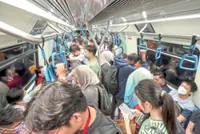
Peak hour commuting, of course, is another story. Morning and evening crowds look like sardines packed into a can. There is barely enough space to breathe, let alone move. You rely on your legs and a bit of luck to stay upright.
There’s also the unspoken “survival instinct” that kicks in – the rushing, squeezing and the not-so-gentle pushing by seasoned public transport warriors determined to get to their destinations on time.
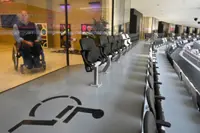
Now, imagine doing all of that as a person with a disability. Rush-hour trains and buses are often so packed that even “accessible” stations become impossible to navigate. During peak hours, train and bus doors are jammed with commuters, forcing wheelchair users and those using walkers to fall back and wait until the rush subsides. By then, the train or bus would be full and they would have to wait for the next service.
When elevators break down at train stations, which happens quite often, tasks like buying tickets, navigating platforms or locating the correct train become exhausting in the midst of the dense crowds.
Malaysians are generally sympathetic, offering seats or space. But on packed trains, asking for room for a wheelchair can invite stares or judgement. These anxieties generally deter persons with disabilities from using public transport even when it is labelled “accessible”.
For individuals with autism and other non-visible disabilities, the barriers are even more overwhelming. Crowded and noisy trains can trigger sensory overload, yet there are no quiet coaches or recognised markers like sunflower lanyards available, leaving neurodiverse commuters to navigate peak-hour chaos with little help.
Safety, however, is where the issue becomes urgent. In March this year, a blind man tragically lost his life after falling onto the tracks at Titiwangsa LRT station. The incident exposed serious gaps in Malaysia’s public transport safety.
As a State Party to the Convention on the Rights of Persons with Disabilities (CRPD) since 2010, Malaysia is obligated to ensure that public transport is not only accessible but safe too.
Suhakam (Human Rights Commission of Malaysia) has stressed that safety must carry equal weight, as Section 27 of the Persons with Disabilities Act 2008 and Article 9 of the CRPD affirm accessibility as a fundamental right that includes preventive safeguards against foreseeable harm.
One glaring gap is the absence of platform screen doors (PSDs) on our LRT lines. A standard safety feature elsewhere, PSDs act as physical barriers to prevent falls, restrict unauthorised track access and significantly reduce fatal incidents. While Prasarana has announced plans to instal them, swift implementation is critical.
Beyond infrastructure, on-the-ground support remains limited. Staff are often stationed at ticket counters rather than platforms, and emergencies rely on CCTV footage or bystander reports. Real-time alert systems to relay information to passengers with disabilities are also not available.
These matters are critical because access to transport directly determines access to work, education and economic participation.
If we are serious about empowering persons with disabilities to participate in society on an equal footing, transport accessibility and safety must be prioritised.
Practical solutions include equipping stations with dedicated lanes for disabled travellers, call buttons, improved tactile paving and motion sensors to prevent accidents. Quiet coaches, crowd control and trained staff must be available for commuters with hidden disabilities.
SHARANYAH NAIR
Kuala Lumpur
(The writer is a volunteer with the National Autistic Society of Malaysia.)
Already a subscriber? Log in
Get 20% OFF The Star Digital Access
Cancel anytime. Ad-free. Unlimited access with perks.