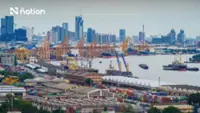
EARLIER this year, the Transport Ministry (MOT) introduced a ban on back-to-back container movements exceeding the permitted Gross Combination Weight (BGK).
While aligned with safety and regulatory goals, this move ends a decades-old practice that helped reduce truck traffic by up to 25%. The change now risks increasing container truck movements without any corresponding expansion in port or road infrastructure.
In response, MOT announced off-peak incentives to encourage container movements outside of peak hours to reduce congestion and better utilise terminal capacity. But whether this works in practice depends on how the incentives are structured and, more importantly, whether they support or inadvertently burden the container haulage industry.
Ports are often described as Malaysia’s gateway to global trade. But a gateway is only as efficient as the supply chain behind it. Hauliers are not merely transport providers, they are the essential land-based link between ports and the country’s economic base – factories, warehouses, and production plants.
Despite their importance, hauliers operate under mounting pressure. What was once a tightly regulated sector dominated by five major players has, since deregulation in the early 2000s, ballooned to over 300 licensed operators. Most run fleets of around 30 trucks; only a few operate over 200. This saturation has led to intense price competition, shrinking margins, and growing operational risks.
Unlike ports and depots, hauliers operate in less controlled environments. They contend with time restrictions, road bans, and a growing list of compliance requirements, all while facing inflexible scheduling systems at terminals.
For example, the digital appointment system that governs terminal access is skewed in favour of ports and depots, offering them flexibility while imposing rigid collection windows on hauliers.
In this lopsided setup, hauliers are expected to meet unpredictable customer demands while adhering to fixed terminal schedules, often with little or no support.
The discontinuation of back-to-back container movements only compounds the pressure.
Now, with the rollout of off-peak incentives, there’s potential for meaningful improvement. But that potential will only be realised if policies are designed with ground realities in mind. Otherwise, what is framed as an “incentive” could morph into a hidden burden.
About 70% of container movements at Malaysian ports occur between 8am and 8pm, largely because factories, warehouses, and commercial clients operate within these hours. Asking hauliers to shift to off-peak timings without structural support or, worse, penalising peak-hour deliveries may force them to absorb costs they cannot pass on. The policy may inadvertently punish the very group it hopes to engage.
To make the initiative effective and sustainable, MOT should consider complementary measures such as:
> Fuel subsidies or operational support for hauliers operating during off-peak hours to offset longer idling periods, lower trip efficiency, and extended working hours;
> Relaxation of highway usage restrictions during targeted periods to enhance routing flexibility; and
> Dedicated container truck lanes near major ports and industrial zones to reduce traffic conflicts and improve flow.
Such enhancements would give hauliers a fair opportunity to participate not by compulsion but through genuine incentive.
Crucially, no single policy should be viewed in isolation. The container haulage industry is already the weakest link in the supply chain, not due to a lack of capability but because of deep structural imbalances. Yet, paradoxically, it remains one of the most essential.
A policy that boosts port throughput but weakens hauliers risks destabilising the very system it seeks to strengthen. If Malaysia is serious about improving logistics resilience and port competitiveness, we must go beyond top-down policy tools and engage with realities on the ground. That means empowering, not just regulating; collaborating, not just instructing.
Off-peak incentives can help but only as part of a broader, balanced effort to make logistics more efficient and inclusive, especially for those doing the heavy lifting.
DR CHANDRA MOHAN SINNANDAVAR
Klang
(The writer is the enterprise owner of CNG Synergy, a logistics and supply chain consultancy based in Malaysia.)
Already a subscriber? Log in
Get 20% OFF The Star Digital Access
Cancel anytime. Ad-free. Unlimited access with perks.