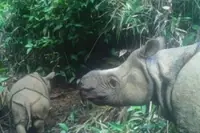
I SPENT over 40 years observing the so-called Sumatran rhinoceros and saw the death of the last one in Malaysia in 2019. I started off as a leader of one of the teams in the Endau-Rompin Expedition in May 1977.
The extinction of the Sumatran rhino in Malaysia is a long and complex story, but it delivered several lessons.
First, people in general prefer to be optimistic even when the signs show the reverse. In the context of the Sumatran rhino, there was a tendency to believe that footprints of the tapir were those of the former (they are similar) even though that was not the case.
Second, there is often just one basic thing that needs to be done to save the situation, but it isn’t done because it is perceived to be difficult or controversial. The birth rate of the Sumatran rhinos in Malaysia had been too low for many decades and there was no hope for their survival if they were left scattered in the forests. A single captive management programme was needed to maximise the potential of every remaining rhino to breed. But due to many factors, not least problems associated with international collaboration, that basic need was never fulfilled.
Third, the decision-makers are normally risk averse and put off making difficult decisions until it is too late to do anything useful.
Fourth, especially in this era of stakeholder consultation, everyone was invited to give their opinion. People love to give their opinions, however ill-informed they might be. And all those opinions combined into an ineffective compromise.
As of now, the risk of the Malayan tiger going extinct in the wild remains high simply because the numbers are very low and the remaining individuals are very scattered.
But there are three positive points that Malaysia has in its favour to save the species, namely:
> The issue is entirely within Malaysia, so we need not fear undermining by external parties;
> There is already significant government and NGO interest, support and funding; and
> The establishment of the Al-Sultan Abdullah Royal Tiger Reserve, which is a truly remarkable boost.
With this background and the sorry extinction of the Sumatran rhino in context, I wish to offer some comments on saving the Malayan tiger.
First, poaching and habitat loss have both played massive roles in the demise of Malayan tigers. But we should not think that just by recognising these facts, the species will recover without human intervention.
Second, the main reason why the population of Malayan tigers will not recover is that there is simply not enough food in the forests to sustain their recovery. One adult tiger can live on small animals for short periods, but a healthy wild tiger population needs a constant supply of large mammals, namely deer and wild pig.
Every adult Malayan tiger needs to kill at least one deer or pig per week to remain healthy and be able reproduce. If we want to see a local population of, say, 30 adult tigers and there are no pigs, that translates to 1,500 deer needed per year. This means there must be at least 1,500 female deer alive, each producing one fawn annually.
Unless and until we think in these terms, the Malayan tiger is doomed. Yet, wild deer populations in Malaysia are extremely and chronically depressed due to more than a century of intensive hunting, and wild pigs have been wiped out over vast forest areas due to African swine fever, which entered the wild pig populations in 2021.
Boosting and sustaining the productivity of wild deer and pigs is the number one priority to prevent the extinction of the Malayan tiger. All other interventions – whether anti-poaching patrols, monitoring with camera traps, or artificial insemination – will be a waste of time and effort if this is not done.
DATUK DR JOHN PAYNE
Kota Kinabalu
Already a subscriber? Log in
Get 20% OFF The Star Digital Access
Cancel anytime. Ad-free. Unlimited access with perks.