Poverty is real for Indians


S. MUNIANDY used to be a clerk in a plantation in Jalan Akob, Kapar, Klang in his younger days. Now 75, he has long lost his job and has been moving from one place to another.

He now lives in Penang in a small rented house with his wife Nagammah, 72. He has no income. But the cancer survivor, who has also suffered a stroke, gets RM500 from the Welfare Department, RM400 of which goes towards paying the rent.

Muniandy used to sell used items at the “pasar karat” in Padang Brown to cover expenses. But sales there were banned during the Covid-19 pandemic, and when he tried to get a licence to sell his “antiques” at nearby Lorong Kulit, he was turned down.

He still sells some of his items at Lorong Kulit after all the other shops close for the day. He earns anything from RM6 to RM10 on a good day. Most days, he goes home empty-handed.

Divorcee Amutha used to work as a cleaner, earning about RM1,200 a month. But an accident in November left her with a broken finger. She soon lost her job and the RM600 allowance from Socso was paid only until February. After that, there was no money and no work.

She lives with her sister in a house once rented by the sister’s son. They have to split the RM500 rent. Amutha also has a school-going daughter and needs RM430 for her education expenses alone. The husband stopped paying his RM250 alimony a long time ago.

She now works as a part-time cleaner, but jobs are scarce. She is called to work once or twice a week, earning RM40 each time. Her sister used to sell thosai and nasi lemak, but she, too, had fallen ill and is unable to run their makeshift stall.

These are just a couple of Indians in extreme poverty – and in Penang alone. Poverty among Indians is all too real. And help, it seems, is just not forthcoming, despite what Prime Minister Datuk Seri Anwar Ibrahim may say.

Those mentioned above get some help from the Penang Hindu Association (PHA) in the form of monthly groceries and maybe some household items. But making ends meet remains an impossible task. That is why Anwar’s assertion that the Indians are not being sidelined and have been helped with various programmes sounds hollow to many.

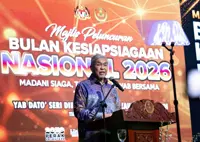
Speaking at a conference to celebrate Hari Raya Aidilfitri and Indian statesman “Babasaheb” Dr BR Ambedkar’s 133rd birthday on Sunday, Anwar said the eradication of hardcore poverty has almost been completely done, regardless of race, in Kuala Lumpur, Selangor, Negri Sembilan, Melaka and Penang.

Really? Hearing the stories of the many poor Indians, that’s quite hard to believe. And what exactly is hardcore poverty? In Malaysia, it refers to those with a household income of RM1,169 and below.

But try telling S. Pannirselvam, 41, that he is not hardcore poor. He earns RM1,500 a month as a security guard, and has three children aged eight, six and four. Two of them are in school.

He used to live in a communal house shared by 35 people. But thanks to PHA, he found a People’s Housing Programme house in Rifle Range flats, for which he pays RM90 a month. Still, the RM1,500 is just not enough to see his family through one month. Nevertheless, he is considered “wealthy” enough not to warrant government help.

“Prices are high ... I need to send the kids to school; food and everything else are expensive in Penang,” he says. All he wants is a better paying job. “I am ready to do any job as long as I can have a few ringgit left over each month,” he says. The government does have schemes run by agencies like Tekun Nasional and the Malaysian Indian Transformation Unit (Mitra). However, these are not targeted towards people like him. Instead, they are for businessmen who want loans. Even then, it looks like it is mainly those with political links and networking who can gain access to these loans.

I even Googled “Mitra success stories” to try and find out how many people have made it thanks to Mitra. I got to read about Amrita Mitra, Haimantika Mitra and Ria Mitra – all Indian students. Nothing about how Mitra has made Malaysian Indians into successful business people.

To be fair, it is not Pakatan Harapan’s fault. Mitra, in fact, was once heavily criticised by Pakatan leaders when it was helmed by MIC politicians. But how much has changed since the last election?It is still led by politicians – there have been two chairmen since the last election – and has been kicked from one ministry to another and back. The chairman and ministers are all politicians, and no one quite knows which of the politicians are really in charge. And should politicians, with their inherent bias, be in charge of funds to uplift the communities? Would a neutral activist do a better job?

Even Bersatu, a Malay-based party in a mostly Malay-Muslim coalition, is talking about a special task force to help Indians and Orang Asli. But talk is cheap. It is all about implementing such talk when you have the power. Right now, the unity government has the power.

What it really needs to do is to work with NGOs that deal with the hardcore poor and get aid directly to them. They should not be forced to line up outside some office in a city to apply for aid. Aid should be brought to them where they are. And it’s not just money that these people need; they also need the means to earn a living. They do not all want fish; many just want to be able to fish.

Many of these families had jobs, roofs over their heads and livelihoods, but the dismantling of the estates in the 1980s displaced them. Having been forced into towns, they are now the urban poor where the cost of living is high but the means to earn a living is very difficult. They have nowhere to turn to. Even those who try opening food stalls or do agriculture in open spaces have only seen local councils come down hard on them.

Anwar, who has always acknowledged that Indians are among the poorest in the country, has said his government is mindful about helping the poor. But he needs to ensure the aid reaches those it is intended for. It is not enough to make speeches at conventions.

Ambedkar was a man who fought doggedly against class and caste discrimination and struggled to lift his Dalit people out of poverty.

If we are to honour him, we should also look at how we can level the playing field for all in the country, especially the poor.

Get 20% OFF The Star Digital Access

Monthly Plan

RM 13.90/month

RM 11.12/month

Billed as RM 11.12 for the 1st month, RM 13.90 thereafter.

Best Value

Annual Plan

RM 12.33/month

RM 9.87/month

Billed as RM 118.40 for the 1st year, RM 148 thereafter.

Follow us on our official WhatsApp channel for breaking news alerts and key updates!
Development , Indian community

Next In Columnists

Make Penang AI plan a bridge for majority
Giants fall, England survive – World Cup quarter-finals take shape
Who shapes global AI rules: Asean-China cooperation role
Why the Johor election is good for Malaysian democracy
Confessions of a durian season sinner
Looming threat to social security
More predictable than the World Cup
America at 250
Coexistence with wildlife key for public safety
Jitters all round in Johor

Others Also Read