Of rice, greens and avarice


WE were in India last month and stopped at a restaurant for lunch. The naan there apparently was to die for. The server (as waiters are called) wanted to know what curry we wanted, pointing to the menu.

I ordered mutton but my wife wanted whatever gravy that would come with the naan. She was in for a shock. There was no free gravy. You had to buy it.

The cooks would not even start on the naan until we ordered the gravy. And what you get is just about enough for the naan. No roti banjir stuff there.

The Indians have more than a billion mouths to feed – and they are realising that every drop, every morsel, matters.

In Malaysia, we can have three kinds of gravy with our naan, and with no limit to how much we get. We even have some vegetable thrown in as well. We are indeed a pampered lot. Which is probably why we waste a lot of food.

Every day, Malaysians produce about 17,000 tonnes of food waste, from which about 25% are still edible. That’s about 4,250 tonnes or 4.25 million kg of perfectly good food going to waste every day.

Indians waste food too – about 50kg per person per year. But Malaysians generate 250kg of food waste per head annually. It’s shocking.

Is it any surprise then that we are faced with a food security problem?

The farmers just aren’t motivated to grow more and they have little access to markets to sell their produce. Instead, greedy middlemen ride the gravy train and enrich themselves. It’s mind boggling that those who feed us cannot put food on the table for themselves.

Instead, monopolies and traders fool around with packaging to get maximum profits while short-changing customers. Then there are the hoarders who hide foodstuff in warehouses while desperate consumers suffer and accept the higher prices.

Take rice, our staple food. Padiberas Nasional Bhd (Bernas) has a monopoly on rice imports, but it buys rice from local farmers at a floor price so they are assured of a fair price even if their padi is bad.

But is Bernas indeed the saviour of our padi farmers? Or is it a money-making machine? The company, now hugely profitable, also has its hands in sugar.

And do we really need a monopoly? Will opening up rice imports to others bring prices down?

The government did try to end the monopoly a few years ago but ended up extending the concession until 2031. So, for the next eight years, we really have our hands tied.

From seeds, we grow: Students at a school in Pulau Carey, Selangor preparing their plot to plant seeds. Getting children involved can help raise awareness of the need for agriculture.

For now, it might be a good idea to see how we can grow more rice. But that’s easier said than done. In Kedah, the rice fields are suffering. Climate change has brought the sea inland and the saltwater is killing the padi crop. The farmers there remain poor and, what’s worse, the state government is even thinking of reducing the acreage of padi fields.

It’s a bad idea. The days of converting agricultural land for industrial use may be over. Factories are great to make money, but you can’t eat money. Agriculture is regaining importance.

Ask India. In 1967, they were begging the world for grain supplies to feed their people. Now, they have got the world, including Malaysia, begging them to ease restrictions on rice exports. It was agriculture that did the trick.

We need to up our food production, and I don’t mean just padi. Man does not live by rice alone.

Our farmers also need last mile access. They often cannot bring their produce to customers, or get customers to their produce.

Despite what the Opposition may say, it’s good that the Federal Agricultural Marketing Authority (Fama) is now taking produce to the buyers. After all, it is the marketing authority for agriculture and has over 1,000 outlets. But more – many more – are needed, both in terms of outlets and produce.

We have land for agriculture.

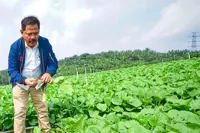
Selangor, for instance, has thousands of hectares of unused land that farmers can even rent. Tenaga Nasional Bhd also has thousands of hectares of land under its pylons. We can grow other foodstuff there, like leafy vegetables and chilli.

In Singapore, rooftops are being used for planting vegetables hydroponically. We are talking malls and factories with thousands of square feet of vegetable gardens here.

They also plant food in open community areas, with residents providing compost from their food waste. They call it foodscaping, planting vegetable instead of ornamental plants. Even Singapore’s prison is one big vegetable farm now.

In Malaysia, schools have lots of empty areas. Wouldn’t it be a good idea to have agriculture clubs in these schools and get the children involved?

The Consumers’ Association of Penang (CAP) is looking into this. It has some 30-odd schools – a dozen of them in Penang – planting seeds wherever they can. Some schools are already reaping what they sowed. And getting the children involved may be the best method to bring adults back to agriculture.

Today, as part of “Green Action Week”, a worldwide move to promote sustainable consumption at community, country, regional and international levels, CAP will also be handing out seeds of all sorts to everyone. Farmers will also be there to share their seeds and produce.

CAP research officer NV Subbarow said they were sowing the seeds of the future with the initiative.

“We need community gardening to ensure food security,” he says, adding that people should be encouraged to use every bit of space in residential areas to grow vegetables and share the produce.

“If we have 50-60 residents who work together in a common area, each planting a different vegetable, there will be enough to go round,” he says.

But there is another problem. Local councils are of no help. Often, they end up demolishing these farms. So they first need to be educated. If councils can understand and encourage the need for more community farms, middlemen and hoarders can be put out of business.

Like India in 1966, we need to plan for the future. We cannot continue to be at the mercy of choked supply chains when there is a war or a climate disaster. Politicians who want to make quick bucks with quick deals must also wake up to that.

Get 20% OFF The Star Digital Access

Monthly Plan

RM 13.90/month

RM 11.12/month

Billed as RM 11.12 for the 1st month, RM 13.90 thereafter.

Best Value

Annual Plan

RM 12.33/month

RM 9.87/month

Billed as RM 118.40 for the 1st year, RM 148 thereafter.

Follow us on our official WhatsApp channel for breaking news alerts and key updates!

Next In Columnists

Make Penang AI plan a bridge for majority
Giants fall, England survive – World Cup quarter-finals take shape
Who shapes global AI rules: Asean-China cooperation role
Why the Johor election is good for Malaysian democracy
Confessions of a durian season sinner
Looming threat to social security
More predictable than the World Cup
America at 250
Coexistence with wildlife key for public safety
Jitters all round in Johor

Others Also Read