Authorities must rectify issues, address checkpoint loopholes
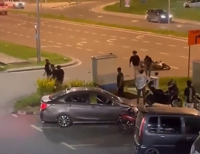
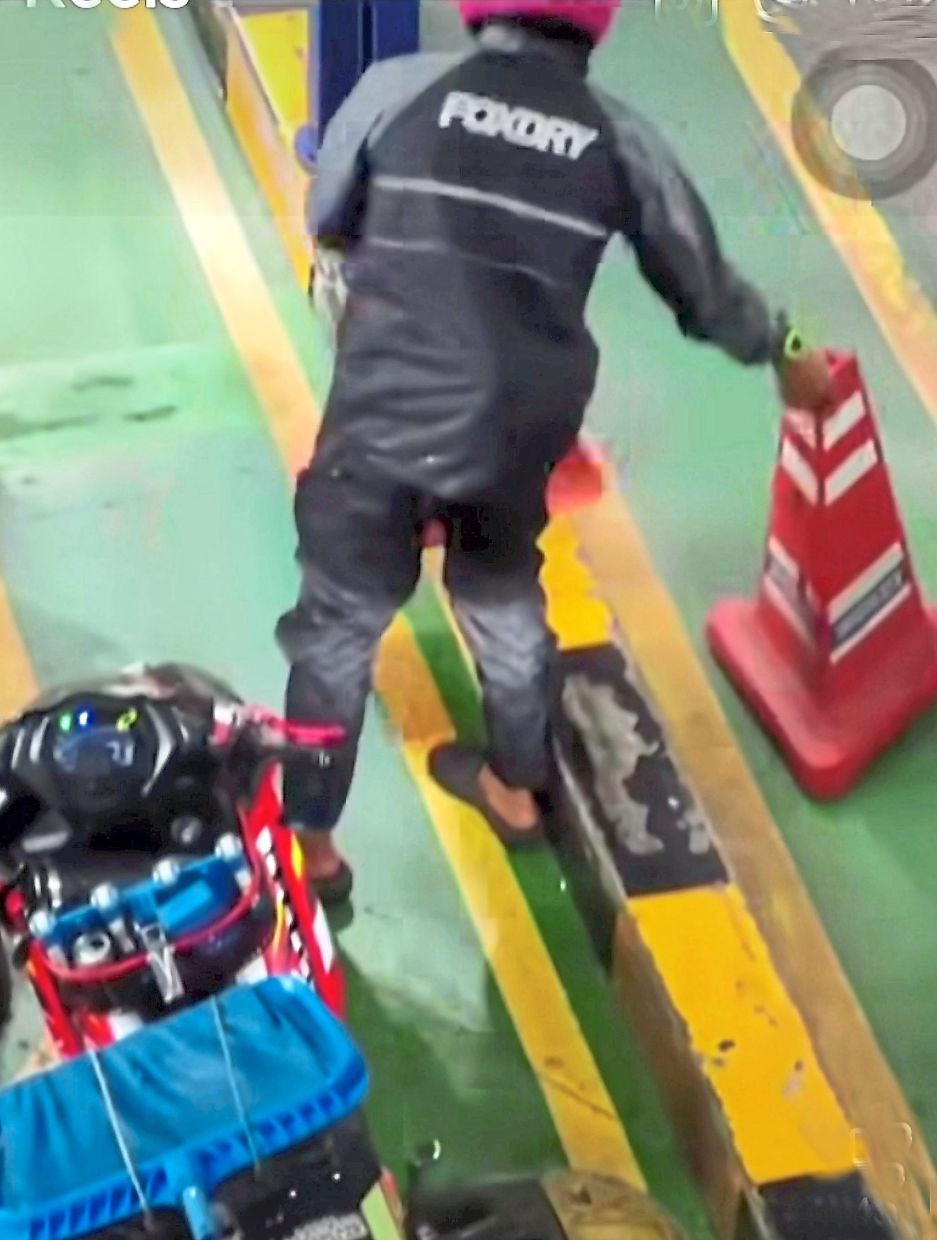
RECENTLY, a video went viral showing a motorcyclist at a Malaysian entry checkpoint during peak hour traffic, getting off his machine, removing a cone along a closed motorcycle lane and zooming through without getting his passport checked.
The incident allegedly took place at Bangunan Sultan Iskandar (BSI) Customs Immigration and Quarantine (CIQ) Complex in Johor Baru.
At least two other motorcyclists were seen using the same illegal exit.
This blatant act shows how easy it is to exit and enter the country by taking advantage of “loop holes” at checkpoints.
To date, at least one of those involved in the video, allegedly taken by a person with access to a restricted part of the BSI CIQ, had come forward and voluntarily surrendered to the authorities.
Such cases are not new.
On Oct 16, Malaysian Border Control and Protection Agency (AKPS) detained 26 Malaysians for not presenting their passports when leaving the country and heading into Singapore.
Thirteen of them were charged at Pekan Nenas Immigration Court and fined RM1,500 each, while three pillion riders were released with warning.
Another 10 offenders were convicted on Nov 6 and fined RM1,000 each.
Similar arrests and charges had also been carried out in the past on motorcyclists at Sultan Abu Bakar CIQ (KSAB) at the Second Link.
Under Section 2(2) of Passport Act 1960, it is an offence to leave or enter the country without presenting a passport to an Immigration officer manually or via an application, which is the QR code system generated under MyBorderPass or National Integrated Immigration System (NIISe), which operates through the MyNIISe mobile app.
Despite fines or even jail time, why are people still silly enough to risk breaking the law?
Is it worth the while being arrested, spending a day or two in lock-up and paying a fine in court?
Meanwhile, why are checkpoint authorities still using cones to close disused lanes instead of opting to close it with an automatic barrier or even a gate, to prevent such cases?
What happened to our CIQ automation using QR codes for motorcyclists to enhance security clearance?
Since these incidents, security at the two land checkpoints have increased, resulting in long queues during peak hours.
Pictures of tens of thousands of motorcycles choking the checkpoints even made international headlines.
All this hype and attention is for the wrong reasons.
As an Immigration officer scans each passport, what used to be about a 10-second clearance is now dragging up to 40 seconds to even one minute especially when the system is slow.
With automation and modernisation, why is the immigration clearance getting longer instead of faster and shorter?
Has anyone stopped to give a thought as to why all this is suddenly happening at one of the world’s busiest checkpoints?
This latest border congestion issue ignited a flurry of comments online about the daily suffering of motorcyclists.
People also questioned the sudden need to tighten security at checkpoints, and called for more automation such as expanding the MyBorderPass lanes and urging the authorities to come down hard on those who do not get their passports checked.
Each day, more than 160,000 motorcyclists commute between Malaysia and Singapore for work.
BSI has a total of 100 counters for motorcycles, with 50 each for entry and exit, while KSAB has 50 counters, comprising 25 each for entry and exit.
Both checkpoints only have a handful of lanes using the MyBorderPass and MyNIISe QR codes.
The time has come for those who helm AKPS and Immigration Department to come down and deal with the nitty-gritty.
These include making sure all motorcycle manual lane barriers are functional.
There should also be more close circuit TV cameras inside and outside the counters to nab errant motorcyclists.
Efforts should also be put in place for more interaction among senior leadership and their subordinates, as BSI has more than 1,200 Immigration personnel and over 600 personnel in KSAB.
Getting feedback and engaging with ground personnel will be essential for top management to get a feel of the actual situation on the ground, and rectify and plug all loopholes.
Getting all these loopholes dealt with is paramount as next year the number of visitors is set to increase with Visit Malaysia 2026 and Visit Johor 2026.
We cannot continue to be business as usual with Malaysia’s poor border management system.
Already a subscriber? Log in
Get 20% OFF The Star Digital Access
Cancel anytime. Ad-free. Unlimited access with perks.