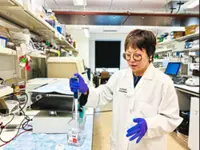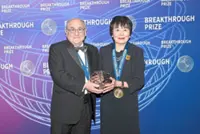
WE have another “Oscar” winner! But unlike Tan Sri Michelle Yeoh’s best actress win that was immediately known the moment she was crowned, Malaysians didn’t cotton on to haematologist and physician-scientist Dr Thein Swee Lay’s magnificent achievement until weeks later.

Dr Thein’s win was actually reported by mainstream media like The Star and Malay Mail on April 19, a day after she received the prize at a gala event at the Academy Museum of Motion Pictures in Los Angeles.
Somehow it didn’t generate much buzz or public interest then. It only went viral on social media after a clip from the award ceremony was posted on YouTube.
It showed British actor and television host James Corden introducing a pair of Academy Award winning actors – Octavia Spencer and Sean Penn – to the stage to announce the winners of the Breakthrough Prize in Life Sciences, Dr Stuart H. Orkin and Dr Thein.
Dr Orkin took the microphone first to give his acceptance speech, and then it was Dr Thein’s turn.
With her opening sentence, she brought the audience to her home country: “As a child hanging out with my older brothers, playing on old railway tracks in Malaysia, I never imagined being here today.”
The way she emphasised the word “Malaysia” – wow! The moment was brief and her American audience would most likely have missed it, but not us Malaysians. It was music to our ears.
But first, a little background on the Breakthrough Prize. Unlike the really famous and most coveted Nobel Prizes that have a 125-year history, the Breakthroughs are just 14 years old.
The Nobel is awarded to people whose work has been “for the greatest benefit to humankind” in the categories of physics, chemistry, physiology or medicine, literature, peace and economic sciences.
The Breakthroughs, according to its website, recognise the world’s top scientists working in the fields of life sciences, fundamental physics and mathematics.
The Nobel Prizes are the legacy of Swedish inventor Alfred Nobel, whose most famous invention is dynamite. The Breakthroughs were founded by Sergey Brin – who co-founded Google and is one of the richest men on the planet – his then wife Anne Wojcicki, Priscilla Chan and Mark Zuckerberg of Facebook fame, Yuri Milner – Israeli physicist and entrepreneur – and his wife Julia.
The prize money – US$3mil (about RM12mil) per award – is sponsored by the personal foundations of these ultra-wealthy people.
Dr Orkin and Dr Thein, who shared the award with five other scientists in other fields, were honoured for their research on sickle cell disease (SCD) and beta-thalassemia.
Every cell in our bodies needs oxygen that is delivered by the iron-rich protein haemoglobin. SCD causes healthy haemoglobin to harden into twisted, curved sickle-like forms that block blood vessels, resulting in anemia and intense pain. In beta-thalassemia, not enough haemoglobin is produced, so patients need life-long blood transfusions.
People who inherit a copy of the mutated haemoglobin gene from both parents develop SCD. Similarly, beta-thalassemia afflicts people with inherited genetic mutations in the haemoglobin beta gene that reduces hemoglobin production.
There are 20 million SCD patients globally with about 515,000 babies born with it annually, mostly in sub-Saharan Africa, the Caribbean, India and the Middle East.
Beta-thalassemia, a fairly common blood disorder globally, occurs in nearly 60,000 infants annually and is most common in Mediterranean countries, North Africa, the Middle East, India, Central Asia and South-East Asia.
But what puzzled Dr Thein was why some patients with the mutated genes developed only mild forms of beta-thalassaemia and could live relatively normal lives while others needed lifelong blood transfusions.
The answer lay in a hidden genetic “switch”. Babies are born with a special form of haemoglobin that protects them in such conditions. This healthy foetal haemoglobin, however, gets switched to the adult form within six months of birth.
As Dr Thein told The Star in an interview, in patients with milder forms of the disease, this switch did not turn on completely so they could continue producing high levels of foetal haemoglobin.
It took 20 years before she and her team finally found the controlling gene that they named BCL11A.
This breakthrough led directly to the development of Casgevy by Dr Orkin, the first CRISPR-based medicine to treat SCD. CRISPR is a revolutionary gene-editing technology that can make precise modifications to DNA.
Dr Thein, 72, was born in Kuala Lumpur, according to Wikipedia – although other reports say her birthplace is Kuantan – and is the seventh of nine children. She studied medicine at Universiti Malaya, graduating in 1975, before moving to Britain for postgraduate training.
After completing her training, she joined the University of Oxford’s Medical Research Council (MRC) Molecular Haematology Unit.
She has also served as clinical director of the Red Blood Cell Clinic at King’s College Hospital. Currently, she is senior investigator and chief of the Sickle Cell Branch at the National Heart, Lung, and Blood Institute of the US National Institutes of Health.
Prior to winning the Breakthrough Prize, both she and Dr Orkin were recipients of the 2024 Shaw Prize in Life Science & Medicine.
In her Breakthrough acceptance speech, Dr Thein credited her mother, mentors, students, collaborators and patients for her success and said that while gene-editing marked a major breakthrough for SCD and beta-thalassemia, most of the millions of people affected still lacked access to such therapies as they require many resources and advanced hospital facilities.
The current approach, known as ex vivo gene editing, is complex and demanding and could take a year, she said in The Star interview.
She explained that it is also very gruelling for the patient, as the treatment involves extracting the patient’s stem cells, editing them in specialised laboratories to modify the BCL11A gene, then reinfusing them into the patient after chemotherapy has cleared the bone marrow to make space for the modified cells.
And the treatment is astronomically expensive, ranging from US$2mil (RM8mil) to US$3mil (RM12mil) per patient.
Still, there is hope, as Dr Thein told the Breakthrough gala audience, as new and affordable therapies were coming and the future of genetics was brighter than ever.
It was a short but thoughtful speech that touched on her humble beginnings, acknowledged those who contributed to her success and promised hope for affordable treatments for sufferers of the disease.
Dr Thein’s name may never reach that kind of instant recognition as, say, Michelle Yeoh, Datuk Lee Chong Wei, Datuk Azizulhasni Awang, Datuk Jimmy Choo or Datuk Nicol David, but she has certainly won the right to be counted among our brightest and best.
As Breakthroughprize.org states beautifully: “Knowledge is humanity’s greatest asset. It defines our nature, and it will shape our future. Great scientists enrich us all. They enable technologies that ease our lives, but they also show us what’s beyond our horizons.”
The views expressed here are the writer’s own.
Already a subscriber? Log in
Get 20% OFF The Star Digital Access
Cancel anytime. Ad-free. Unlimited access with perks.