
His words, rich in metaphor, were meant to inspire athletes to rise above adversity.
Today, they echo with renewed relevance as we revisit a storm of a different kind – the controversy surrounding unpaid cash prizes for Malaysia’s Sportsmen and Sportswomen of the Year.
While the call for accountability and recognition is valid, it must be tempered with historical understanding. The amateur era of Malaysian sport, spanning the 1950s to 1980s, was shaped by global sporting norms and national policy frameworks. To judge it by today’s standards is to risk misreading the very foundations of our sporting legacy.
The National Sports Award was initiated by the Culture, Youth and Sports Ministry, in partnership with the Olympic Council of Malaysia (OCM) and sponsored by Rothmans of Pall Mall Malaysia Ltd. The idea was inspired by the success of the Malaysian contingent at the 1965 SEAP Games, hosted in Kuala Lumpur.
The inaugural ceremony took place on Saturday, July 22, 1967, at the Rothmans Pavilion, MAHA Showgrounds on Old Klang Road, to honour the achievements of our best performers in 1966.
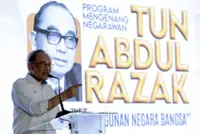
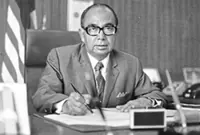
Originally proposed to be named the Rothmans Award, and later the Tun Razak Award, Tun Razak, as the Deputy Prime Minister and OCM President, insisted that the award reflect national spirit rather than individual recognition.
His message was clear: greatness could come from anywhere in Malaysia, if one trained hard, persevered, and refused to be discouraged by setbacks. “If there were no failures, there will be no triumphs,” he said.
“The greater the difficulty, the more glory in surmounting it.”
At that time, Malaysian athletes operated under strict amateur codes – a global standard enforced by bodies like the International Olympic Committee (IOC) and the International Association of Athletics Federations (IAAF). Athletes were prohibited from receiving direct monetary rewards, as it would compromise their eligibility for multi-sport events such as the Olympics, Asian Games, and SEA Games.
This context is crucial in understanding the controversy surrounding the RM5,000 prize associated with the National Sports Awards.
It was a princely sum then – reportedly more than the Prime Minister’s monthly salary – but it was not meant for immediate disbursement.
Instead, it was often held by National Sports Associations (NSAs) and earmarked for talent development, training programmes, or future release upon retirement.
A defining moment in Malaysia’s amateur sporting history came in 1978, when Datuk Shukor Salleh, the midfield general of Malaysian football, was awarded RM10,000 by the Penang FA as a token of appreciation.
It was the first time a Penang player received such a monetary reward.
The gesture, though well-intentioned, sparked controversy. Critics argued that by accepting the money, Shukor could be deemed a professional, thus disqualifying him from representing Malaysia at the Asian Games in Bangkok.
He was advised by the FA of Malaysia (FAM) to return the money if he wished to retain his amateur status. He chose country over cash.
Shukor’s sacrifice was not just personal – it was symbolic of an era when loyalty to country and sport outweighed personal gain.
Shukor was not alone in navigating the complexities of amateurism. Datuk Marina Chin, who shared the podium with Shukor as 1977 National Sportswoman of the Year, retired from athletics after appearing in a scooter advertisement.
The RM5,000 prize was symbolic — a gesture of honour rather than a transactional payout.
While the system was opaque and flawed, it reflected the bureaucratic and sporting norms of the time. Funds, however limited, were routed through NSAs, sometimes repurposed for team development or “heroes funds”.
Today’s generation of leaders should not be blamed for decisions made decades ago under an entirely different sporting landscape. The systems in place then were governed by international amateur codes and local bureaucratic norms, by pro bono part-time officials.
Instead of manipulating the situation for personal glory, today’s leaders must ensure transparency, reform, and recognition – not to shoulder the burden of historical decisions.
Equally important is to honour the yeoman service of figures like Datuk Kwok Kin Keng, Thong Poh Nyen, John Kanagaratnam and Shaharudin Jaffar, who were known to have spent their own money to keep sports alive. They were not administrators chasing glory – they were custodians of a national dream.
As we celebrate the legends of Malaysian sport, let us also pay tribute to the systems that shaped them. Let us build a future where recognition is both meaningful and equitable – but let us do so with historical clarity.
Because sometimes, the greatest triumph is not in receiving a reward, but in returning it – for the love of country.