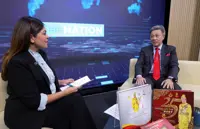
A MONTH ago, I found a video of myself on social media promoting an investment scam promising huge returns.

The difference was that my voice had been altered, using artificial intelligence (AI) skills, to talk about investment opportunities.
The original content was on human capital and the importance of training. The modified content, using the AI version of my voice, sounded just like the real thing. It was so good it was hard to tell the difference.
I do not know why I was chosen by these scammers as I do not see my unsolicited endorsement to be of any real value.
But this is the story. I filed a complaint with Facebook on Oct 1 and they replied on Oct 8, thanking me for the report.
“We use a combination of technology and human reviewers and identify content that goes against our Community Standards. In this case, we did not remove the content that you reported,” the reply said.
As I wrote this article, I re-checked and found the content still floating around on FB, promising that “every Malaysian who invests from RM1,200 is guaranteed to earn at least RM210,000 in the first month!” It adds: “Limited spots available.”
In short, Facebook owner Meta did not see anything wrong with the fake content using my face and voice to cheat people. Meta’s reply was mind-boggling and made me feel helpless about combating such fraud.
Last week, Datuk Seri Michael Chong cautioned the public against fraudulent schemes that employ AI to replicate the faces and voices of the Prime Minister and Yang di-Pertuan Agong to dupe unsuspecting individuals.
The MCA Public Service and Complaints Bureau chief said he had identified two online advertisements featuring the PM and King. When they were reported, the ads were removed, but the syndicate had re-uploaded similar content, this time using the faces of an MP and a prominent business figure.
Using AI, the syndicate created investment advertisements requiring a payment of RM1,100 while promising returns of up to RM200,000.
Why did Facebook fail to act?
Well, we may know now. An investigation by Reuters has cast a harsh light on the business practices of Meta Platforms Inc, the parent company of Face-book, Instagram, and WhatsApp.
According to internal documents reviewed by Reuters, Meta projected that roughly 10% of its 2024 revenue – around US$16bil (RM66.72bil) – came from advertisements tied to scams, banned goods, and other fraudulent content.
What is deeply troubling is that the documents suggest that Meta’s enforcement efforts against these bad actors were intentionally limited, constrained by “revenue guardrails” and automated systems that only block ads when there is at least a 95% certainty of fraud.
For Malaysia and for users of social media everywhere, the implications are profound.
This is not just about one tech giant’s failure; it is about the structural tensions between platform profit models and user protection, and the regulatory void that allows serious harm to happen.
In Malaysia, the Malaysian Communications and Multi-media Commission has already expressed alarm, noting that some of that revenue could stem from Malaysian-market ads, and has summoned Meta for answers.
Allowing platforms to be used for such scams and profiting from it makes Meta an accomplice to such cybercrimes.
These platforms should be held to account for the content they host and monetise.
If a platform is earning money from fraud-linked ads, that raises questions of complicity, not just oversight failure.
When a company’s business model allows or even subtly incentivises questionable advertisers, that means it does not value ethics.
It has been reported that Meta internally estimated the scale of “high-risk” scam advertisements at US$15bil (RM61.9bil) of such ads per day across its platforms.
The company’s justification is that it will only block advertiser accounts when automated systems are 95% sure the advertiser is engaging in fraud.
If it is not absolutely certain, it just charges them higher ad rates – effectively profiting from uncertainty.
In my case, despite my protest, we can assume that Meta did not find enough evidence that it was a fraud.
It was a case of “looks like you, sounds like you but we are not sure it’s a fraud despite your complaint”.
A Reuters report on Nov 11 said that “Meta knowingly profits off of them” – meaning the social media giant knew about ads for fake products and scam posts and projected that it could earn up to US$16bil from running these ads featuring banned goods or scamming posts.
Meta is so powerful that it can snub protests and calls from regulators requiring it to publish clear data on scam advertising volumes and the ad revenue derived from them.
If the company doesn’t have any ethics why would it care two hoots about accountability? It knows the world is addicted to its products.
Responsibility does not seem to exist in the company statement.
The only way out is to teach Malaysians how to identify scam ads, report suspicious content, and hold platforms and advertisers to account.
Digital literacy is a frontline defence, and also, simply stop being greedy. If it sounds too good to be true, then it’s a scam.
Meta knows we are hooked on WhatsApp, Instagram and Face-book, and the world will not function a day without these products. It is untouchable.
We have miserably consented and surrendered all our personal data to Meta to use these products for free.
Now you know why and how these scammers get our details. Meta is enriching itself, and each time regulators want to haul it up, it cries that it’s an assault on the platforms.
National Journalism Laureate Datuk Seri Wong Chun Wai is the chairman of Bernama. The views expressed here are solely the writer’s own.
Already a subscriber? Log in
Get 20% OFF The Star Digital Access
Cancel anytime. Ad-free. Unlimited access with perks.

Wong Chun Wai
Wong Chun Wai began his career as a journalist in Penang and served Star Media Group for nearly four decades in various capacities and roles. He was group editorial and corporate affairs adviser to the group, after having served as group managing director/chief executive officer. "On The Beat" debuted on Feb 23, 1997. Chun Wai has penned the column weekly without a break, except for occasional press holidays when the paper was not published. In May 2011, a compilation of selected articles of On The Beat was published as a book and launched in conjunction with his 50th birthday. Chun Wai also comments on current issues in The Star. He is now chairman of national news agency Bernama.