THE most powerful politician in Sulu is Abdusakur “Sakur” Tan, who has held sway in the southern Philippine province near Sabah for decades. However, as local observers like Ameera Tammang note, the 76-year-old Tausug leader might well prefer a different title – perhaps the most loved politician in Sulu rather than a regional strongman.
For many Malaysians, especially Sabahans, when they think of Sulu (or Jolo, which is both an island and a town within the province), they remember it as a lawless territory.
That reputation was cemented on April 23, 2000, when militant group Abu Sayyaf raided the diving haven of Sipadan Island, abducting 21 people and smuggling them across the Sulu Sea to be held hostage in the jungles of Jolo Island.
The crisis rocketed to global media attention, driven in part by the diverse nationalities of the captives: The group comprised 10 foreign tourists (three Germans, two French people, two South Africans, two Finns, and one Lebanese citizen) alongside 11 resort workers (nine Malaysians and two Filipinos).
I first learned of Sakur Tan while covering the hostage drama; he was serving as governor at the time. Law and order was almost nonexistent on the island, and I was utterly amazed to see the governor travel with a convoy of armoured vehicles and 4WD trucks packed with armed bodyguards. It felt like I was in an Arnold Schwarzenegger movie set in a banana republic.
This week, I returned to Jolo town – which I last visited in 2024 – to reconnect with old friends and meet new ones.
For me, Sabah and Sulu are like twins, bound by a shared heartbeat. I journeyed to Jolo to conduct field research for a book I am writing, titled Sabah and Sulu: Separated by Sea and Connected by History, Geography, Geopolitics and People.
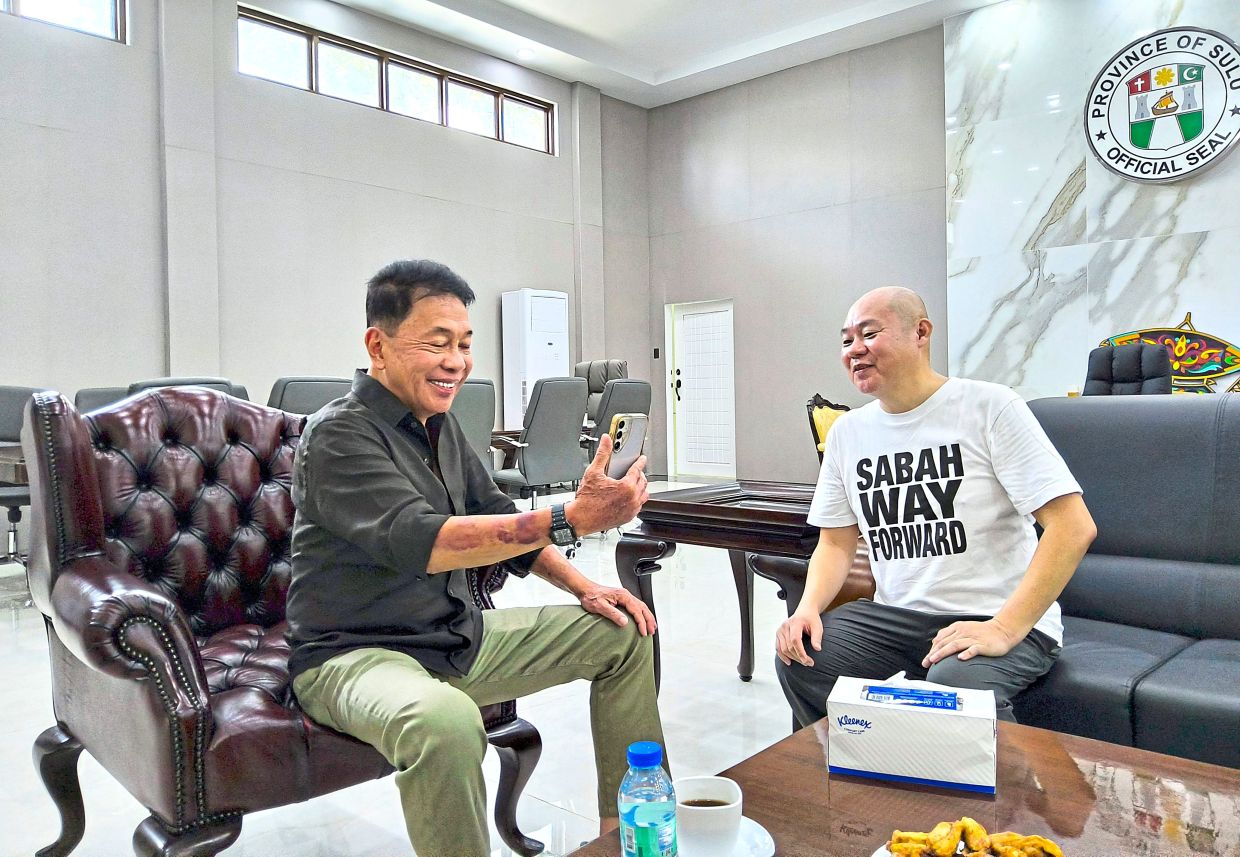
On Friday, at the iconic Sulu Provincial Capitol in Jolo, I interviewed Sakur Tan. Before asking my questions, I connected him via video call to former Sabah chief minister Datuk Seri Yong Teck Lee. As chief minister, he had been actively involved in the Brunei-Indonesia-Malaysia-Philippines East Asean Growth Area, and he was a key Malaysian negotiator in securing the release of the hostages in the 2000 Sipadan crisis.
Yong wanted to speak with Sakur Tan because he recognises him as a powerful anchor of stability in the province – someone uniquely positioned to drive positive change for current and future relations between Sulu and Sabah, particularly in regional peace and order.
After their brief chat, Yong remarked that the conversation reassured him of how much the security landscape in Sulu and the broader Southern Philippines has improved.
“To the extent that we [in Sabah] can now look forward to a truly smart partnership in which our previously neglected regions can move forward to a brighter future together,” he said.
I started my interview with Sakur Tan by asking him what he thought of Sabah.
“When I think of Sabah, I think of my people. That my people are in Sabah. The government of Sabah took care of them, especially when Sulu was in crisis, when Sulu was in trouble. There was nothing here, and we are glad that the government of Sabah and the people of Sabah accepted our people,” he said, referring to the Moro Wars in the 1960s and 1970s.
That was then; how is it now, I asked.
“Well, now, I would like to believe that so many of our people are already much better established in Sabah. They refuse to come back anymore, though maybe some of them would like to come back because so many have not seen the real situation here in Sulu – how much it has improved, far better than way back during the war in southern Philippines,” he said.
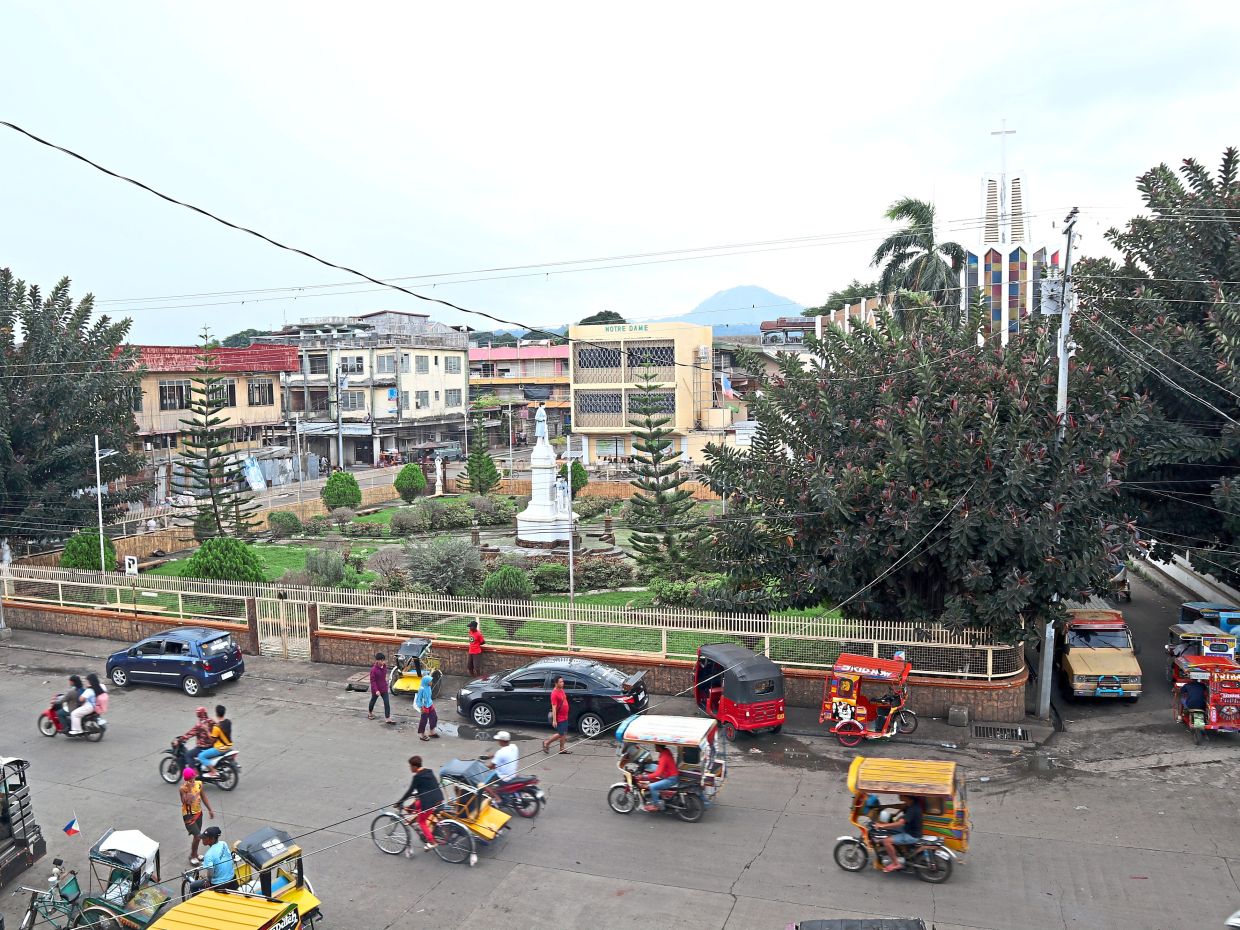
Sulu has indeed changed. During this trip and the ones in 2023 and 2024, I could feel that law and order have firmly taken root. The lingering feeling I had when I was in Jolo in 2000 and during subsequent visits up to 2023 – a heavy weight on my shoulders, the constant dread that I could be shot at any moment – has lifted.
Now I can comfortably walk through the Jolo Public Market to buy fish for dinner while my drone captures the scene overhead.
The day before my interview with the vice governor, Philippine Defense Secretary Gilberto “Gibo” Teodoro Jr came to the Sulu Provincial Capitol to officially declare that the province had achieved SIPS, a Stable Internal Peace and Security condition, marking a major milestone. Insurgent groups have been dismantled and the region has transitioned from active conflict to sustained development.
In Sabah, when most people think of Sulu or Jolo, they think of Abu Sayyaf. What has happened to the group I asked Sakur Tan?
Community support for the government’s law and order efforts led to Abu Sayyaf giving up, he replied.
“They surrendered to the government, and the government has a programme to reintegrate them into society. Some are still in jail.”
I was curious to know whether he had ever visited Sabah. He said not recently. The last time he visited my state was when he was for business in the 1980s.
“Sabah helped me so much. Trading. I was bringing copra and items from the Philippines to Sabah, and from Sabah, I took back goods like toiletries, soap, electronics, and imported shoes,” he said.
Sakur Tan said his impression of Sabah back then was that law enforcement was very efficient.
“Where there is law enforcement, there can be peace and order. Without law enforcement, you can hardly have order in any community,” he said.
On the legitimacy of the so-called Sulu Sultan, Sakur Tan said there are so many sultans that he couldn’t tell me who the real Sultan might be.
“I tried to bring them together. I told them, ‘You always say that you own this land or that land, but if you do not benefit from it, you are a poor man’.”
On Nov 29, 2016, Sakur Tan was granted the authority to act as their representative and was conferred the royal rank of Datu Shahbandar.
What happened to that effort?
“Everybody was speaking, I cannot be the spokesman when everybody speaks. They still wanted me to reorganise it, but I said, ‘No more. You are unruly, I cannot be with you’,” he said.
He said he has seen little of the records purporting to show that Sabah still belongs to the Sulu sultans. “I told them, ‘Up to you. If you want to wait forever, up to you’,” he said.
On the relationship between Sabah and Sulu, Sakur Tan had this to say: “We are like brothers. My people, whenever there is a problem here, they go to Sabah. They want peace or business, they go to Sabah. So many of our people are doing business in Sabah or with Sabah. How can we not be grateful to Sabah? Sabah and Sulu are brothers.”
I asked him what his secret was to remaining in power for so long.
“I also wonder why I am still here after so many other leaders are gone. I am still here governing, and I feel loved by my people because of my dedication to helping them,” he said.
“Not because you’ve got more guns and gold?” I asked.
“No, that’s not true. Other people have gold and guns too. I tell my children, ‘If you think that you have money, there are so many other people who have more money. If you think you have guns, there are more people who have more guns,” he said.
“But you have to have something seen in you when you are loved and when you are feared.”
To his political opponents, he is a feared figure – a formidable architect of power who has outlasted decades of turbulence. But to the 19 mayors of Sulu, he is a beloved figure.