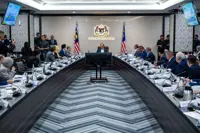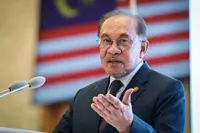
A MINISTER cried and was not dropped, another minister cried and was still dropped, and a deputy minister cried at not being made a minister. The new ministers just cried with joy.

As usual, there are critics and supporters of the new line up.
Datuk Seri Rafizi Ramli, who resigned as Economy minister in May, said that Fadhlina Sidek should have been dropped as Education minister, as that was what many Malaysians expected.
As expected, PAS and Umno politicians questioned why both the Federal Territories Minister and Deputy Minister are Chinese – Hannah Yeoh (from DAP) and Datuk Lo Su Fui (from GRS/PBS). They argued that the Malay majority in the Federal Territories necessitates a Malay appointee to safeguard urban bumiputra interests and land management effectively.
Anwar firmly defended his choices, calling the race-based attacks on the appointees “atrocious” and stating that it is unacceptable to reject leaders based on their skin colour in this day and age.
Some economic analysts praised the reshuffle as a move towards better performance. They welcomed the appointment of Datuk Seri Johari Ghani as Investment, Trade and Industry Minister, seeing him as a credible leader who can drive economic growth.
Others praised the “generational renewal” in the Cabinet, with younger leaders like Dr Moha-mad Taufiq Johari (Youth and Sports Minister) and Akmal Nasrullah Mohd Nasir (Economy Minister) being given prominent roles to bring fresh ideas to the table.
There were sharp criticisms of other appointments, though. Some questioned the selection of Senator Marhamah Rosli as Deputy Minister in the Prime Minister’s Department (Religious Affairs) due to past controversies. Others were unhappy with the appointment of Adam Adli Abd Halim as Higher Education Deputy Minister, citing his past activism.
Then there was the usual talk about who won and who lost in the reshuffle. Some we agree with and some we don’t.
For me, the overall winner is Malaysia. Anwar appointed Yeoh as a Minister in the Prime Minister’s Department (Federal Territories) based on her ability to serve rather than her ethnicity. The Prime Minister didn’t see her as Malay, Chinese, Indian, or Iban, but simply as a Malaysian qualified for the job.
This was a good choice based on merit without using race as a filter.
Still, the political talk continues. Some Umno friends see her appointment as a move to block Datuk Seri Najib Razak from being placed under house arrest. While my property developer friends see it differently: They believe Yeoh will expedite project approvals and be more developer-friendly and flexible than the former minister or the ex-Kuala Lumpur mayor.
There is the question of who else won and lost.
Without naming names, I believe Malaysians lost because there are Cabinet members who I know are self-serving. They appear to serve themselves and their political masters first, rather than the people. I do not have confidence they will truly put Malaysia first in their decision- making.
The big question now is: Will we see another major reshuffle in six months?
Following a crushing 8-0 defeat in the recent Sabah state elections, DAP issued an ultimatum to the Prime Minister. They warned that they would reassess their role in the unity government if meaningful reforms are not delivered within six months.
I am told this ultimatum was not just a knee-jerk reaction to the party’s total rejection in Sabah. Before the polls, DAP had already secured an agreement from Pakatan Harapan chairman Anwar to pursue certain reforms, such as the separation of the roles of the Attorney General (AG) and the Public Prosecutor (PP).
This is a key demand; currently, the AG acts as both the government’s legal adviser and the sole authority for criminal prosecutions, creating the possibility of a conflict of interest, especially when politicians are investigated. Separating these roles would create an independent PP who can charge individuals in accordance with the law, free from political pressure.
In short, this reform ensures the person advising the government is not the same person deciding on who to prosecute, thereby removing political bias from the justice system.
Even if we do get this reform, do you think those who voted for Pakatan will be happy with the Madani government and continue to vote for it?
And what happens if those reforms demanded are not forthcoming in six months? Will DAP politicians remain as ministers and deputy ministers? If they don’t, doesn’t that give an Islamist party and its partners an excuse to fill those minister and deputy minister posts?
If this happens, who will be crying for Malaysia?
Already a subscriber? Log in
Get 20% OFF The Star Digital Access
Cancel anytime. Ad-free. Unlimited access with perks.