LAST March, at the height of the buzz over the news that a French arbitration court had instructed the Malaysian government to pay US$14.92bil (RM62.6bil) to the descendants of a Sulu Sultan, I was in Manila, Zamboanga City, Jolo and Davao to get insights on the matter.
Covid-19 travel restrictions had been eased, and after more than three years of not travelling to the Philippines, I wanted to meet old contacts and make new friends.
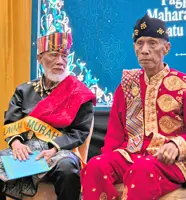
Since the big news was the US$14.92bil decision, I decided to meet up with the families of the Sulu Sultanate -- some of whom I have known since covering the Sipadan hostage crisis on Jolo island in 2000.
Some of the Kirams were delighted that they were soon to receive a windfall of billions of pesos, while others were unsure whether the amount would ever be recovered. But for all of them, the French court instruction validated their families’ claim that Sabah belonged to them.
But whether Sabah belongs to them or not depends on how history is interpreted.
Brunei signed four treaties and a commission on Dec 28, 1877, granting Baron de Overbeck and Alfred Dent parts of North Borneo (as Sabah was called before Malaysia was formed in 1963). A month later, on Jan 22, 1878, Sulu Sultan Jamal Al Alam signed a treaty with von Overbeck and Dent granting part of North Borneo to the two businessmen.
Shari Jeffri, a private researcher examining North Borneo/Sabah history explains the situation: “Signing the second agreement was a way of addressing the piracy situation on the east coast. The east coast of North Borneo was unruly, as the Sulu Sultanate claimed it. And as von Overbeck and Dent did not want to have any headaches, they signed the treaty with the Sulu Sultan.”
In summary, von Overbeck and Dent acquired parts of North Borneo from the Sultan of Brunei and not the Sultan of Sulu.
But the French arbitration decision is not based on who owned what.
Arbitrator Gonzalo Stampa, from Spain, issued the award in a Paris court where Malaysia was not represented, based on the alleged violation of payments of RM5,300 in cession money under the 1878 agreement signed by Sultan Jamal Al Alam, von Overbeck and Dent.
In 1939, Judge Charles Frederick Cunningham Macaskie, Chief Justice of the Supreme Court of North Borneo, decided that the nine heirs of Sultan Jamal Al Alam should receive the cession money. In 2013, Malaysia stopped paying Sultan Sulu’s heirs their cession money following the Lahad Datu armed incursion by the “Royal Sulu Army”.
In his book, My Story: Justice in the Wilderness, former attorney general (AG) Tan Sri Tommy Thomas writes: “Although there appears to be no evidence of any link between the Sulu descendants who were receiving the annual fees from Malaysia under the 1878 Agreements and the armed invaders into Lahad Datu, the Malaysian government ceased payments from 2013.
“There were no legal grounds for Malaysia’s refusal to pay annually since 2013. It resulted in Malaysia being in breach of the 1878 Agreements.”
In April this year, during a webinar jointly organised by the Kuala Lumpur Bar Committee and Sabah Law Society on “The Philippines/Sulu claim to Sabah”, Thomas repeated his assertion that there is no evidence to link the recipients of the annual payments with the 2013 Lahad Datu incursion.
It is mind boggling that Thomas, who was AG from mid 2018 to early 2020, does not know there is evidence of a link between the nine heirs of the 1939 decision and the 2013 attack.
I covered the incident – in which six civilians, 10 Malaysian security forces personnel and about 56 intruders were killed – for more than a month in my home state.
It was masterminded by Jamalul Kiram III, the self-styled Sulu Sultan who gave almost daily news briefings from his residence during the 42-day standoff. His younger brother, Raja Muda Azzimudie Kiram, led the intruders to Kampung Tanduo in Lahad Datu.
The High Court in Kota Kinabalu sentenced to death their nephew Datu Amir Bahar Hushin Kiram (the son of self-styled Sulu Sultan Esmail Kiram, the brother of Jamalul and Azzimudie) for waging war against the Yang di-Pertuan Agong in connection with the Lahad Datu intrusion.
Jamalul, Azzimudie (also spelt as Agbimuddin) and Esmail are the sons of Sultan Punjungan Kiram, one of the nine claimants in the 1939 Macaskie judgement.
Punjungan’s descendants are the eight claimants in the 2022 French arbitration case. The one with the clearest bloodline is Dayang Dayang Sheramar T. Kiram, the daughter of Jamalul Kiram III, who masterminded the Lahad Datu intrusion.
It is a big mystery how Thomas missed this link.
In the Philippines, the big mystery is about who was sponsoring the millions of dollars needed to pursue a suit against the government of Malaysia. Filipinos connected with the Sulu Sultanate told me the family does not have “serious” money to pursue the claim worldwide.
London’s Financial Times reported that “London-based investor Therium, which according to multiple people close to the case, is backing the Sulu heirs financially.
“The cost of pursuing arbitration cases over a number of years represents a substantial financial gamble on the outcome of each case, and would typically run into tens of millions of dollars. The eight descendants, who live in the Philippines, are not wealthy and include several retirees according to their representatives.
“The litigation fund [Therium], which says it has raised $1.1bn to finance various cases since it was founded in 2009, declined to comment,” the article said.
Contrary to coffeeshop talk and WhatsApp chats, the French arbitration case has nothing to do with Malaysia’s 15th General Election. Rumour-mongers, who don’t even know how to pronounce Jolo (it is “holo”, not “jolo”), think it is a conspiracy to frighten voters into voting for a particular coalition.
The plan to sue Malaysia for more cession money was hatched as far as 2011. Back then, there was a list of descendants who were the nine heirs of the Sulu Sultan mentioned in the Macaskie judgement. The list has been trimmed to eight, and some individuals have been replaced for various reasons.
This legal wrangle, which originated from a 1939 court case, will be long-drawn. Politicians who don’t even know the family tree of the Sulu Sultanate should stop trying to score political points on a matter as serious as RM62.2bil of taxpayers’ money.
Already a subscriber? Log in
Get 20% OFF The Star Digital Access
Cancel anytime. Ad-free. Unlimited access with perks.