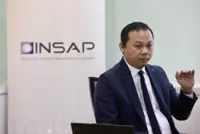
THE Institute of Strategic Analysis and Policy Research (Insap) held a series of engagements on Friday (Nov 7) to examine the implications of the recently signed US–Malaysia Agreement on Reciprocal Trade (ART).
In the morning, Insap convened a closed-door roundtable involving over 40 representatives from government-linked agencies, private-sector leaders, economists, think tanks and policy researchers. The discussion was held under Chatham House rules and the key points raised were subsequently conveyed to the Investment, Trade and Industry Ministry (Miti) during an afternoon briefing session on the same day with the Minister, Datuk Seri Utama Zafrul Tengku Abdul Aziz.
Key observations and ministerial responses
During the briefing, Insap raised questions about the asymmetry of benefits between Malaysia and the United States, the lack of detailed economic-impact assessment and the uncertainty surrounding the definition of State-Owned Enterprises (SOEs) under Article 6.2 of the Agreement as well as the implication of shipping clauses within ART following US-China tit-for-tat on imposition of higher port fees on each other’s ships in October.
The Minister confirmed Insap’s analysis that Malaysia’s gains under the ART are modest, which is limited to roughly RM21.2bil or approximately 11% to 12% of our total exports to the United States, while US exports worth RM54.3bil to RM75.2bil or equivalent to 65% to 90% of US trade with Malaysia, will receive preferential or simplified access.
The Minister acknowledged that Malaysia’s decision to sign the Agreement was based on pragmatic considerations to avoid exposure to higher US tariffs or potential exclusion from the global supply chain, recognising that Malaysia’s leverage during negotiations had been limited. He also informed participants in Miti’s briefing in the afternoon that no detailed economic-impact projections or study was undertaken beyond a high-level assessment.
On the definition of SOEs under Article 6.2, there was no clear answer on whether the term covers only federally owned or also state-level entities. The Minister stated that Miti would provide further clarification in due course.
Regarding future adjustments or side letters to amend the ART, Miti noted that there is room for discussion with the US should the need arise, but did not outline how Malaysia could proceed beyond the ratification process stated in ART.
As for the implication of Article 5.1.3 on Malaysian shipping following US-China tit-for-tat, the Minister has reiterated that if there are any issues that affect shared economic interests, it will be brought to a discussion platform with the US
Additional issues raised during Insap’s roundtable in the morning
Prior to Insap’s participation in Miti’s roundtable in the afternoon, Insap organised a closed-door roundtable with representatives from public and private sectors to gather their views and feedback on the ART, which were subsequently brought to the Miti Minister’s attention in the afternoon. In addition to the issues above, which were highlighted to and responded by the Minister, below are other issues raised during Insap’s roundtable in the morning:
1. Limited net benefit to Malaysia under current ART: Participants at the morning roundtable noted that over 60% of Malaysia’s exports to the US (mainly semiconductors and E&E products) were already duty-free before the ART, while the new tariff benefits mainly affect niche sectors such as rubber, cocoa, palm-oil-based and pharmaceutical products.
2. Implementation and compliance risks: Concerns were raised about traceability of exports and enforcement mechanism under ART, particularly since all Certificates of Origin will be issued solely through Miti. Without robust systems, Malaysia risks being perceived as a potential transhipment hub for third-country goods, affecting the high-level of trust placed on Malaysian exports.
3. Policy alignment and sovereignty: Analysts observed that Malaysia could be drawn too closely into US regulatory frameworks, especially given provisions on export controls, shipping and SOE governance that mirror American standards, which is a clear shift from prior positions held by Malaysia.
4. Semiconductor considerations: Although semiconductors, which form the bulk of Malaysia’s exports to the US, are not covered by the ART, several participants noted that the Government’s decision to sign ART was motivated partly by a desire to secure future tariff exemptions for this sector through goodwill and alignment with US interests.
Insap’s position and recommendations
Insap recognises the difficult geopolitical environment in which Malaysia negotiated the ART. However, the engagements held on Nov 7 underline that important definitions, procedural and analytical gaps remain unresolved. To ensure clarity and public confidence, Insap calls on Miti to:
1. Clarify the scope and definition of SOEs under Article 6.2 and its implications for vendor-development, local-content and affirmative-action programmes currently being implemented by Malaysian GLCs and GLICs.
2. Publish or brief Parliament on the internal economic-impact assessment used to guide Malaysia’s position, so that stakeholders and legislators can better understand the assumptions and trade-offs involved.
3. Establish a transparent review mechanism with industry and SME representatives to identify clauses that may require amendment or side-letter clarification during implementation.
Way forward
The sessions on Nov 7 demonstrate the strong public interest in understanding how the ART will affect Malaysia’s economy, industries and policy space. Moving forward, Insap will continue to engage with policymakers, researchers and businesses to ensure that Malaysia’s trade commitments are implemented in a way that safeguards national interests, strengthens local competitiveness and maintains Malaysia’s independent economic position.
> Insap, set up in 1986, is a think tank focusing on political-economic research. A not-for-profit organisation, Insap develops long-term strategies and policies relevant to the interests and aspirations of Malaysians.
Already a subscriber? Log in
Get 20% OFF The Star Digital Access
Cancel anytime. Ad-free. Unlimited access with perks.