Debating the A-G’s reports in Parliament is one way to strengthen accountability and transparency.
AS he approaches his first year as a Dewan Rakyat Speaker, Tan Sri Johari Abdul remains determined to bring reform and changes to the august House.
One of these includes making debates on the Auditor-General’s reports a permanent fixture, one that will be “religiously followed” whenever the government’s audit statement is tabled, he said.

In the past, the reports have always been put on the desk of MPs and made available to the press and public via the National Audit Department website, but they had never been debated until the sitting in June.
Putting up the audit statement for debate is a step in the right direction as it sends a clear signal to enforcement agencies, including the Malaysian Anti-Corruption Commission (MACC), that action must be taken quickly as Parliament is watching.
In addition, MPs will also have the opportunity to raise queries with the relevant ministers on the findings of the report.
MPs, too, should seize this opportunity to hold ministries accountable and flag the discrepancies highlighted in the report.
This will also serve as a reminder to the ministries that they must uphold good governance in their current and future undertakings.
Aside from that, in the course of these debates, MPs may also propose improvements, even though the report comes with the Auditor-General’s own reprimands and recommendations, as well as responses by the respective ministries, federal agencies and companies on any discrepancies.
Ministers, on the other hand, can provide updates on the remedial actions taken to resolve the discrepancies since the audit was conducted.
This could be beyond what was just written in the audit response. As the A-G’s report is usually backdated, it allows the House and public to know of the measures being taken at that moment in time.
On top of that, it allows for the active participation of MPs in the process of ensuring transparency and accountability of public funds.
This will also ensure that the audit process is not only confined to the National Audit Department, the agencies under scrutiny and enforcement agencies.
It is time that reports that highlight the issue of poor governance, questionable procurement practices, leakages and wastage of funds working out to millions of ringgit are taken more seriously.
During the tenure of the late Tan Sri Ali Hamsa, former chief secretary to the government, townhalls used to be held to discuss the A-G’s reports.
Having attended these townhall sessions almost a decade ago, I am of the view that they should be revived as they were a good platform for the media to have active engagement with civil servants and pose questions on the findings.
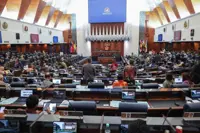
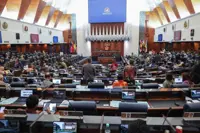
When the House debated the A-G’s Report 2021 Series 2 in the Lower House for the first time in history, there was a fair share of hue and cry.
The Opposition walked out of the chambers en bloc to show their disapproval of the move.
Opposition chief whip Datuk Seri Takiyuddin Hassan said the move to debate the report had never been done before.
“Based on our check, this has never happened before... that the audit report is open for debate.
“I believe that the motion to debate the audit report could be against Parliament’s Standing Orders and the Federal Constitution,” he said.
Perikatan Nasional MP Datuk Mas Ermieyati Samsudin, who is chairman of the Public Accounts Committee, reminded the House that the A-G’s post was vacant at the time.
She added that all the questions raised in the report had been answered by the relevant ministries.
Opposition MPs that I spoke to recently seemed to have the view that the move to debate the report defies convention.
“The report has already been confirmed by the highest authority. We cannot dispute it. If it has not been confirmed, then it is okay to debate it,” said a Perikatan MP. “When we debate, it is akin to criticising the report – and that is not nice.”
Another Perikatan MP said that the Dewan Rakyat should just stick to tabling the report as per the norm.
On whether the Opposition would join the debate in the next round, he said that it will depend on what its leaders decide.
Johari, in an interview with The Star last month, described the “boycott” by the Opposition as a thing of the past and said that it was time to move on.
“What is important is the report was debated and there was a decision made by the Dewan, (which will) put pressure on the authorities to act,” he said.
“I have been an MP for 15 years, and not once did we debate the A-G’s report, but now it’s part of the agenda that the Suhakam (the Human Rights Commission of Malaysia) and A-G’s reports will be debated,” the former Sungai Petani MP said in recounting his experience as a lawmaker.
He added that when there is no debate, agencies might feel that “everything is okay”.
Prime Minister Datuk Seri Anwar Ibrahim has said that the annual A-G’s report must be debated in Parliament and its recommendations given due attention.
He also said that it was time to put a stop to the culture of ignoring the reprimands contained in the report, especially in issues involving power abuse, negligence or cheating.
In the course of reforming Parliament, it is important for transparency and checks and balances to be strengthened.
The highest legislative institution of the land can certainly play an important role in ensuring accountability in the executive branch of the government.
Already a subscriber? Log in
Get 20% OFF The Star Digital Access
Cancel anytime. Ad-free. Unlimited access with perks.