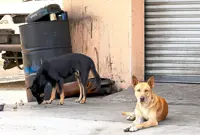
Take a kinder approach to strays


Long-term solutions require compassion, collective effort from public and authorities

THE unconditional love we receive from animals, especially dogs and cats, is priceless.

Anyone who has had the privilege of sharing their life with these voiceless beings will know just how sincere and loving they can be.

There is a famous saying that “a dog is man’s best friend”. Having experienced it myself, I can certainly understand why.

One of the best things I have done for myself was overcoming my fear of dogs as it led me to adopt a rescued Shih-poo — a Shih Tzu and Poodle mix.

I named her Bliss, and life has never felt more complete.

Bliss has taught my children responsibility, and all of us have learnt from her that love truly can be unconditional.

Every day when we return home, she rushes towards the door to greet us.

She never goes to bed until all of us do. If any of us is unwell, or having a bad day, she becomes our emotional support provider.

But not every dog is as fortunate as Bliss. Not every stray is rescued and given a loving home where it becomes part of the family.

The lives of our stray animals can certainly be better if we become the force for change.

Instead of arguing about who should be responsible, perhaps we should first ask ourselves what we have done for these voiceless animals.

I hope that as responsible citizens, we can unite when it comes to deciding how we want to address the issue of strays.

The government, together with veterinary authorities, must embark on serious and sustained spaying-and-neutering programmes for cats and dogs.

This is one of the most effective ways of controlling the strays.

The relevant departments should also be given the responsibility of establishing a clear timeline and measurable targets to reduce the stray population humanely and sustainably.

Every local council should likewise have an active and accessible spay-and-neuter programme.

Council officers who are responsible for handling stray dogs should also receive regular refresher training, including training in humane animal handling and welfare.

Children should be taught from an early age about responsible pet ownership, and the importance of spaying and neutering.

We also need to teach compassion towards animals in our schools, communities and places of worship.

Perhaps we need to be reminded that a life given by God is a life worth protecting, as long as it does not pose a danger to others.

We need to cultivate a society that understands and respects animals.

We cannot assume that because humans have the ability to speak, think and lead, we have the right to do whatever we want to those without a voice.

We should also remember that when disasters such as earthquakes or landslides strike, canine search-and-rescue teams join our frontline responders to find humans who are trapped, whether alive or dead.

These animals put themselves in harm’s way to help us.

So let us be kinder to them before we are too quick to label them a nuisance or decide that their lives should end simply because we have failed to manage the problem.

Our stray animal problem did not appear overnight, and there is no single solution.

But perhaps the first step is simple: compassion.

Follow us on our official WhatsApp channel for breaking news alerts and key updates!

Next In Columnists

Athletes deserve better than our silence
Embrace change, stay employed
Final push to secure RTS systems
Timor-Leste’s new battles
Back to the drawing board – the Premier League is back!
Independence on a personal level
Navigating the path as boys become men
Freedom to practise in peace
Truth from facts and logic
The price of staying in power

Others Also Read