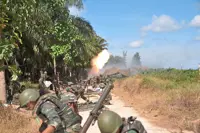
IT was billed as a “Sabah Homecoming”. However, it ended in a military intrusion that reshaped Malaysia’s border defence system, and set off a chain reaction of legal fallout, including the US$14.9bil (RM60.9bil) Sulu arbitration.

To understand how it all unravelled, it helps to look back:
In February and March 2013, more than 200 armed followers of the self-proclaimed Sulu Sultanate began infiltrating the east coast of Sabah in waves in small boat groups from the southern Philippines; they eventually all gathered at the coastal village of Kampung Tanduo, Lahad Datu.
They were led by Raja Muda Agbimuddin Kiram, the brother of the claimant, Sultan Jamalul Kiram III. What was meant to be a permanent occupation quickly escalated into a deadly military standoff that left between 68 and 72 people dead, including over 50 intruders, 10 Malaysian security personnel, and six civilians.
To sum up information I’ve gathered from experts over the years, several micro and macro factors were at play that resulted in the Lahad Datu incident.
At the micro level, a localised flashpoint was one man’s anger at an oil palm plantation: “Mat Bom”, as he was known, used to collect oil palm seeds from the plantation before the practice was stopped, which led to him allegedly bombing the plantation office; subsequent police investigations determined he had allowed his house in Kampung Tanduo to be used as a gathering point for the Sulu group, which included his Filipino relatives.
Zooming out, the macro reasons point to the national elections in the Philippines and Malaysia.
According to my security expert source, the operation was a long-planned gamble.
“They called it Sabah Homecoming. They had planned it for a long time,” he said, adding that preparation and training was needed for an operation like Lahad Datu.
The rank and file who breached Kampung Tanduo comprised distinct tiers, driven by high stakes.
“The 200-plus Filipinos who joined were promised citizenship, land, and jobs in the police and government after they managed to occupy Lahad Datu and the east coast of Sabah. That is why they were interested in joining, as they had nothing to lose,” the security consultant explained.
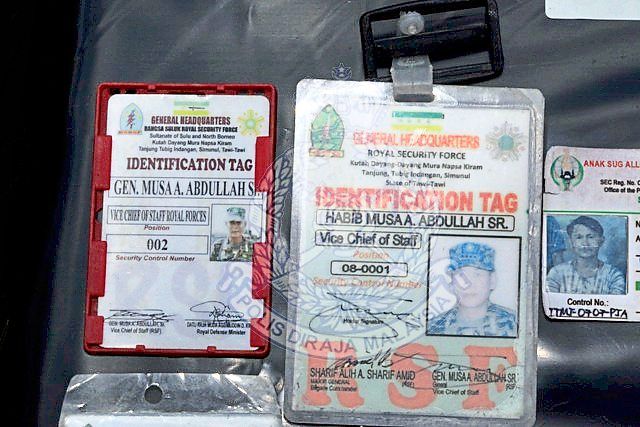
Raja Muda Agbimuddin, the crown prince and brother of the self-proclaimed Sulu Sultan, spearheaded the operation from Pulau Simunul in the southern Philippines, where the sultanate’s Royal Security Forces headquarters were located; alongside him was his right-hand man, Commander Musa.
Behind their tactical mobilisation was a battle for legitimacy – though it was not a straightforward claim as multiple factions in the Philippines have claimed to be the rightful Sultan of Sulu.
In fact, at the time of the Lahad Datu incursion there was another claimant on Jolo Island, Sulu Province, who was very active, said the security expert.
“He managed to contact opposition leaders in Malaysia, finding his own ways to get the attention of the Malaysian government.”
He explained that this rival claimant was seeking recognition as the Sulu Sultan in exchange for settling the long-standing dispute.
At its core, the dispute stems from an 1878 agreement over territorial rights that various Sulu Sultanate families keep reviving, while Malaysia maintains it has absolute sovereignty over Sabah following the formation of Malaysia in 1963.
The security expert explained that the Jamalul Kiram III faction ultimately decided to launch “Sabah Homecoming” to establish a physical footprint on the ground. According to him, the group initially hoped to avoid all-out conflict.
“Actually, they did not want to fight. That is why they had negotiations with our police, who advised them to leave Sabah peacefully,” he said.
“The negotiations failed as Agbimuddin refused to leave Sabah. His condition was that Malaysia had to invite Sultan Jamalul Kiram III to Lahad Datu. Agbimuddin said he represented only Jamalul Kiram III and was not the final decision-maker. That is where the negotiation failed.”
I had heard that the Lahad Datu intrusion was seen as a means to bring international attention to the Sulu Sultanate claim – is that true? I asked my security contact.
“That is our assessment,” he replied.
“The Jamalul Kiram III group felt that the Malaysian government did not pay attention to them. They needed to do something, so they came up with a project. They wanted us to negotiate,” he said.
“They wanted Malaysia to recognise Jamalul Kiram as the legitimate Sultan of Sulu. That is important to them, as they are fighting among themselves over who the legitimate Sulu Sultan is.
“That was the only demand. When you recognise him as the Sulu Sultan, then the other things follow.”
This narrative of peaceful intent, however, sharply contrasts with the reality on the ground.
In an interview, secretary-general of the Royal Security Forces Abraham Idjirani insisted the mission was entirely peaceful:
“We will reiterate our view that Raja Muda went to Sabah not to intrude but with the noble objective, as an institutional leader equipped with an appointment of his late father as sole administrator of the Estate Territory of North Borneo, to alleviate the economic suffering of the Sulu Sultanate’s followers through an understanding and consideration of the Malaysian government.”
When pressed on whether they anticipated bloodshed by entering a foreign nation armed, Idjirani defended the presence of arms: “Again, we will reiterate, the few guns were aimed to ensure the security of Raja Muda from harassment of piracy along the sea route.
“If his intention was for the possibility of bloodshed, then why should he and the followers have gone there knowing their firepower could not resist the Malaysian military, even for 20 minutes?”
When asked about details, Idjirani maintained he had only heard of “a few handguns”.
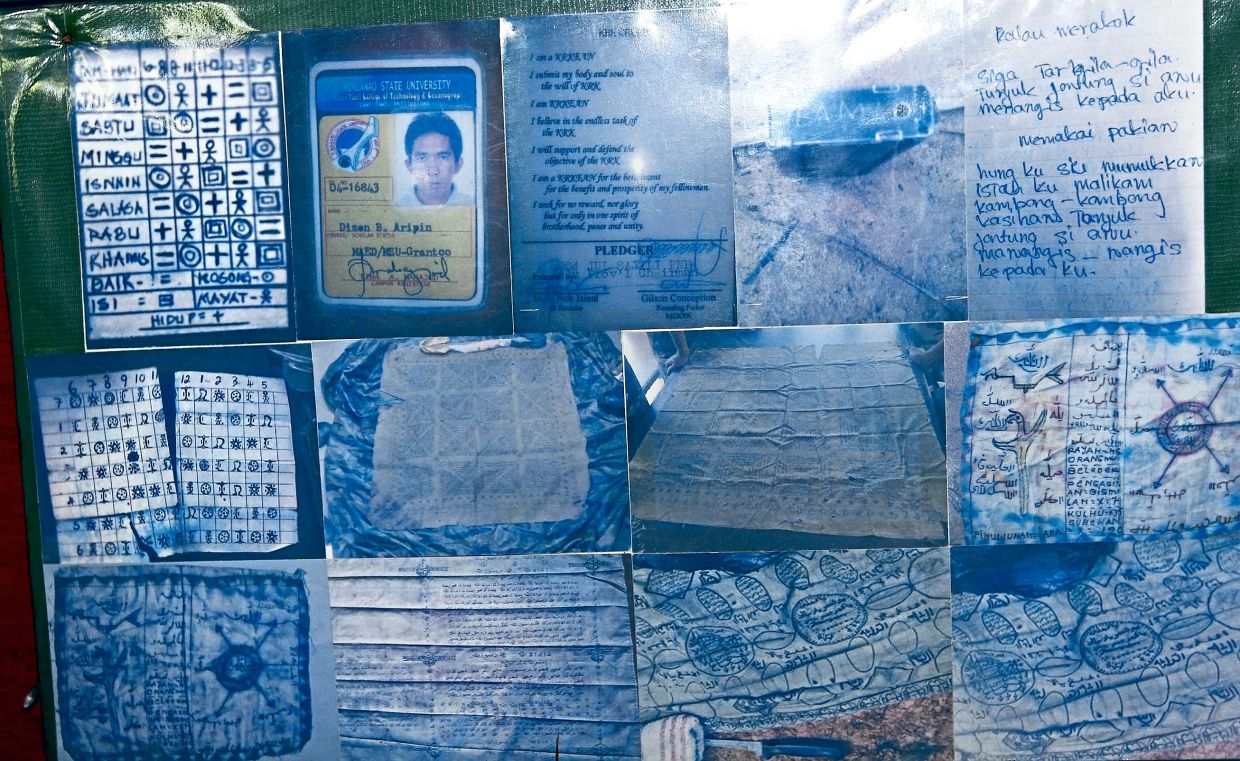
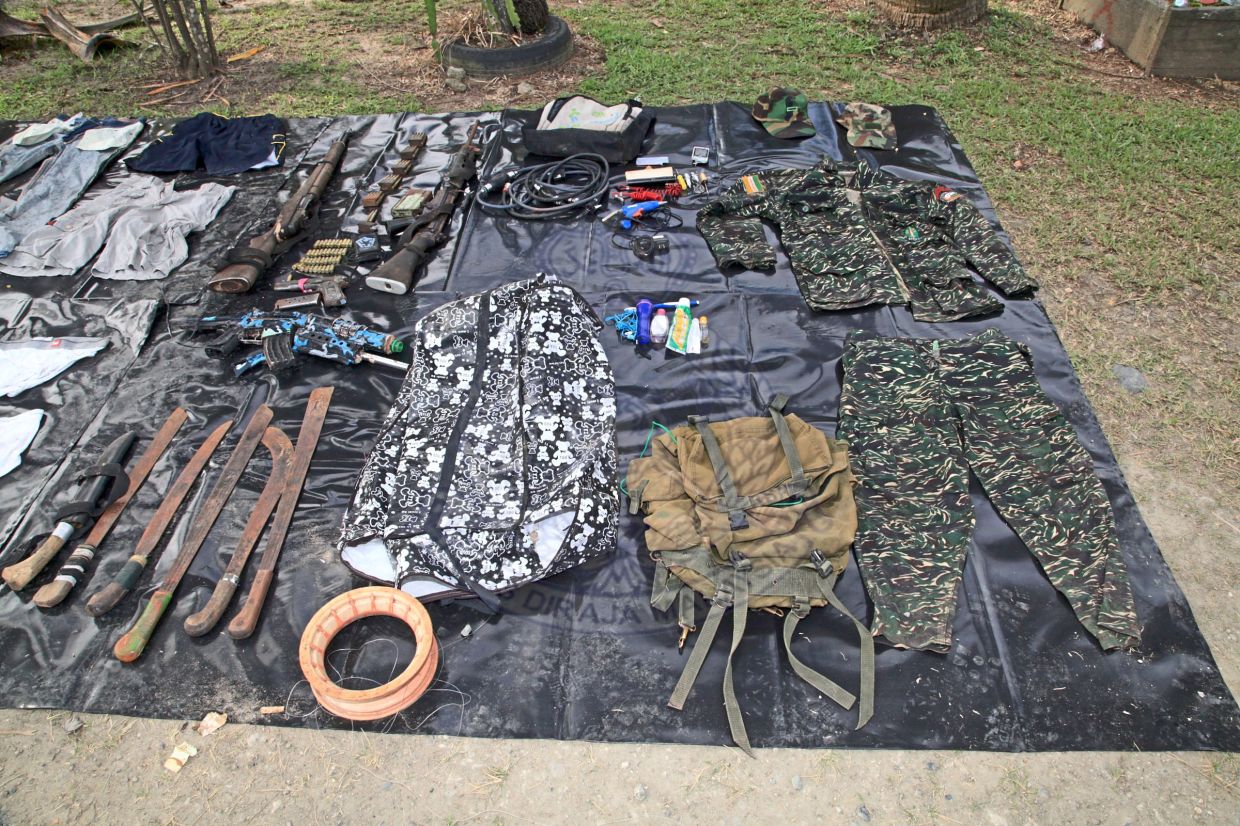
Ground zero intelligence told a drastically different story; According to my security contact, Malaysian police recovered grenade launchers, M16s, Colt AR-15s, Garand rifles, and .38 revolvers.
As the standoff intensified over more than 50 days and the risks became clearer, the Filipinos’ tactical cohesion fractured. The security expert noted that leadership eventually withdrew from the frontlines, leaving fewer than 100 Royal Security Forces members behind at Kampung Tanduo. This set the stage for a chaotic climax marked by intense aerial bombardments, heavy crossfire, and disorienting friendly fire incidents.
One of the consequences of this military reaction was a complete overhaul eventually of Sabah’s eastern security, triggering the establishment of the Eastern Sabah Security Command – now familiarly known as Esscom – to permanently unify military, police, and maritime enforcement along a 1,400km stretch of the vulnerable eastern seaboard of Sabah, spanning from Kudat down to Tawau.
As for the consequences for the Jamalul Kiram III family, their gamble that planting their flag on Sabah soil would force Malaysia to the negotiating table and crown their lineage as the true rulers of the Sulu Sultanate was totally lost. They had badly miscalculated Malaysia’s resolve.
The move left a rival branch of their family to pursue a multi-billion-dollar legal war over proprietary rights, a fight Malaysia eventually won, much like it prevailed over the battle lines drawn at Kampung Tanduo in 2013.
Already a subscriber? Log in
Get 20% OFF The Star Digital Access
Cancel anytime. Ad-free. Unlimited access with perks.
Malaysia strikes back
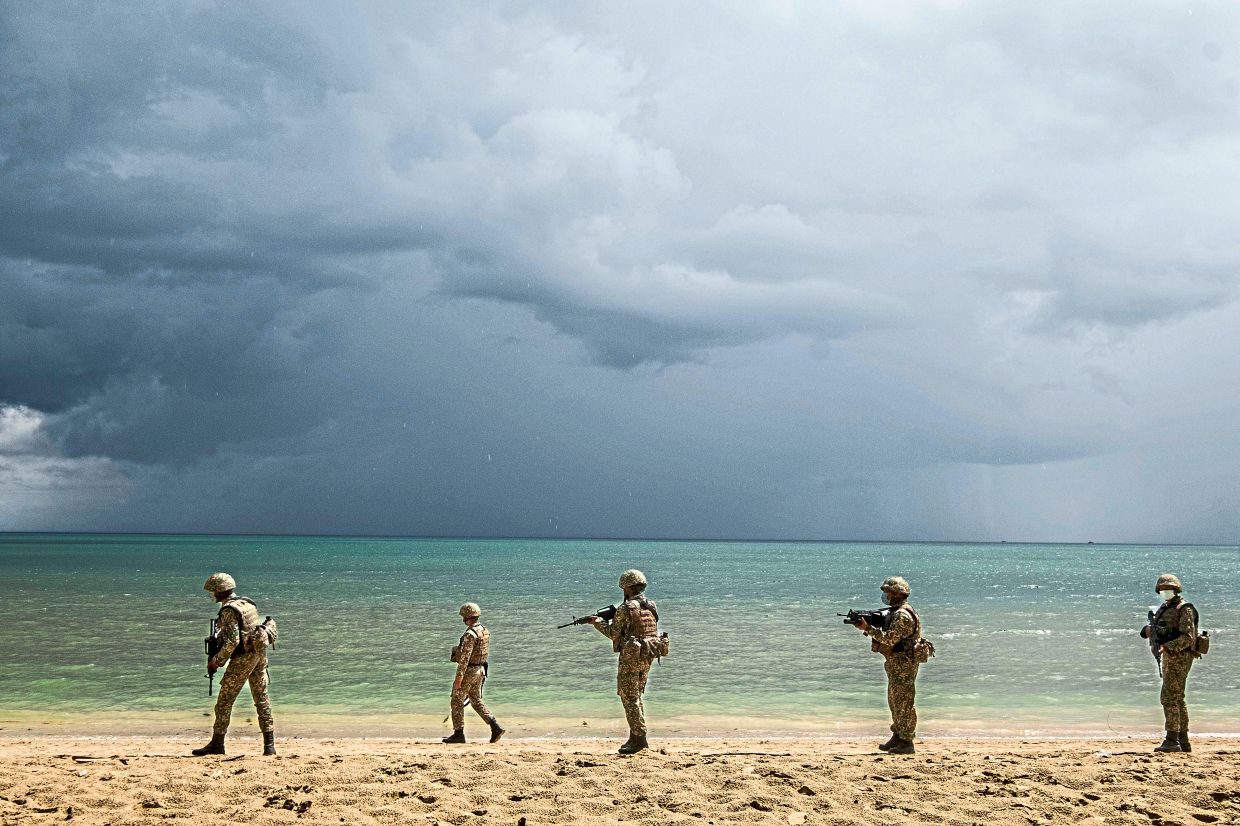
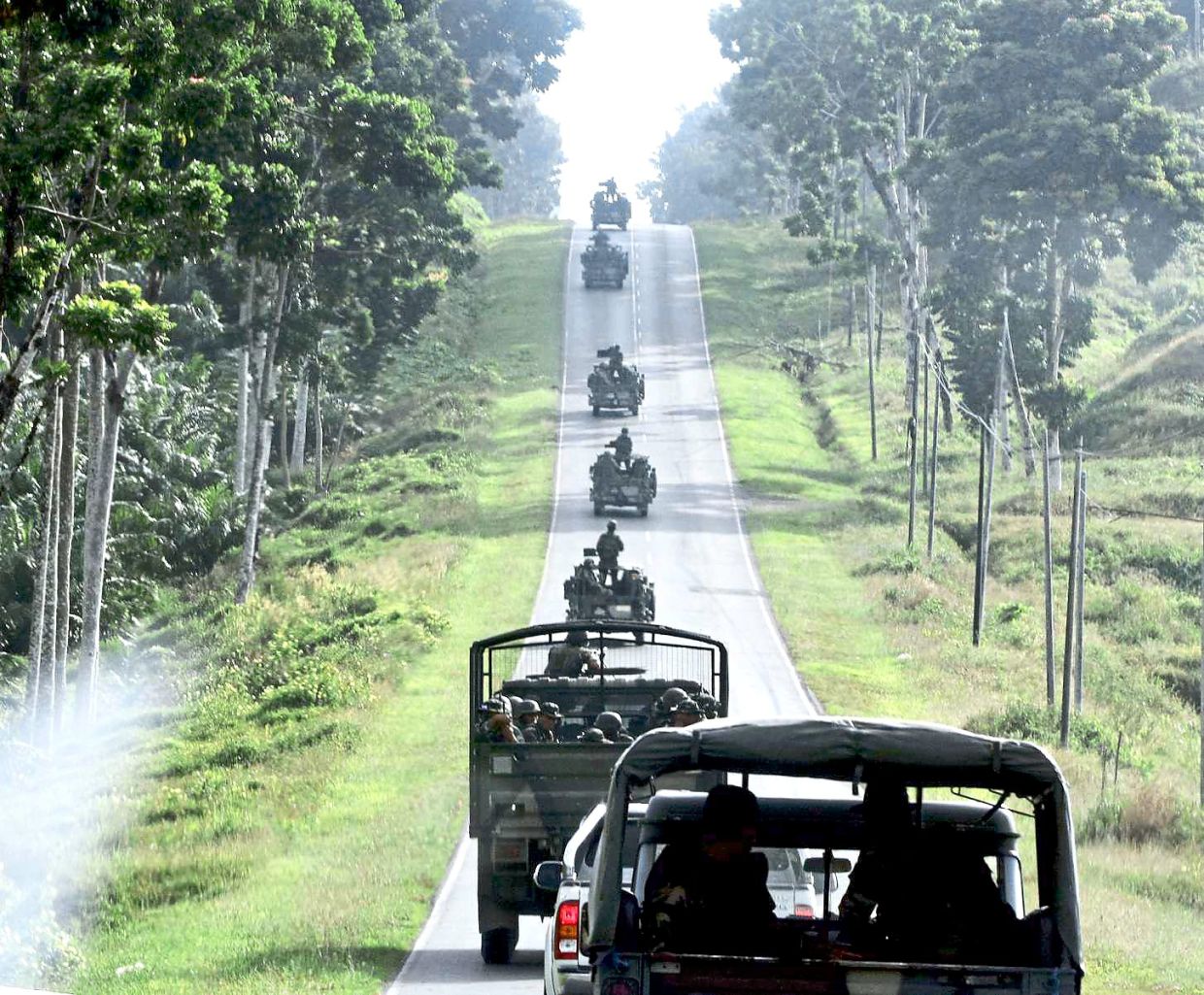
Malaysian security forces on March 4, 2013, patrolling Tanjung Labian beach in Lahad Datu close to Kampung Tanduo where the Sulu intruders had landed on Feb 12, 2013. One of the consequences of the military operation was the formation of the Eastern Sabah Security Command that now patrol’s Sabah’s vulnerable eastern seaboard. — Photos courtesy of the Malaysian Armed Forces
A helicopter hovering overhead as ground troops keep looking for the gunmen in a Lahad Datu plantation in March 2013. — Filepic/The Star
Items recovered from the Filipino armed force include operational notes.
Clothing and weapons.
An identity card purportedly belonging to Haji Musa, a general in the Sulu army.