
WHEN the Armed Forces Fund Board (LTAT) aborted its proposed partnership with Kuala Lumpur Kepong Bhd (KLK) in 2023 to jointly privatise Boustead Plantations Bhd (BPlant), the transaction was valued at RM3.5bil.
The deal was called off following political pressure over concerns that effective control of the strategic plantation asset would pass to a non-bumiputra company.

It was said that Datuk Seri Anwar Ibrahim approved the cancellation. The valuation has since risen by RM2bil. Kudos to the PM.
Now, the Prime Minister is once again facing a crucial decision involving the proposed sale of this strategic national asset to Acis Jaya Plantations, a relatively unfamiliar name that has attracted considerable public attention and scrutiny.
Anwar has several options. He can allow the transaction to proceed if he is satisfied that all financial, ownership and governance requirements have been met. Alternatively, he can renegotiate the terms to secure better value and stronger safeguards for LTAT.
He can also cancel the proposed transaction and reopen the bidding process if material shortcomings cannot be resolved.
A prudent course would be to temporarily suspend the deal, commission an independent assessment and ensure full disclosure of its material findings before making a final decision.
The BPlant controversy presents Anwar with an important test of governance, transparency and accountability, particularly because LTAT is involved.
To be fair, the issue should go beyond whether Acis Jaya Plantations should be allowed to acquire BPlant.
The more fundamental question is whether the proposed transaction can be demonstrably shown to be in the best interests of LTAT contributors, particularly serving members of the armed forces, veterans and their families.
The immediate step should be to defer any final approval or signing of the sale agreement until all material questions have been answered.
This is not a rejection of Acis Jaya or an assumption that anything improper has taken place. It is simply a necessary safeguard.
LTAT has said that its bidding process followed predetermined criteria, including financial capability, strategic suitability and commitment to the armed forces community.
However, the public, and more importantly, veterans of the armed forces, have not been given sufficient information to understand how the preferred bidder emerged.
The Prime Minister should therefore request an independent assessment, preferably by a reputable professional firm with no previous involvement in the transaction.
The review should examine Acis Jaya's financial capacity to undertake a transaction worth several billion ringgit, the source of its financing and whether firm banking commitments are in place.
Its ultimate beneficial ownership, including any offshore corporate structures, must also be scrutinised.
There is also a need to understand the financial and operational risks LTAT could face following the disposal, should the deal proceed.
The question of beneficial ownership is particularly important. The Government must establish who ultimately controls the purchasing company rather than relying solely on its immediate corporate shareholders.
Any decision must be based on long-term financial returns and commercial merits, not political convenience or pressure to complete a restructuring exercise.
There is no need to rush the deal. The Prime Minister should insist that any transaction clearly demonstrates how it will benefit LTAT contributors.
The questions are straightforward. If LTAT retains a minority interest, what protection will it have? Will it have board representation? Will it enjoy veto rights over major asset disposals? Can the new majority shareholder sell plantation land, restructure the business or incur substantial new borrowings without LTAT's consent?
These are not minor technicalities. They will determine whether LTAT can continue protecting its investment after surrendering control.
There is also the question of consistency. The circumstances surrounding the aborted KLK transaction in 2023 remain relevant.
If KLK's proposed deal was opposed because of concerns over the transfer of control of a strategic plantation asset to a non-bumiputra company, the Government must explain whether the same principles will apply to the current proposal, particularly if foreign interests are involved.
The Government must apply consistent principles. Bumiputra ownership objectives are legitimate policy considerations, but they must go hand in hand with commercial viability, transparency and accountability.
The Prime Minister should make clear that political connections, ethnicity or corporate relationships must never substitute for an objective assessment of the transaction.
There is also a larger institutional issue. LTAT must be seen as the guardian of the financial future of our armed forces personnel, not merely an investment vehicle disposing of assets.
Ultimately, the BPlant transaction gives Anwar an opportunity to demonstrate that the Madani government's commitment to good governance applies equally to politically sensitive, multi-billion-ringgit corporate deals.
Above all, one principle must remain paramount: The interests of the soldiers who contribute to LTAT must come before the interests of those who manage, buy or sell its assets.
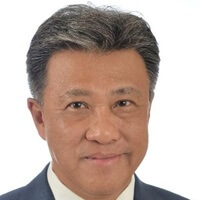
Wong Chun Wai
Wong Chun Wai began his career as a journalist in Penang and served Star Media Group for nearly four decades in various capacities and roles. He was group editorial and corporate affairs adviser to the group, after having served as group managing director/chief executive officer. "On The Beat" debuted on Feb 23, 1997. Chun Wai has penned the column weekly without a break, except for occasional press holidays when the paper was not published. In May 2011, a compilation of selected articles of On The Beat was published as a book and launched in conjunction with his 50th birthday. Chun Wai also comments on current issues in The Star. He is now chairman of national news agency Bernama.