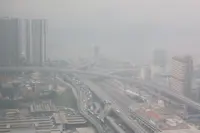
THE rain over the past few days has brought some relief to Malaysians suffering from the haze caused by Indonesia’s worst wildfire crisis in more than a decade. But it is only a temporary reprieve.
The haze continues to affect Malaysia, Brunei and Singapore, with the situation particularly worrying in Central Kalimantan, where thick smoke, hazardous air pollution and widespread damage to forests and wildlife have been reported.
This is no longer just Indonesia’s environmental problem. The fires are affecting neighbouring countries, turning a domestic crisis into a regional concern.
Deputy Prime Minister Datuk Seri Ahmad Zahid Hamidi has said Malaysia is still awaiting a formal response from Indonesia to its offer of assistance.
Malaysia is prepared to deploy firefighting assets, including a Bombardier CL-415MP water-bombing aircraft, three helicopters, and 52 to 55 personnel from various agencies.
The offer was conveyed directly to Indonesian President Prabowo Subianto and Vice-President Gibran Rakabuming Raka during Ahmad Zahid’s official visit to Jakarta.
Yet, there has been no formal response so far. Media reports suggest Malaysian officials remain positive, indicating that Indonesia may either feel it does not need outside assistance or believes it can manage the fires with its own resources.
Perhaps our offer, while well-intentioned, is simply not enough to address the enormous scale of the operation required.
Indonesia has reportedly mobilised substantial domestic resources, including thousands of ground personnel, military personnel and volunteers across Sumatra and Kalimantan. Helicopters have also been deployed to tackle hotspots.
It is fair to acknowledge that Indonesian authorities know the terrain better than anyone else. The absence of a formal response does not necessarily signal a breakdown in communication, as bilateral discussions are continuing.
Cross-border assistance in such situations is diplomatically sensitive.
Governments naturally prefer to manage emergencies within their own borders, particularly when these involve sovereign authority and the enforcement of domestic policies. Indonesia is no exception.
But while the fires continue to burn, its neighbours are left choking.
As of Oct 10, Central Kalimantan reportedly recorded 288 high-confidence fire hotspots, the highest among Indonesia’s six priority fire-control provinces. Fires around Palangka Raya have contributed to a deterioration in air quality.
The scale of the disaster is alarming. Reuters has reported that Indonesia is experiencing its most intense wildfires in 11 years.
Estimates from environmental organisations suggest that at least 800,000ha of land has caught fire across Indonesia in 2026, although the exact figure remains uncertain.
Wildlife is also under threat. Videos circulating on social media have shown various animal species, including orang utans, caught up in the fires and their aftermath.
Conservation teams have been rescuing animals suffering from burns and smoke exposure. In West Kalimantan alone, local conservation authorities have reportedly rescued 46 orang utans since August.
Indonesia may prefer to handle the crisis independently, but the situation remains troubling.
The country’s Forestry Ministry reportedly recorded 793 high-confidence hotspots nationwide on Oct 10, up from 437 the previous day. Central Kalimantan alone accounted for 288 of them. The ministry has said it is strengthening ground and aerial firefighting operations.
One of the biggest challenges is that many fires occur on peatland. Such fires can smoulder underground and reignite even after surface flames have been extinguished.
Hot, dry conditions associated with El Nino are making the situation harder to control.
For Malaysians, the consequences are all too familiar. Smoke can travel across the Malacca Strait, affecting air quality far from the fires themselves.
This is more than an inconvenience. Fine particulate matter in haze can aggravate asthma and other respiratory conditions, while increasing the risk of cardiovascular problems.
School closures, reduced outdoor activities and disruptions to daily life also carry economic costs. Businesses may suffer as people stay indoors, while tourists may reconsider visiting Malaysia if the haze persists. The resulting losses could be substantial.
What we are witnessing is no longer merely a seasonal forest-fire problem. It has become a serious regional environmental and public health crisis.
How long will it last? Reports suggest the crisis could continue into November if significant rainfall does not arrive.
Against this backdrop, a statement reportedly made by Syahganda Nainggolan, head of Indonesia’s government communications agency, is hardly helpful.
He was quoted as saying: “We don’t just send smoke. When there is no smoke, we send oxygen. The oxygen in Singapore and Malaysia also comes from our forests.”
Such remarks do little to reassure Indonesians’ neighbours, whose citizens are bearing the consequences of the fires.
Malaysia has offered assistance, and Indonesia has the right to determine how best to manage the emergency within its borders. But the haze does not respect national boundaries, and neither should the spirit of regional cooperation.
Asean has long recognised the need for countries to work together on transboundary haze pollution. This is precisely the kind of crisis that calls for that commitment to be put into practice.
The immediate priority must be to contain the fires, protect vulnerable communities and prevent further damage to forests and wildlife.
The skies may clear after the rain but unless the underlying problem is addressed, the haze will return.
For Malaysia and its neighbours, the question is not simply when the smoke will disappear. It is whether the region can work together to stop it from returning.
National Journalism Laureate Datuk Seri Wong Chun Wai is the chairman of Bernama. The views expressed here are solely the writer’s own.