
IF you quickly glance through the Asean Secretariat website, you will find the names of the heads of state and heads of government of 10 out of 11 member states. Myanmar is listed as a member but its leader’s name is missing. Why?

Five years ago a coup d’etat took place, overthrowing a democratically elected government in Myanmar.
Following the crisis, Myanmar’s participation at Asean meetings has been restricted to non-political representatives until the country fulfills the five-point consensus (5PC) plan drawn up in 2021 by the regional grouping. The 5PC calls for an immediate end to violence, the delivery of humanitarian assistance, dialogue among all parties, the appointment of a special envoy to Myanmar, and the envoy’s direct engagement with all stakeholders.
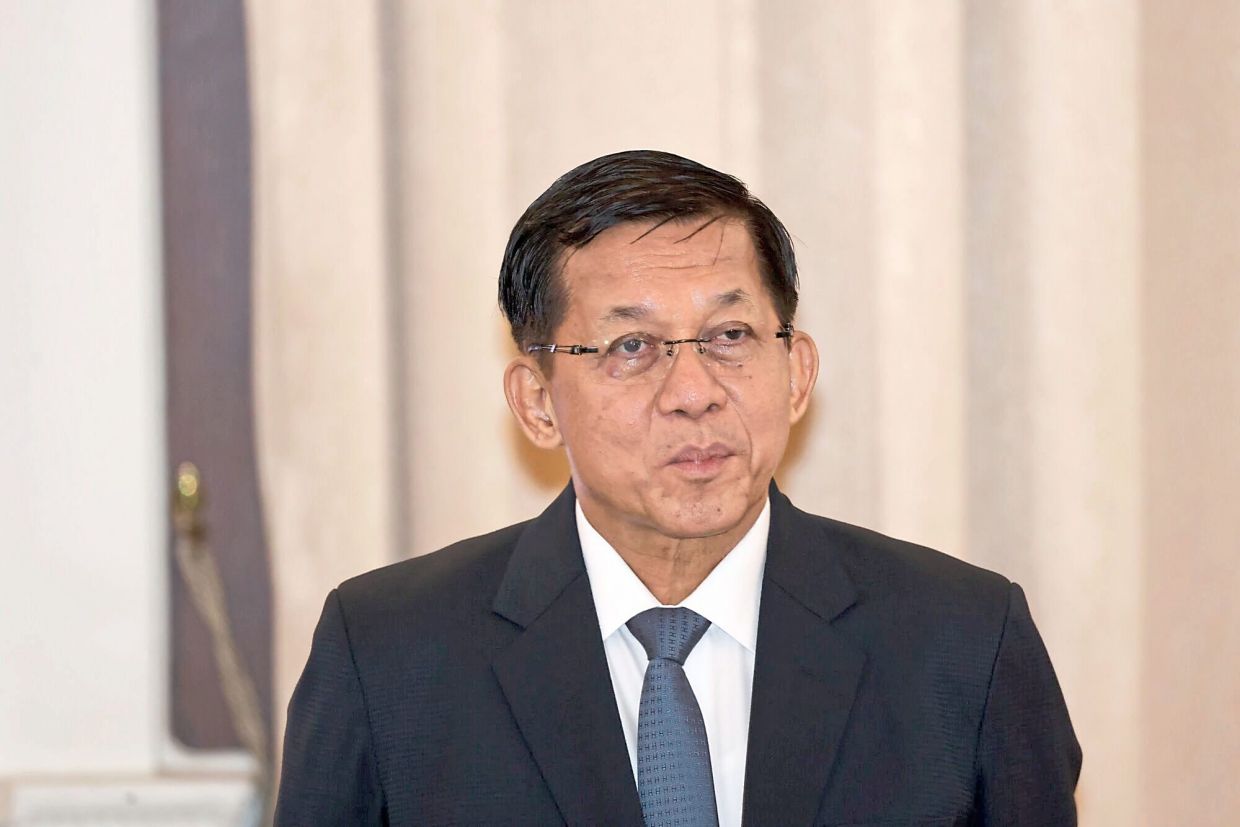
A general election was held late last year and in April, Myanmar’s coup leader Min Aung Hlaing won a parliamentary vote to become the country’s president after a landslide win by an army-backed party. Critics slammed the election as a sham to perpetuate military rule behind a veneer of democracy.
But in the last few years the brutal civil war between the military and various resistance groups has forced its citizens to flee. The military conducted a ruthless crackdown on the Rohingya, prompting growing number of refugees seeking protection in neighbouring countries including Malaysia.
In a recent podcast interview “Sembang Oh Yeah”, Prime Minister Datuk Seri Anwar Ibrahim revealed he is inviting Min Aung Hlaing to Malaysia to expedite the repatriation of some 200,000 Rohingya refugees in the country.
The prime minister is aware the Rohingya issue has caused concern and extreme anger among Malaysians, especially due to growing competition over economic opportunities and living space, following an increase in their numbers. Human rights groups say Rohingya refugees in Malaysia are facing growing online hate campaigns and disinformation, fuelling both xenophobia and intimidation.
As expected, the Malaysian government’s decision to repatriate the Rohingya was met with surprise and concern from international agencies and NGOs, given that the Rohingya are refugees who fled persecution in their homeland.
While Malaysia is a member of the UN, it has never signed the 1951 Refugee Convention. Anwar has defended Malaysia’s engagement with Myanmar, saying calls to simply “not send them back” offer no solution for the hundreds of thousands of Myanmar refugees in the country.
Anwar’s decision to invite Min Aung Hlaing to Malaysia has also drawn scrutiny, particularly as Malaysia does not formally recognise the military government in Naypyidaw. This raises the question of whether engaging directly with its leader is the most prudent course of action.
In June, after meeting his Myanmar counterpart Tin Maung Swe in Naypyidaw, Foreign Minister Datuk Seri Mohamad Hasan told Parliament that Malaysia has not recognised Myanmar’s new government but is keeping communication channels open to prevent a diplomatic vacuum that could invite external powers to interfere in Asean affairs, sticking to its 5PC.
Nevertheless, Wisma Putra has been directed by the prime minister to extend the invitation to Min Aung Hlaing who is expected to make an official visit to Malaysia this week.
As the invitation was accepted, Malaysia sent 1,476 Myanmar nationals using two vessels and a hospital ship owned by the Myanmar government, last Tuesday. This is the first phase of repatriating 5,000 Myanmar nationals.
The United Nations refugee agency, UNHCR, has expressed concern over the move amid the country’s continuing conflict and dire human rights and humanitarian situation.
“We are concerned by these returns at a time when people sent back to Myanmar may face serious risks, and some within the group may be in need of international protection,” said UNHCR Assistant High Commissioner for Protection Edem Wosornu.
“While authorities say the returns are voluntary, those returned had been held in immigration detention. This raises serious questions about whether decisions to return were genuinely free and informed. UNHCR did not have access to the individuals to assess this.”
Former foreign minister Tan Sri Syed Hamid Albar did not believe inviting Min Aung Hlaing to Malaysia is the right diplomatic move at this stage. In a published article, Syed Hamid said while he understands why the Government is seeking a practical and durable solution, diplomacy requires engagement with difficult actors and the pursuit of solutions that serve both humanitarian and national interests.
“But diplomacy is not simply about opening doors to anyone. It is about knowing what we want to achieve, building leverage and securing commitments before we make concessions,” he wrote.
Min Aung Hlaing has made visits to India, China, Laos, Thailand, Russia, Belarus, Vietnam and Cambodia so far this year.
When viewed in a broader context, the situation reflects competing interests: on one
side is a government seeking international legitimacy, while on the other is a government responding to prevailing public sentiment at home.
Is this truly a repatriation where they are guaranteed safe and dignified return, or are we feeding them to the battlefield? Will the prime minister be able to secure a clear commitment from Myanmar that would fulfil the Asean 5PC?
It remains to be seen if this change of foreign policy by the Madani government is drawn from a strategic playbook, or simply a political overture to secure its vote bank in the next polling season.