Sometimes, it is okay to practise a little bit of diplomacy in times of war and not just follow rules and regulations.
FROM the Strait of Hormuz to the Strait of Malacca – I am quite sure many of us, including politicians and government advisors, are checking where the Strait of Hormuz is located or finding out the length, width and depth of the world's busiest strait, which runs along Peninsular Malaysia.
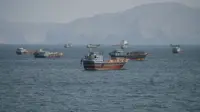
The Strait of Hormuz has been in the headlines for the last few weeks after Iran started a blockade in the Iranian-controlled area, allowing only tankers and vessels from certain countries free passage. It is considered one of the world’s most important shipping routes, particularly for transporting oil and gas from the Gulf states.
Malaysia's long-embedded principled diplomacy seems to have won the day after Iran allowed Malaysian tankers to pass through the Strait of Hormuz.
On Friday, Prime Minister Datuk Seri Anwar Ibrahim confirmed that one of the seven Malaysian-owned vessels is on the way home and the rest are waiting to set sail.
High-level diplomatic engagements, including constructive telephone conversations between Anwar and Iranian President Masoud Pezeshkian, and between their foreign ministers Datuk Seri Mohamad Hasan and Abbas Araghchi, also made this possible.
Wisma Putra in a statement said Malaysia remains firmly committed to the principle of freedom of navigation, safety and security of maritime passage in accordance with international law.
As the world prays the two-week ceasefire between the United States and Iran will hold, different news has emerged from Singapore. Foreign Minister Vivian Balakrishnan said the island republic will not negotiate with Iran for safe passage through the Strait of Hormuz, as doing so would implicitly erode the legal principle of the United Nations Convention on the Law of the Sea (UNCLOS), to which Singapore is a signatory.
"You may be wondering why I am taking such a legal and strict definition. It is not because I am particularly obsessed with law, but because the Straits of Malacca and Singapore is in fact another critical chokepoint. You may be aware that, in fact, if you add up all the maritime oil – crude and refined – you might be surprised that more flows through the Straits of Malacca and Singapore than even the Strait of Hormuz.
"Yes – I engaged the Iranian Foreign Minister before the war. And yes, I am sure I will engage him in the near future – but as a matter of principle, and not because we are taking sides, I cannot engage in negotiations for safe passage of ships or negotiate on toll rates because to do so would be implicitly eroding this legal principle," Balakrishnan said in reply to a question in Parliament.
His remarks received much attention from both sides of the Causeway. Parti Keadilan Rakyat deputy president Nurul Izzah Anwar joined the fray and issued a statement saying Balakrishnan's remarks reflect not prudence but a narrow strategic posture that prioritises alignment over regional responsibility and international law.
A foreign affairs observer said only a representative of the little red dot could look at a global maritime crisis and decide that the primary casualty is not trade or security but the sanctity of a "legal and strict definition".
"It is a masterclass in the art of being technically correct while remaining strategically immobile. While the rest of the world scrambles to prevent the global economy from catching a cold, Balakrishnan seems content to stand on the shore with a ruler and a law book, ensuring no one accidentally 'erodes a principle'.
"His refusal to negotiate safe passage or tolls — lest he accidentally acknowledges a reality that doesn't fit a treaty — is typical Singaporean diplomacy. It suggests that if the world were ending, Singapore would still be worried about the paperwork.
"The Minister is right about one thing: the sheer volume of oil passing through our shared backyard is staggering. But citing the Strait of Hormuz only highlights his own paradox. If the stakes are truly that high — higher than the world's most famous chokepoint— then perhaps not taking sides in order to protect a legal definition is a luxury the region can ill afford," said the observer.
Sometimes, too, it is okay to practise a little bit of diplomacy in times of war and not just follow rules and regulations. After all, Singaporeans can still travel to Malaysia to pump RON97.
While countries feel the effects of the conflict, which has triggered a global energy crisis, many have forgotten the continuing suffering of the people in Gaza. But we also wonder why, at this time of turmoil, Malaysia decided to send a mentri besar to facilitate delivery of aid to people in Gaza.
Selangor Mentri Besar Datuk Seri Amirudin Shari will lead the Malaysian Emergency Aid Mission to Gaza and the Global Sumud Flotilla 2.0 delegation. The prime minister said his close relationship with Egypt's President Abdel Fattah al-Sisi has helped secure the passage of Malaysian humanitarian aid into war-torn Gaza.
Malaysia, he said, currently has 30 containers of aid stranded in Egypt, intended for the Flotilla to Gaza.
“I am friends with the Egyptian President. I told him: 'My friend, our children in Malaysia felt compelled to help. Please grant them passage so they can penetrate Rafah.'
"Because of that friendship, he replied: 'Anwar, we will do it immediately. Once they arrive, I will use my machinery to help,'" Anwar shared with Transport Ministry staff during a gathering on Thursday.
Why a representative of that high a level? Maybe Amirudin is being exposed to foreign affairs with the intention of appointing him to hold some role at federal level in future. But at the moment, this mission looks more like scoring political points with voters, especially those in Selangor.
This is hardly the time to do so. Surely there are PKR officials, especially those without government portfolios, senior enough to be named as the mission head instead.
Sometimes, we wonder who the government advisors are and what advice or feedback leaders receive before making decisions like this.
Negotiations take time, not just a few days.
The UN Office for the Coordination of Humanitarian Affairs (Ocha) in March reported that the Rafah crossing was reopened for limited movement of people after nearly three weeks' suspension. Currently, a daily average of only 110 humanitarian trucks have been allowed to enter and not 600 as agreed in the Gaza ceasefire.
And what guarantees are there that the aid will reach the people in Gaza when the Malaysian team arrive at their designated destination?
We can only wish the best for the mission as it is a noble cause indeed. But don't expect a hero's welcome when Malaysia is still trying its best to contain the fallout from the Middle East tension.
Already a subscriber? Log in
Get 20% OFF The Star Digital Access
Cancel anytime. Ad-free. Unlimited access with perks.