Trade war’s peak anxiety


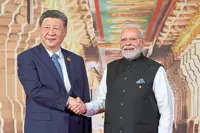
Trump attending a bilateral meeting with Xi during the G20 leaders summit in Osaka, Japan, in 2019. The US president hopes they will meet again soon. — Reuters

IN today’s rocky United States-China relations, uncertainty lingers even if rising tension seems to have paused.
This relates to personalities as much as to their different systems. Misunderstanding the personas and the politics has caused considerable confusion.

Washington-Beijing ties equate very much to Trump-Xi ties on the US side. This translates into Trump’s personal perceptions and capricious impulses on any given day and time of day.

China’s collective leadership emphasises formal procedure and established protocol, however much the President also ultimately decides. These differences tend to work better together than is generally perceived.

Trump’s personality-focused style means only he makes the decisions for his country even if that upsets established institutional norms. China’s approach is to have senior officials do the talking before the President sets the final seal of approval on decisions.

Rising bilateral trade tensions for months, starting to spill over into other concerns, led to a Trump-Xi phone call three days ago. They had not spoken for 20 whole weeks, a long time for the world’s biggest economies whose worsening relations had afflicted global trade and much more.

Many observers were thus tempted to over-interpret the significance of the 90-minute phone conversation and what it signified. It was a significant call, but not in the way many see it.

Optimists call it a breakthrough, while sceptics see it as insubstantial. The reality is that it was no more than what it was – one of several necessary steps in a phased process going forward.

Only four weeks ago, talks in Geneva between senior officials from both countries were said to signal “substantial progress.” They had launched a process as well as exchanged terms for an agreement, both signifying considerable promise for a deal.

Last Thursday’s phone call happened as the next necessary step, given the spiralling tension hurting both sides and all others in between. But it was little more than setting the scene for the next phase: in-person Trump-Xi talks in China which would officially be decisive.

Beijing made clear that the call had been on Trump’s initiative, to which Xi agreed for it to happen at all. This implies that the US is more anxious for a settlement, and that China had graciously assented for trade peace.

All this reflects the reality of the situation going back to before last November’s US election. During his campaign for a second term, Trump pledged that among the first things he would do in office was to reach a trade settlement with China.

However, the caveat was that he had to end the Ukraine war first. Since that is proving profoundly intractable, resolving the trade war and everything else just had to wait.

Trump informally set the establishment of trade peace by the end of last January. It is an urgent matter that the longer it is delayed, the harder it would be to achieve.

It is increasingly clear that the US is more desperate than China to end a trade nightmare of its own making. But instead of mitigating a dire situation, Trump presided over potentially worsening conditions with more trade restrictions and ending foreign student visas.

There is little doubt that the messy trade war as everyone has come to know it will end, and soon. It was never sustainable, properly grounded or rationalised – it never had any future.

Two things are now certain. Trump will portray ending the trade war as a great success, whatever talks may accomplish, and he will claim credit for achieving it.

China may also achieve some gains, such as improved student conditions and establishment of Chinese electric vehicle plants in the US, and clearer limits on its semiconductor imports. Pragmatism however would temper any inclination to trumpet these gains.

For now, achieving an unmitigated breakthrough remains challenging for both Trump and Xi. China has its list of demands, and the US also has its own that surpasses Trump’s personal priorities.

Certain quarters in the US seek to constrain China further on grounds of “security” more than what Trump may deem necessary. The prospective US team’s bottom lines appear still to be variable, such that further delays in negotiations could prove very costly.

Some lessons may be learned from Trump’s first term. Trade impediments on China from January 2018 ran for six months before talks were initiated.

Unforeseen delays stalled agreement with Beijing further, so that the Phase One deal was inked only in January 2020. By then it was too late for the 24-month life of the deal to see much hope of success before November’s election.

Joe Biden won the 2020 election and junked the deal, adding to trade restrictions on China instead. The bar is now higher for Trump to succeed.

Whether a new deal with China, still to be defined and established, can actually succeed now hangs in the balance.

Bunn Nagara is Director and Senior Fellow of the BRI Caucus for Asia-Pacific, and Honorary Fellow of the Perak Academy. The views expressed here are solely the writer’s own.

Get 20% OFF The Star Digital Access

Monthly Plan

RM 13.90/month

RM 11.12/month

Billed as RM 11.12 for the 1st month, RM 13.90 thereafter.

Best Value

Annual Plan

RM 12.33/month

RM 9.87/month

Billed as RM 118.40 for the 1st year, RM 148 thereafter.

Follow us on our official WhatsApp channel for breaking news alerts and key updates!

Next In Columnists

The Battle Royale for Political Control
The incredible star power rising from the East
Make Penang AI plan a bridge for majority
Giants fall, England survive – World Cup quarter-finals take shape
Who shapes global AI rules: Asean-China cooperation role
Why the Johor election is good for Malaysian democracy
Confessions of a durian season sinner
Looming threat to social security
More predictable than the World Cup
America at 250

Others Also Read