The way to lasting peace


Thailand and Cambodia should work towards boundary clarification, the root cause of the recurrent conflicts.

“SAME same but different” is a common catchphrase in Thailand. It is equally popular in Cambodia where the word “psame”, with a silent “p”, means “different” in English.

Compared with the other eight Asean nations, these two neighbours are the closest in terms of culture and the same religion of Theravada Buddhism.

They are also the nearest geographically, sharing a forested and mountainous border stretching 817km.

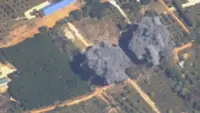
Thailand and Cambodia, which agreed to an “unconditional cease­fire” yesterday after five days of fighting that killed 38 people and displaced almost 300,000, have similar social norms, cuisine and cultural practices that date back to centuries.

An obvious tradition that comes to mind is the Apsara dance, a rich cultural heritage influenced by links to ancient Hindu and Buddhist civilisations.

Although the origin of the dance, depicting celestial nymphs believed to inhabit the heavens, is from Cambodia’s bygone Khmer Empire, it spread to Thailand through historical interaction, making it an iconic part of the kingdom’s culture.

Another area where the countries share a common passion is sports, especially kick-boxing, which is called Muay Thai in Thailand and Kun Khmer in Cambodia.

Ironically, such similarities have led to more conflicts than cooperation.

Over the past decades, it has been a pattern for the two countries to stoke nationalistic fervour through claims of “original” ownership of their cultural heritages and territories.

Paradoxically, the fiercest of these claims centre around what is meant to be divine – an array of 11th century Hindu temples dating back to the Khmer Empire.

These places of worship have been the primary source of animus between the two nations, which have recurrently boiled over into confrontations and bloodshed.

Unlike Cambodia’s more famous Angkor Wat temple complex, built in the early 12th century for the Hindu deity Vishnu, this clutch of shrines located along the Dangrek mountain range have been the flashpoint of conflicts for ages.

The area, also known as the Emerald Triangle, is near the common border of Thailand, Cambodia and Laos.

Disputes over the ownership of this rugged terrain can be traced to a French map drawn in 1907 when colonial France ruled Cambodia. The map placed the Prasat Preah Vihear Temple under Cambodian territory.

Thailand, then known as Siam, accepted this but later argued that it did so under the mistaken impression that the border followed a natural watershed line.

Although the International Court of Justice (ICJ) confirmed Cambodia’s ownership in 1962, Thailand disputed the status of the land around the temple, claiming it was not covered by the ICJ ruling.

The hostilities flared again when Cambodia succeeded in listing Preah Vihear as a Unesco World Heritage site in 2008, resulting in bloody skirmishes.

The area has remained contes­ted even after the ICJ reaffirmed its decision in 2013.

The main temple at the dispu­ted border is the Prasat Preah Vihear dedicated to the Hindu deity Shiva. Its Thai name is Prasat Phra Viharn.

Prasat Preah Vihear is the combination of the words Prasat, Preah and Vihear, which, roughly translated from Sanskrit, mean the “religious offering of a sacred abode”.

The others are Prasart Ta Moan Thom (Prasat Ta Muen Thom in Thai), another Shiva shrine loca­ted about 95km to the west, where the most violent clash over a decade happened last Thursday.

The remaining shrines are Prasart Ta Moan Toch (Prasat Ta Muen Tot in Thai), Prasart Ta Krabey (also Prasart Ta Krabey in Thai) and Chong An Ses (Dan Chong Am Ma in Thai), which is roughly translated as “End of the Ridge”.

There were conflicting claims over which side started the fighting last week – with both countries accusing the other of doing so.

But the latest flare-up could actually be traced to May 28 when a Cambodian soldier was killed in a border clash, after which both sides traded blame and beefed up forces.

According to the Thais, last Thursday’s hostilities began when a unit guarding the Ta Moan Thom shrine heard a Cambodian drone overhead and saw six soldiers moving towards their military positions.

They claimed that Cambodian soldiers opened fire to the eastern side of the temple near their base and fired rockets into a nearby village.

In response, the Thais deployed six F-16 fighter jets and hit two Cambodian military targets.

But Cambodia claimed Thailand used a drone first before opening fire, and that it had “acted strictly in self-defence, responding to an unprovoked incursion by Thai troops who violated our territorial integrity”.

There is relief all around after Cambodian Prime Minister Hun Manet and acting Thai Prime Minister Phumtham Wechayachai agreed to a halt in fighting.

As Prime Minister Datuk Seri Anwar Ibrahim, who hosted the peace talks as the chairman of Asean said, the ceasefire that came into effect on July 29 is a “vital first step towards a de-­escalation and restoration of peace and security”.

The talks were held against the backdrop of US President Donald Trump’s threat to halt trade negotiations with the countries until the fighting stops.

According to a joint statement released after the talks, the foreign ministers and defence ministers of Thailand, Cambodia and Malaysia have been instructed to develop a detailed mechanism for the implementation, verification and reporting of the ceasefire, which would serve as a foundation for sustained peace and accountability.

To prevent future conflicts over their disputed territories, Thai­land and Cambodia should build on the ceasefire agreement with key reforms and institutional mech­anisms to ensure long-term stability.

Bangkok and Phnom Penh should fully utilise the General Border Committee (GBC) and expand its mandate to include clear protocols for de-escalation, incident reporting and cooperative patrols.

A vital step is to address root causes of the recurrent conflicts – legal boundary clarification through cartographic reviews accepted by both parties.

Media consultant M. Veera Pandiyan likes this quote from John Steinbeck: “All war is a symptom of man’s failure as a thinking animal.”

The views expressed here are the writer’s own.

Get 20% OFF The Star Digital Access

Monthly Plan

RM 13.90/month

RM 11.12/month

Billed as RM 11.12 for the 1st month, RM 13.90 thereafter.

Best Value

Annual Plan

RM 12.33/month

RM 9.87/month

Billed as RM 118.40 for the 1st year, RM 148 thereafter.

Follow us on our official WhatsApp channel for breaking news alerts and key updates!

Next In Columnists

The incredible star power rising from the East
Make Penang AI plan a bridge for majority
Giants fall, England survive – World Cup quarter-finals take shape
Who shapes global AI rules: Asean-China cooperation role
Why the Johor election is good for Malaysian democracy
Confessions of a durian season sinner
Looming threat to social security
More predictable than the World Cup
America at 250
Coexistence with wildlife key for public safety

Others Also Read