Weaning from imported rice


It is crucial for Malaysia to act quickly towards striving for 100% self-sufficiency in rice supply instead of continuing to rely on imports.

THE global price of rice has soared to a 15-year high after India, which accounts for 40% of the world’s rice trade, banned exports in July.

The decision has affected half of the world’s eight billion people who eat rice as their staple food.

Last week, Alvaro Lario, head of the UN’s International Fund for Agricultural Development, warned that India’s export ban had raised the risk of political instability in Asia and Africa.

He told Bloomberg that the decision could bring about potential conflict or social unrest, which could be quite dangerous.

“Export bans have a lot of impact, especially on the most vulnerable, by raising prices and having a shock on prices,” he was quoted as saying.

India’s Directorate of Foreign Trade announced the ban on exports of non-basmati white rice on July 20 to ensure adequate supply of white rice for its domestic consumers, and to stem the rise in price, which had increased by 11.5% since last year.

The announcement could not have come at a worse time for global food security.

Three days earlier, Russia had pulled out of the Black Sea Grain Initiative brokered by the UN and Turkey in July 2022.

Under the deal between Russia and Ukraine, which have been at war for the past 20 months, ships carrying food grains were given safe passage from three Ukrainian ports – Odessa, Yuzhny and Chornomorsk.

In return, the UN agreed to help Russia get its food and fertiliser exports to foreign markets.

Ships were inspected by Russian, Ukrainian and Turkish officials before they arrived in Ukraine to ensure they were not smuggling weapons into Ukraine.

With the pullout, Russia also withdrew its safe navigation guarantees in the Black Sea. It justified the decision by saying that the purported supply of grain to countries in need, especially in Africa, had ended up in rich nations instead.

Russia also blamed Ukrainian “provocations and attacks against Russian civilian and military facilities” in the Black Sea, adding that the UN and the Western countries had turned a deaf ear to these incidents.

Both these major events have led to the skyrocketing of food prices worldwide.

In Malaysia, India’s ban on white rice exports led to Padiberas Nasional Bhd (Bernas), which holds the monopoly on rice imports, increasing prices to RM3,200 per metric tonne from the previous RM2,350 – a 36% hike.

As for white rice from Thailand and Vietnam, it was priced at RM2,901.91 per metric tonne. The price of fragrant rice from these countries was also adjusted to RM3,725.68 and RM3,369.96, respectively.

The higher prices led to local consumers scrambling for locally milled white rice, resulting in shortages in many places around the country.

It has also become a hot political issue, as seen during the debate on the 12th Malaysia Plan mid-term review in the recent sitting of the Dewan Rakyat.

To score political points, Kedah Mentri Besar Datuk Seri Muhammad Sanusi Md Nor blamed a “cartel” for the problem, stating that padi farmers remained poor because “cartel” controlled the sector.

With Bernas accounting for 30% of rice imports, he may be partially right. The reality is Malaysia’s self-sufficiency level (SSL) is now only at 65%. It used to be closer to 70% before the Covid-19 pandemic.

Malaysia remains heavily reliant on imports to meet local demand, and among the immediate solutions proffered by the government is to negotiate with India to release export restrictions to Malaysia.

Agriculture and Food Security Minister Datuk Seri Mohamad Sabu said on Monday that he hoped to hold a meeting with India’s Agriculture and Farmers’ Welfare Minister as soon as possible.

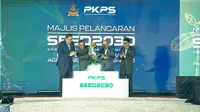
Last Thursday, I was invited to attend the 40th anniversary of PKSJ Fertilisers Sdn Bhd, a company which has won five Star Outstanding Business Awards (SOBA) since 2016 for achievements in innovative technologies for agriculture.

The company, which started out as a supplier of specialised fertilisers for oil palm, has expanded into soil repair and foliar technologies for rice production.

Among those whom I was fortunate to meet at the event was Prof Dr Muhamad Shakirin Mispan of Universiti Malaya’s Institute of Biological Sciences.

A rice expert, he told me Malaysia’s continued reliance on imports exposed the country to the risk of a potential food crisis.

He said it was vital for the country to act quickly towards striving for 100% SSL in rice supply.

“It is not an unrealistic target. To achieve this, the government needs to adopt two key strategies – improved rice management and increased productivity of farmers.

“There needs to be more efficient management of the country’s granaries and optimum use of land for padi cultivation,” he said, adding that currently, about 10% of the padi land is not fully cultivated.

Shakirin said steps must be taken to ensure all padi fields are utilised throughout the year to increase the overall rice yield, giving the success of farmers in Sekinchan, Selangor, as an example and a model to follow.

He said the Agriculture and Food Security Ministry’s use of technology and management should be expanded throughout the country.

The expert also proposed the consolidation of smaller padi fields with targeted assistance to farmers to standardise planting management, control input costs and enable better monitoring of typical fields that are mostly owned by ageing farmers with few workers.

“Increasing the productivity of farmers is the key to achieving higher SSL rates. We can raise the yield from the current four tonnes per acre to eight, or at least six.

“Farmers should be given more comprehensive training, and awareness programmes and closer monitoring,” he said.

Among his other proposed strategies to increase yields is to use the System of Rice Intensification (SRI) method by changing the management of seeds, soil, water and nutrients.

The introduction of premium rice varieties would also help farmers diversify and increase their incomes, he said.

Media consultant M. Veera Pandiyan likes this Japanese proverb: “In a grain of rice, the universe resides.” The views expressed here are the writer’s own.

Get 20% OFF The Star Digital Access

Monthly Plan

RM 13.90/month

RM 11.12/month

Billed as RM 11.12 for the 1st month, RM 13.90 thereafter.

Best Value

Annual Plan

RM 12.33/month

RM 9.87/month

Billed as RM 118.40 for the 1st year, RM 148 thereafter.

Follow us on our official WhatsApp channel for breaking news alerts and key updates!

Next In Columnists

The incredible star power rising from the East
Make Penang AI plan a bridge for majority
Giants fall, England survive – World Cup quarter-finals take shape
Who shapes global AI rules: Asean-China cooperation role
Why the Johor election is good for Malaysian democracy
Confessions of a durian season sinner
Looming threat to social security
More predictable than the World Cup
America at 250
Coexistence with wildlife key for public safety

Others Also Read