Vital to strive for gender equality


FOR many Malaysians, it seems natural that there will be ever improving gender diversity across organisations and sectors.

Six out of eight of the senior leadership team at the Institute for Democracy and Economic Affairs (Ideas) are women, in addition to the CEOs or chairpersons of public listed companies, charitable foundations, musical organisations and academic institutions where I serve.

In many places, a culture of seeking diversity is rightfully ingrained with recruitment, training and promotions planned a decade in advance to ensure diversity at all levels.

But in other places, diversity is seen merely as box-ticking, doing the minimum to escape being criticised.

Still, the threat of being audited by civil society and the media should help shift attitudes in line with the evidence that diversity leads to greater innovation and productivity.

Yet our political institutions have a long way to go, with less than 15% of MPs in the Dewan Rakyat being women.

Few women are candidates in the first place: in these impending Johor state election, there are 37 women out of the total 239 candidates vying for 56 seats.

Much has to do with candidate selection, where across parties it is still party leaders calling the shots.

Democratising candidate selection may thus increase diversity and improve accountability. Although anti-hopping legislation is imminent, this also provides resistance to party-hopping, since MPs will feel greater loyalty to party members, instead of just the party leader.But, as is being pointed out in recent times, gender equality is no guarantee of performance or integrity. Quotas particularly are denounced when individuals appointed through them fall short of expectations.

That is why long-term, sustainable changes to policy are needed.

Culture is undoubtedly one key element in forming necessary attitudes: examples from the home, in wider society and popular media.

Another is education, where in recent years we have seen cases of bullying against girls, and horrifying allegations of sexual abuse by teachers and other figures in authority.

Yet, it has been noted for some years that more women than men enrol in Malaysian universities, only further highlighting the absurdity of the political imbalance, the continued existence of the gender pay gap and raising broader questions of how intelligence and merit are rewarded in our society.

On social media, however, transparency on salaries - thanks to the “Malaysian Pay Gap” Instagram account - is fuelling fresh debates about employer practices and employee expectations.

Often, reforms sought for the population at large have a particular impact on women: for example, Ideas recently argued that the minimum wage should rise every two years, which would especially benefit low-income women caring for families.

More broadly, Malaysian civil society owes a debt of gratitude to pioneering activists and advocates who provide the earliest examples of successful civil society organisation.

At the time of Merdeka the first Raja Permaisuri Agong established and supported organisations such as the Muslim Women’s Welfare Council, Women’s Institute, the Girl Guides Association and others.

Today, Tunku Kurshiah is best known through the school bearing her name which has produced innumerable women leaders.

One clear early example of direct legislative change from civil society was the Domestic Violence Act 1994, through the efforts of coalitions such as the Joint Action Group for Gender Equality.

Similarly, at the height of the HIV/AIDS epidemic, although 99% of those infected were men, it was women’s organisations which highlighted that these men had wives, girlfriends and children who would also be affected as well.

And these days, it is groups like Family Frontiers which have helped secure the hugely significant milestone that mothers are now able to pass on their Malaysian citizenship to their children.

I would hope that the work we do at Ideas towards a Malaysia based on liberty and justice within our pillars of Economics & Business, Public Finance, Democracy & Governance, and Social Policy pays homage to the trailblazing organisations that paved the way for research-based advocacy, and so often for causes related to women.

Some critics denounce the “liberalism” of these efforts, with human rights and democracy regarded as codewords for Western imperialism.

To them I say, talk to the people whose lives have been improved because of changes to the law. And of course, do not forget that we have our own local traditions of democracy and female empowerment, as the Adat Perpatih of Negri Sembilan and its Minangkabau antecedents as proof from centuries before.

Hopefully, it will not be centuries more before gender equality can be achieved, through coalitions among civil society raising pressure and awareness among political parties, the corporate sector, and the population at large.

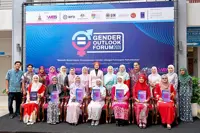
This article is adapted from the writer’s speech at the ADFIM Women’s Summit on March 8, 2022. The views expressed here are the writer’s own.

Get 20% OFF The Star Digital Access

Monthly Plan

RM 13.90/month

RM 11.12/month

Billed as RM 11.12 for the 1st month, RM 13.90 thereafter.

Best Value

Annual Plan

RM 12.33/month

RM 9.87/month

Billed as RM 118.40 for the 1st year, RM 148 thereafter.

Follow us on our official WhatsApp channel for breaking news alerts and key updates!
gender , women , culture

Next In Columnists

Federal funds and fiscal capacity
Chinese wind blowing in Johor
The incredible star power rising from the East
Make Penang AI plan a bridge for majority
Giants fall, England survive – World Cup quarter-finals take shape
Who shapes global AI rules: Asean-China cooperation role
Why the Johor election is good for Malaysian democracy
Confessions of a durian season sinner
Looming threat to social security
More predictable than the World Cup

Others Also Read