




EVERY Malaysian has done it. You bite into a rambutan, the sweet flesh gives way and suddenly you've bitten into that wrinkly, woody seed in the middle.
Maybe you have even chewed on one out of curiosity, or bitten into it while trying to get the last bit of flesh off.
Most of us have never given the seed a second thought beyond spitting it out so you can start on your next rambutan.
But have we all been unwittingly toying with danger? Are rambutan seeds actually poisonous?
Verdict:

TRUE
If you have ever bitten into a rambutan seed and wondered why it tastes so awful, here is your answer: the seed is trying to stop you from eating it, and it has the chemistry to back it up.
Raw rambutan seeds contain a cocktail of compounds that plants produce specifically to discourage animals from snacking on their offspring.
The main culprits are its saponins, tannins and alkaloids, all of which are present in measurable quantities across every variety of rambutan seed that scientists have tested.
Saponins are the ones that cause trouble in your gut.
They irritate the lining of the digestive tract, which can lead to nausea, vomiting and diarrhoea if consumed in sufficient quantities.
Tannins are responsible for that intensely bitter taste that makes you regret ever putting the seed in your mouth in the first place.
They also interfere with your body's ability to absorb nutrients.
The alkaloids within rambutan are the most interesting of the three. In sufficient doses, they produce narcotic effects including drowsiness, stupor and pain suppression.
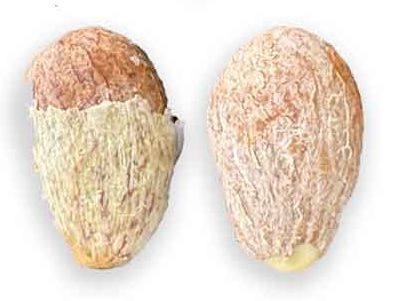
A study published in Food Chemistry examining 11 varieties of rambutan seed found saponins and tannins present in every single one. The concentrations ranged from 14.27 to 18.96 milligrams of saponin and 4.40 to 26.68 milligrams of tannin per 100 grams of seed.
Julia F. Morton, whose reference text "Fruits of Warm Climates" remains one of the most widely cited botanical authorities on tropical fruit, described rambutan seeds as "bitter and narcotic" and noted they are "reputedly poisonous in the raw state."
A peer-reviewed paper on the bioactive compounds of rambutan confirmed that raw seeds contain potentially toxic compounds requiring effective detoxification before they can be safely consumed.
So the toxicity is real. The rambutan seed is not just unpleasant to eat. It is actively hostile to being eaten.
Now for the BUT, which is important before anyone starts panicking about that seed they chewed on last Friday.
If you have ever bitten into a rambutan seed out of curiosity, you probably noticed the bitter taste and spat it out immediately.
That bitterness is the tannins doing exactly what evolution designed them to do: making you stop.
A single bite is extremely unlikely to deliver enough saponin or alkaloid to cause anything worse than a foul taste and perhaps a mildly unhappy stomach.
The real risk would come from deliberately eating multiple raw seeds, which almost nobody does because they taste like a punishment.
The seed's own terrible flavour is, in a sense, its best safety mechanism.
Heat changes the picture entirely. Morton noted that roasted rambutan seeds are consumed in the Philippines, where the roasting process neutralises much of the toxicity.
A study published in Food Chemistry found that fermentation reduced saponin content in rambutan seeds by 67% and tannin content by 47%.
A separate toxicity study tested rambutan seed fat and oil extracts on laboratory animals at doses up to 5,000 milligrams per kilogram of body weight and found them to be "practically non-toxic."
So cooking, roasting or fermenting the seed strips out the very compounds that make it dangerous raw.
The rambutan is not alone in this trick, either.
Packing seeds with toxic compounds is something of a family tradition among the Sapindaceae, the soapberry family to which the rambutan belongs.
Lychee, one of the rambutan's closest and most popular relatives, is actually the more dangerous cousin.
Lychee seeds contain not just saponins but two specific toxins called methylenecyclopropyl-alanine and methylenecyclopropyl-glycine, which can cause blood sugar to drop so severely it leads to seizures, coma and in extreme cases death.
These compounds have been linked to outbreaks of acute encephalitis syndrome in children in India who consumed large quantities of unripe lychees on empty stomachs.
By comparison, the rambutan seed's saponins and tannins look relatively tame.
Longan, another familiar face in the Malaysian fruit basket, also contains saponins in its seeds.
The saponin content is high enough that longan seeds and rind have traditionally been used as shampoo in parts of Asia, since saponins produce foam when agitated in water.
However, toxicity studies on longan seed extract published in Food and Chemical Toxicology found no adverse effects in laboratory animals even at repeated doses over 13 weeks, suggesting the saponin levels in longan seeds are lower and less harmful than in rambutan.
Pulasan, the rambutan's closest Malaysian relative and a fruit many Malaysians consider superior in sweetness, is the odd one out.
Its seeds are reportedly edible when raw and are sometimes compared to almonds in taste, making it possibly the only member of the family whose seeds did not get the memo about being hostile to anything that tries to eat them.
There is even serious scientific interest in what rambutan seeds might be good for once the toxicity is dealt with.
They contain around 39% crude fat, and researchers have found that the fat has a melting profile similar to cocoa butter, leading to studies on whether processed rambutan seed fat could be used as a cocoa butter substitute in confectionery.
A trypsin inhibitor isolated from rambutan seeds, published in the journal Applied Biochemistry and Biotechnology, showed anti-tumour properties and the ability to inhibit HIV-1 reverse transcriptase in laboratory settings.
The same seed your tongue rejected may one day have a second life in medicine or chocolate.
For most Malaysians working through a pile of rambutans on a weekend afternoon, the practical takeaway is reassuringly simple.
Enjoy the fruit but spit out the seed.
If you bit into one and the taste made you regret your life choices, that is the rambutan's defence system working exactly as intended. It has been perfecting that trick for millions of years, and frankly, it is very good at it.
Sources:
1. https://www.sciencedirect.com/
5. https://link.springer.com/


