ALOR GAJAH: With pupils in national-type Chinese primary schools (SJKCs) expected to learn about 2,800 Chinese characters throughout their six years of primary education, MCA president Datuk Seri Dr Wee Ka Siong says sufficient classroom time is essential to help them master the language.
He said writing a good composition alone required a command of about 2,500 characters, making it important for pupils to have adequate exposure to Chinese through regular lessons.
Unlike alphabet-based languages, where words can be learnt through spelling, he said learning Chinese required pupils to recognise and remember individual characters and build their vocabulary.
"Chinese is not simply about learning square-shaped characters. It encompasses knowledge of astronomy, geography and logic.
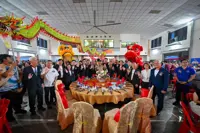
"All these can be learnt through the Chinese language," he said at a dinner hosted by three MCA branches in Machap here on Wednesday (Nov 4) night.
Under the proposed 2027 curriculum, Chinese-language teaching periods will be reduced from 12 to 10 weekly for Years One and Two, from 12 to nine for Year Three, from 10 to nine for Year Four and from 10 to seven for Years Five and Six.

Dr Wee said the reduction would mean less time for pupils to engage with the language, potentially affecting their vocabulary and writing skills.
Drawing on his experience as deputy education minister during the 2010 curriculum review, he urged Education Minister Fadhlina Sidek and her deputy Wong Kah Woh to explain how teaching periods would be allocated across all six years of primary education and which other subjects would be affected.
He said the ministry should provide the complete curriculum framework rather than offer a temporary solution by restoring 12 Chinese-language periods for certain year groups.
"We want to see how you intend to arrange the entire six years. How many English-language periods are being added? How many are being reduced? Which subjects are affected?
"We want to see the complete picture, not just an arrangement for one year," he said.
Dr Wee also questioned the ministry's decision to leave it to individual headmasters to decide whether additional Chinese-language periods should be allocated.
He warned that this could put headmasters in a difficult position, particularly when they were transferred or replaced, or when education inspectors questioned their allocation of teaching periods during school inspections.
"Having served as deputy education minister, I can tell you that this is dangerous.
"If it is 12 periods, then it is 12. If it is 10, then it is 10. There should be no ambiguity," he said.
Recalling the previous curriculum review, Dr Wee said he had conveyed the concerns of Chinese education groups, including Dong Zong and Jiao Zong, to the Education Ministry.
He cited a proposal to introduce Malaysia Negaraku, a subject intended to foster patriotism, national unity and understanding of Malaysia's multiracial society, which was to be taught in Bahasa Malaysia across all primary school streams.
Dr Wee said he opposed the proposal, maintaining that subjects other than Bahasa Malaysia and English should continue to be taught in Chinese at SJKCs.
"As the MCA representative, I made it clear to the Education Ministry that this was our bottom line," he said.
He said the proposal was eventually dropped after the matter was raised at Cabinet level.
Dr Wee also questioned why the full details of the 2027 curriculum had not been adequately explained to the public and expressed support for the demands made by 15 Chinese education organisations, describing them as reasonable and legitimate.
The issue came to light following the circulation of an implementation brief for the 2027 curriculum, which showed Chinese language periods for Year One pupils being reduced from 12 to 10 weekly.
Wong subsequently said the allocation was a minimum, with headmasters allowed to add periods.
The ministry had also reached an understanding with Chinese primary school heads' organisations to prioritise two additional periods for Chinese lessons.
However, Chinese education groups, including Dong Zong and Jiao Zong, raised concerns that leaving the additional periods to individual schools would not guarantee consistent teaching time nationwide.
They called for at least 12 weekly periods to be formally guaranteed under the new curriculum.