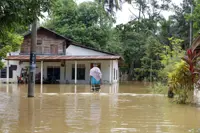
PETALING JAYA: Following nearly two months of haze, Malaysia is now bracing for a wet year-end with the onset of the northeast monsoon, raising the risk of heavy rain, floods and landslides.
As authorities prepare for possible natural disasters, the government is conducting a year-long study to determine whether Malaysia requires dedicated legislation on disaster risk reduction (DRR).
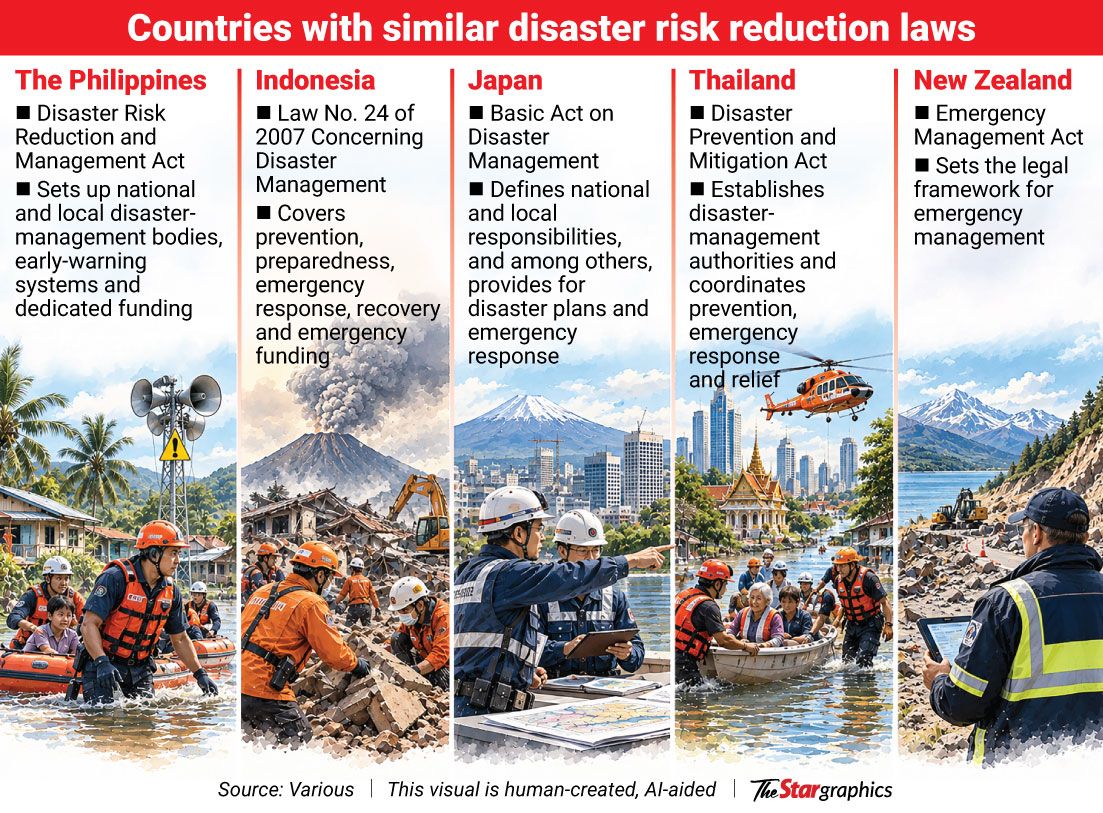
Experts say the proposed law should clearly define agency responsibilities, require risk assessments and provide dedicated funding for prevention.
“It must clearly define what the Federal Government, state governments, local authorities, and government agencies must do before, during, and after a disaster,” said Universiti Utara Malaysia Disaster Management Institute director Dr Chong Kai Lin.
She said the proposed Act should cover disasters such as floods, landslides, storms, droughts, haze, earthquakes, disease outbreaks and even technological accidents.
“There should be no confusion over which agency leads, who issues warnings, who orders an evacuation and who provides assistance,” she said.
She proposed that the Act require authorities to take risk information into account when approving development projects.
“Hazard maps should not remain as reports kept in government offices but instead guide decisions on where houses, schools, hospitals, roads and other important facilities can be built.
“We should not continue approving development in unsafe areas and then depend on rescue teams and evacuation centres when disaster strikes,” she said.
Chong said the Act must provide stable funding for prevention and preparedness.
“The use of disaster funds should be reported transparently so the public can see whether the money has improved safety and preparedness,” she said.
She said the law should also support community-based disaster risk management, community emergency response teams, school preparedness programmes and community training.
Chong said regular reporting and reviews should also be mandated, with agencies required to report on their progress, spending and level of preparedness.
Universiti Teknologi Malaysia’s (UTM’s) Dr Khamarrul Azahari Razak said the proposed Act should be backed by adequate funding, local capacity, enforceable standards and public accountability.
Khamarrul Azahari, a senior research fellow at UTM’s Disaster Preparedness and Prevention Centre, said the Act should require risk assessments and provide dedicated funding mechanisms.
“This includes predefined national annual budgets for pre-disaster mitigation and contingency funds for sudden disasters.
“There must also be explicit statutory rights protecting vulnerable groups, including women, children, Orang Asli and the disabled,” he said.
He said the Act should also promote risk-informed development by linking risk assessments to land-use decisions, infrastructure approvals and public-private DRR investments.
“There must be a ‘Whole-of-Society’ clause explicitly formalising roles and funding rights for local non-governmental organisations, indigenous groups, child-friendly and women-led community resilience networks.
“Risk maps, national infrastructure hazard ratings and localised evacuation procedures must be mandated to undergo comprehensive updates every three to five years,” he said.
Prof Dr Edy Tonnizam Mohamad, a distinguished fellow at UTM’s Centre of Tropical Geoengineering, said the proposed Act is a bold move requiring strict enforcement. “The Act alone may be insufficient to handle disaster issues. It is essential to ensure agencies remain active and proactive,” he said.
Deputy Prime Minister Datuk Seri Dr Ahmad Zahid Hamidi previously said the study’s findings will shape the future of national disaster management, potentially paving the way for a dedicated Disaster Risk Reduction Act.