PETALING JAYA: Separate state elections have become the new political reality in Malaysia, and the trend is probably here to stay, say analysts.
The 12th General Election (GE12) in 2008 was probably the beginning of the trend, as it resulted in significant political changes, particularly the change of government in several states.
This development gave state administrations greater incentive to call for elections separately from general elections, says political analyst Prof Dr Azizuddin Sani.
The trend became even more pronounced after GE14 in 2018, which saw the formation of a unity government comprising several political parties.
Azizuddin said the country’s political dynamics changed after GE15 in 2022 as there was no longer a single dominant political party.
“There’s an element of strategy among political parties. They believe they have a better chance of winning state elections if they are held separately.”
Fellow analyst Azmi Hassan, of Akademi Nusantara, said political parties and coalitions now realise that it has become harder to form governments on their own, at both federal and state levels.
State governments would therefore be inclined to call elections according to their own political interests, particularly when their political arrangements differed from those at the federal level.
“States will seek to dissolve their assemblies according to their own timetable and to their own advantage.”
He cited Johor, Melaka and Negri Sembilan as examples of how state-level considerations could shape election timing.
Melaka goes to the polls on Nov 14, while Negri Sembilan has held two state elections since GE15.
Meanwhile, Azizuddin said there was no guarantee that states like Kedah, Selangor, Penang, Kelantan and Terengganu would seek to hold their next polls simultaneously with GE16.
Any decision would depend on political circumstances in each state, including whether simultaneous polls could improve a party’s chances of winning.
He does not foresee a return to a more synchronised election cycle soon, unless a single party can regain dominance at both federal and state levels.
“Unless we have one party that dominates at the federal level and in almost all the states, I think we will continue to see separate state elections,” he said.
On whether frequent elections could lead to voter fatigue, Azizuddin said the phenomenon could happen if polls are held close together.
However, most Malaysians are willing to go to the polls twice in any cycle.
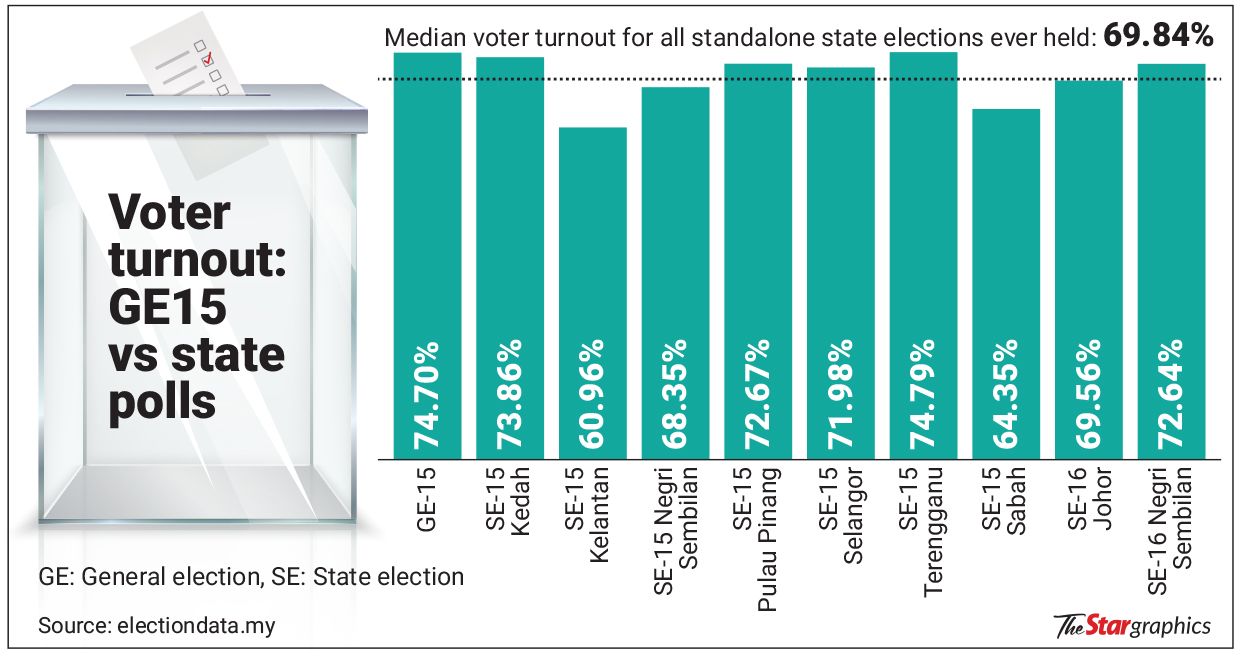
He noted that voter turnout in state elections was generally lower than in general elections but pointed out that some state polls drew a relatively high turnout.
This, he added, suggested that election fatigue was not the only factor affecting participation.
“Voters in Johor, Negri Sembilan and Melaka, for instance, had many reasons to participate in their respective state elections because the outcomes would determine the political direction of their state governments.”
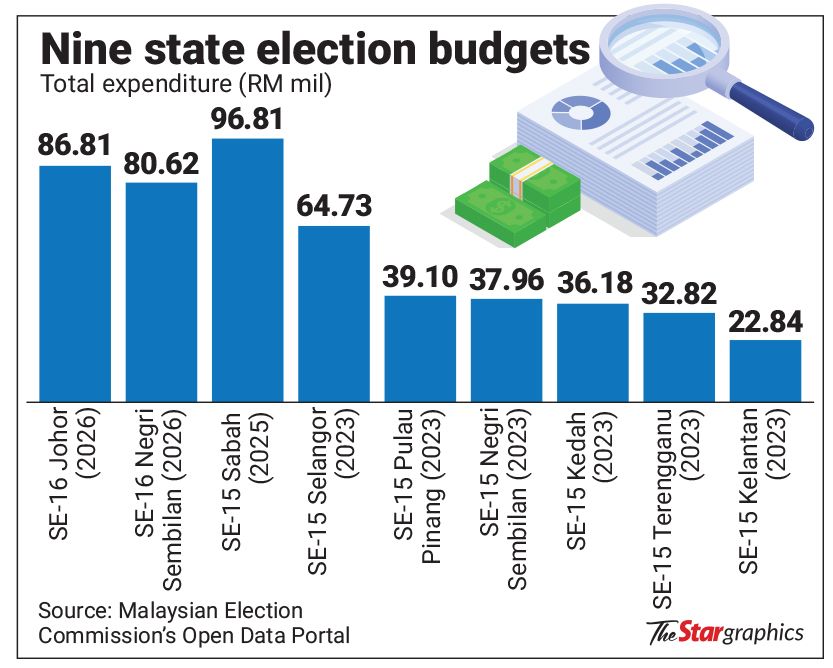
Azizuddin also highlighted the financial implications of holding elections separately, saying political parties incurred substantial campaign expenses beyond the official costs of administering an election.
Spending on campaign materials, publicity and transporting voters could add to the overall cost, although the full amount was difficult to quantify.
While synchronising state and federal elections could reduce some of these expenses, he said political parties were more likely to prioritise their chances of winning than potential savings.