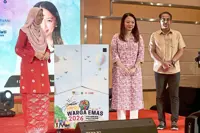
PETALING JAYA: Monthly withdrawals under the Employees Provident Fund’s (EPF) i-Emas scheme should be tailored according to individual needs, where retirees are given flexibility to take money out for genuine emergencies.
Consumer finance expert Prof Dr Mohamad Fazli Sabri said setting a fixed amount would not work for everyone.
“A retiree who owns a fully paid-off home and has other income will have different needs from someone who is renting, supporting a spouse or receiving regular medical treatment,” said the Universiti Putra Malaysia Human Ecology Faculty dean.
Fazli said i-Emas, the rebranded monthly payment option under EPF’s Age 55 and Age 60 Withdrawal, could act as a “self-funded monthly salary” and help retirees budget for food, utilities, transport and healthcare.
Under the scheme, eligible members can receive at least RM100 monthly, or RM1,200 yearly, for at least 12 months or until age 100.
He said withdrawal flexibility should be offered for emergencies such as medical treatment or essential repairs after a disaster, adding that there should not be a withdrawal cap for such cases.
“RM8,000 represents one-fifth of a RM40,000 balance, but only 2% of a RM400,000 balance,” he said, adding that the same amount could have different consequences for the financial security of different people.
He suggested that the retirement fund provide information detailing the remaining balance, its impact on future monthly income and how long savings might last – before a withdrawal is made.
He said monthly withdrawals would allow the retiree “predictable” cash flow, while the savings that remain in the EPF account would continue to earn annual dividends.
However, he cautioned that dividends may not fully offset withdrawals and one should not assume that the rates would not change in the future.
Inadequate savings remain a concern.
“Dividing a small balance into monthly payments does not automatically make it sufficient. For example, RM60,000 withdrawn at RM1,000 per month would last five years, excluding dividends and other withdrawals,” he said.
He said the purchasing power of retirees would be affected and they would have to budget.
Retired accountant Lim Poh Tsuan, 62, from Subang Jaya said the i-Emas was a good idea, especially for retirees who need a steady monthly income to cover their daily expenses, but contributors should be given the option to withdraw money in the event of an emergency or urgent family matters.
“We should be able to manage our own savings, especially after working so hard for so many years. The good thing about i-Emas is that we can receive money every month without worrying too much about spending all our savings at once.
“But, the amount must be enough to cover basic needs. If the monthly payment is too small, it may not help much, especially with the rising cost of living.
“So, I think a combination of monthly payments and flexible emergency withdrawals would be the best option,” she added.