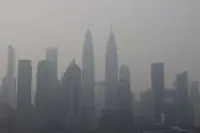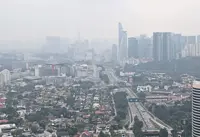
PETALING JAYA: Indonesia cannot be taken to court for the haze – but the companies responsible can.
Malaysia, Malaysian companies or individuals can sue those responsible for causing the haze, say senior lawyers.
“To establish liability and claim for damages, they must establish an evidentiary link between the companies and individuals responsible and the economic or health damage,” Datuk Seri M. Ramachelvam, co-chairperson of the Bar Council Civil Law and Law Reform Committee.
“Malaysia cannot take Indonesia to the International Court of Justice (ICJ) under existing laws,” he said.
Even the 2002 Asean Agreement on Transboundary Haze Pollution (AATHP), which is legally binding on member states, has no enforcement mechanism.
“Article 27 of agreement states that any dispute on the application or compliance with the Agreement or any Protocol thereto shall be settled by consultation or negotiation,” he said.
Senior lawyer Salim Bashir also said Malaysia cannot directly sue a sovereign nation like Indonesia, but it could resort to bringing the disputes to the ICJ .
“However, the ICJ will only hear disputes when states have accepted its jurisdiction through agreement or clauses.
“The AATHP has no specific clauses on the consequences of breach and whether the member countries, including Malaysia and Indonesia, can resolve their disputes through ICJ.”
Lawyer Rajesh Nagarajan said no state has ever sued another over haze.
“The realistic legal battlefield is the companies, not the state,” he said.
Senior lawyer Datuk Dr Baljit Singh proposed that Malaysia tackle this issue with a combination of legal preparedness, scientific evidence and regional diplomacy.
He said the government should strengthen the collection and preservation of evidence concerning the origins of fires, the movement and concentration of pollutants, the effectiveness of preventive measures, and the resulting health, economic and environmental damage.
He said Malaysia should make full use of the Asean framework to demand timely information-sharing, effective preventive action and greater accountability from the relevant states.
Asean, he said, should also consider strengthening its existing framework by developing clearer compliance procedures, more effective dispute resolution and practical arrangements for assessing and compensating proven transboundary damage.
“The principal difficulty is the challenges of jurisdiction, proof, attribution and enforcement. Malaysia should not regard compensation as an automatic entitlement whenever haze affects its territory,” he said.