



GEORGE TOWN: When a major cholera outbreak struck Penang island in 1819, little was known about the disease or how it spread.
Many suffered severe diarrhoea and vomiting, leading to rapid dehydration, shock and death.
Some turned to temples for divine intervention, believing paper talismans could protect them from the disease.
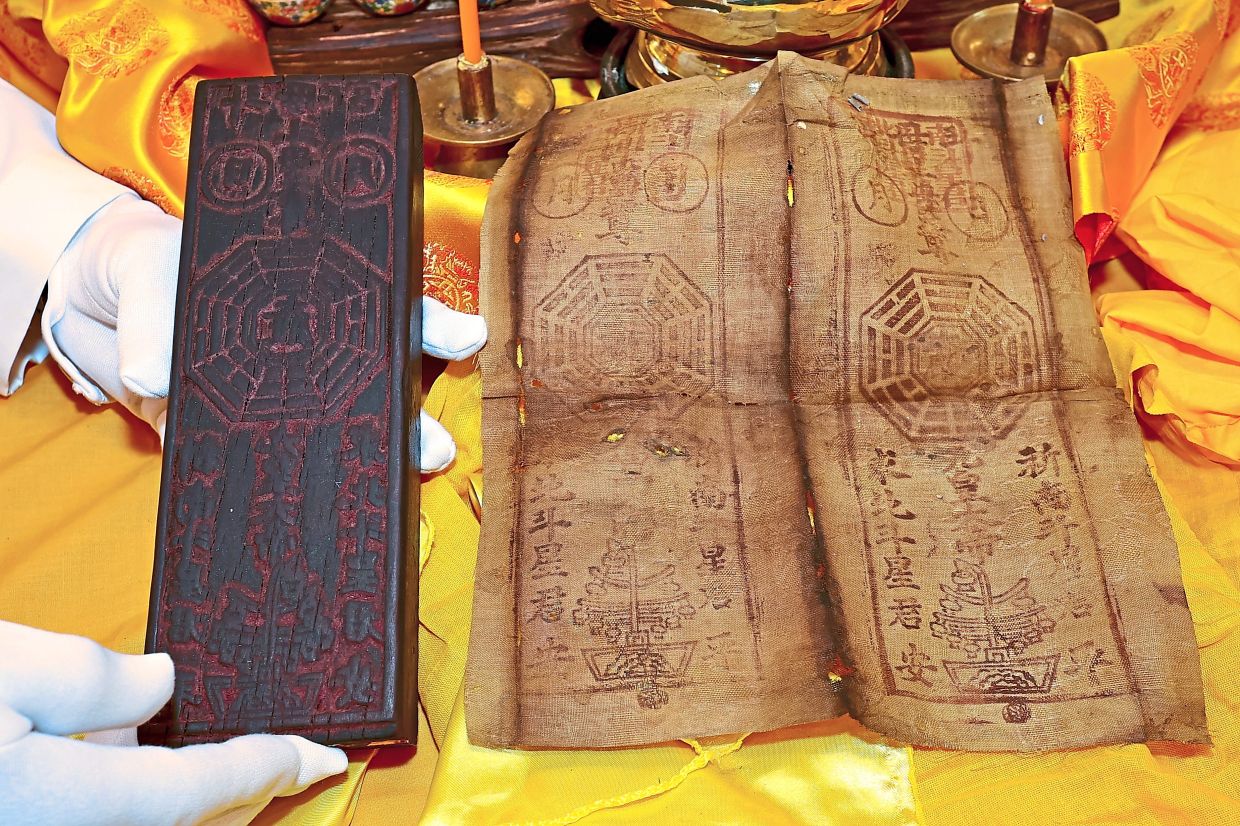
Yesterday, a wooden seal once used to stamp the talismans was among the historical artefacts unveiled at Hong Kong Street Tow Boh Keong Temple on Jalan Cheong Fatt Tze.
Temple trustee Datuk Seri Choot Ewe Seng said the seal, which is more than 200 years old and about the size of a brick, was brought to Penang by early migrants from Fujian province, China.
It was later entrusted to Qiu Macheng, an early custodian of the Nine Emperor Gods tradition in Penang.
Choot said the temple is dedicated to Dou Mu, a deity revered in Taoism as the divine mother of the Nine Emperor Gods.
“We believe the seal was used during the early years of the Nine Emperor Gods tradition in Penang, including around the time of the major cholera outbreak in 1819.
“At that time, people did not fully understand cholera or how it spread, and many believed the talismans had special powers to protect them from the disease.
“The seal was used to stamp cloth talismans for devotees to keep as blessings. Paper talismans bearing its mark could also be burned, mixed with water and drunk as part of religious rituals.
“They also practised vegetarianism and placed importance on cleanliness during the Nine Emperor Gods Festival,” he said during a press conference at the temple yesterday.
Choot said the original seal, regarded by the temple as its first-generation seal, is now worn and no longer used.
He said its design had been updated over the years, with the temple now using its sixth-generation seal, which is simpler.
As the temple prepares for its 184th Nine Emperor Gods Festival, Choot said the original seal and a cloth talisman bearing its impression would be displayed throughout the festival.
Another historical item, a ceremonial cloth banner known as chai in Hokkien, has also been restored and will be displayed during the festival.
Measuring 91cm by 200cm, it underwent six months of conservation work from May to September this year.
Choot said the work included documentation, cleaning, stabilisation and framing, as well as repairing damaged threads and securing the fragile textile to an additional support layer.
The nine-day festival, popularly known as Kew Ong Yeah in Penang Hokkien, begins tomorrow, the first day of the ninth lunar month.
At the same time, the Hindu community will celebrate Navarathiri, a festival dedicated to three Hindu goddesses – Durga, Lakshmi and Saraswathi.
Derived from the Sanskrit words nava, meaning nine, and rathiri, meaning night, the festival spans nine nights, during which devotees pray to the goddesses and observe a strict vegetarian diet.
According to Malaysia Hindu Sangam Penang Council, it will run from Sunday to Oct 19, with major celebrations and pujas continuing through Oct 20.
