WHEN the Mercedes-AMG PETRONAS Formula One (F1) Team lined up in Melbourne for the first race of 2026, one car on the grid carried more than a driver and an engine – it carried a fuel that had not existed when the new regulations were written.
It was the first time the team’s Advanced Sustainable Fuel (ASF), developed by PETRONAS, would be put to the test in competition.
The air of unpredictability surrounding the season left many questions, with no one knowing who would turn out on top.
The Mercedes-AMG PETRONAS F1 team ended up taking both first and second place in the opening two races in Australia and China.
Two-thirds into the season, the team has won 11 out of 16 races and leads the championship.
The result reflects years of shared work between engineers in Kuala Lumpur and at the team’s UK headquarters in Brackley and Brixworth – a relationship that both sides insist goes well beyond a logo on a car.
A partnership built on trust
For Mercedes-AMG PETRONAS F1 team principal and chief executive officer Toto Wolff, the story starts with people, not podiums.
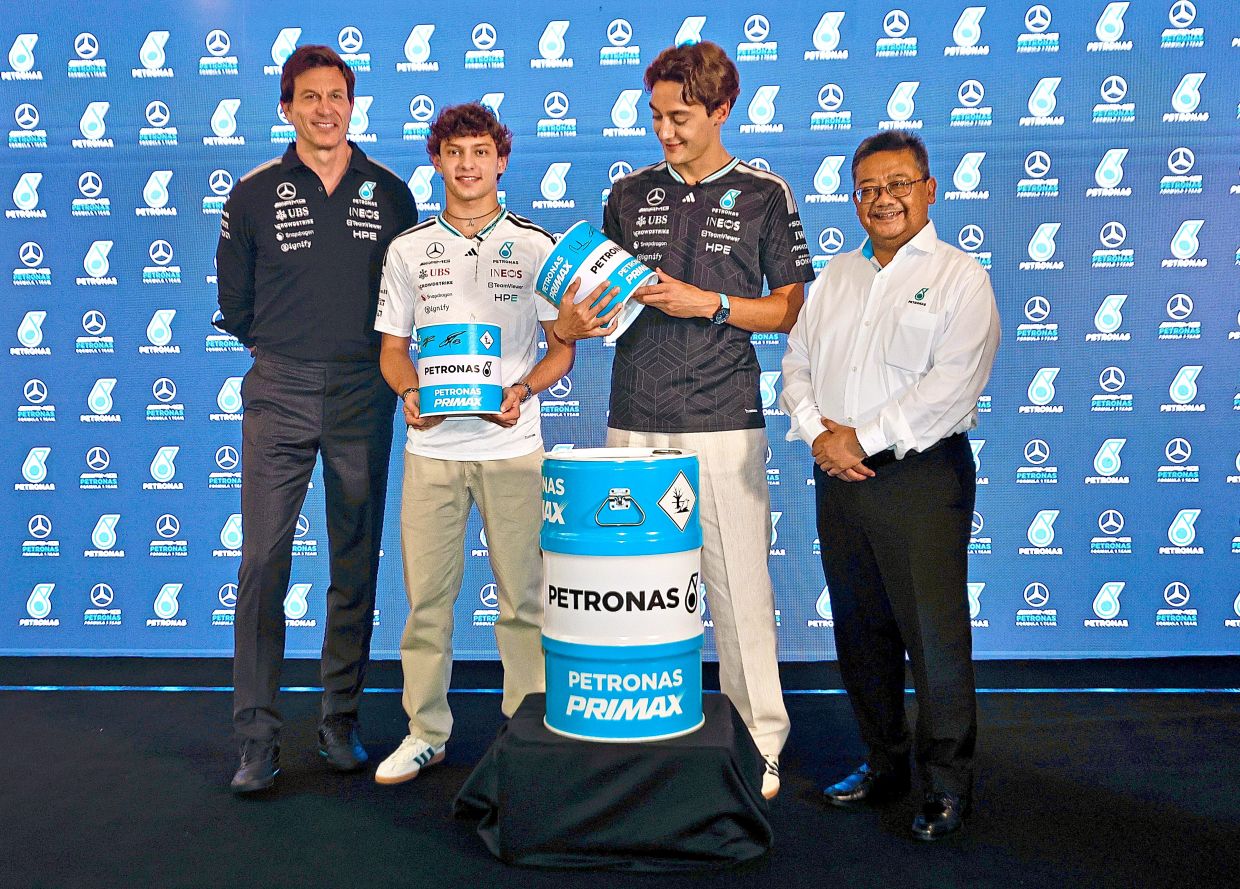
In an interview, he shared that PETRONAS has been on board since Mercedes joined F1 in 2010, and he sees the relationship as a model for how partnerships should work.
“The partnership that we have amongst ourselves is a testament, or blueprint, to how good and successful relationships can be,” he said.
“When we look back at our success – we’ve won more than 130 Grands Prix since we’ve partnered.
“We have the record for the most consecutive championships in that time, the record for championships, the most pole positions, the most front row lockouts, the fastest laps – and we’re leading the championship this year with this groundbreaking ASF.”
Asked about the most significant moment in that partnership journey, Wolff does not point to a trophy; he points to the friendships and the trust built with PETRONAS over the years, which he calls the most fundamental basis of success.
The records, he said, flow from that.
Despite the two names being almost synonymous now in F1, Wolff shared that the relationship began at a very different place.
“This is not a sponsorship relationship; it started as a marketing partnership and is now a technical partnership. But through the years, it has turned almost into an integrated organisation – you wouldn’t think of the Mercedes-AMG F1 team without PETRONAS,” he said.
In his view, three key providers underpin the team’s success: the Mercedes engine team (Brixworth), Mercedes chassis team (Brackley) and PETRONAS fuel technology team (KL).
PETRONAS delivers the fuel and lubricants, while the chassis and power unit teams build the car, motor and electrical systems.
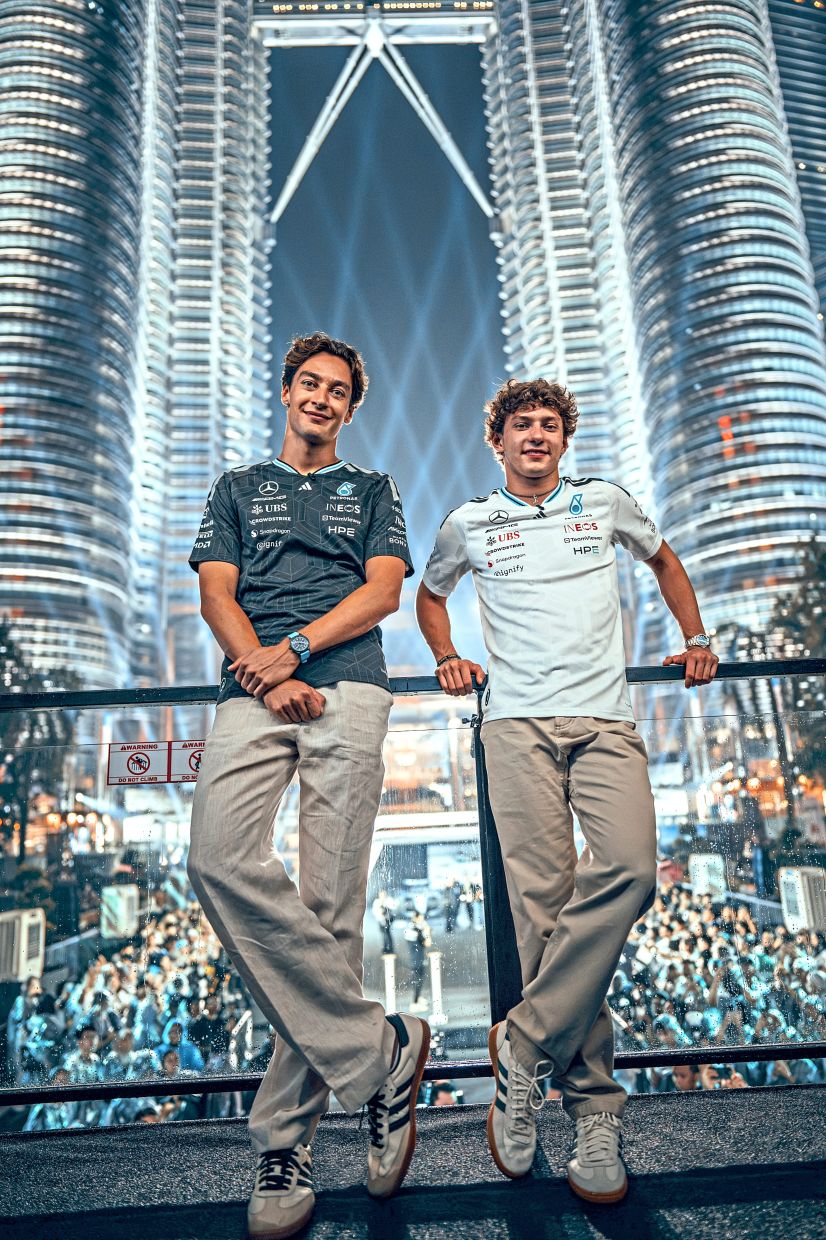
“One cannot work without the other,” said Wolff, highlighting that the collaboration went into the joint development of this season’s ASF and W17 car, in the race to meet the FIA’s new regulations for the 2026 calendar.
Innovation at full throttle
Wolff is adamant that the partnership works because it is authentic.
Mercedes is in F1 because it builds advanced cars; PETRONAS provides the fuels and lubricants that bring them to life.
While plenty of what is developed by the two organisations is for racing alone, Wolff said much of it will eventually find its way onto highways and streets.
Modern road vehicle safety structures, like anti-lock braking systems (ABS) and traction control, all began in F1 and now help drivers avoid accidents on roads.
“F1 has always been the fastest laboratory in the world. When you look at the fuel and lube sides, the technology transfer is absolutely direct,” said Wolff.
“What we are racing today, its fundamental concepts are the same as those you would get at the petrol station. Not at the same level of performance, but it is the same formula that has been developed in F1.”
The 2026 F1 season brought a complete reset of regulations, with new cars, engines, power units and fuels.
“All the obstacles we had to overcome, the many phone calls we had at senior level. At the end, we came to Melbourne, and we won – what a relief it was and what a reward it was to have that together.
“We knew that the sustainable fuel component was going to make the winning difference this year, and the work that has been done is literally tremendous.
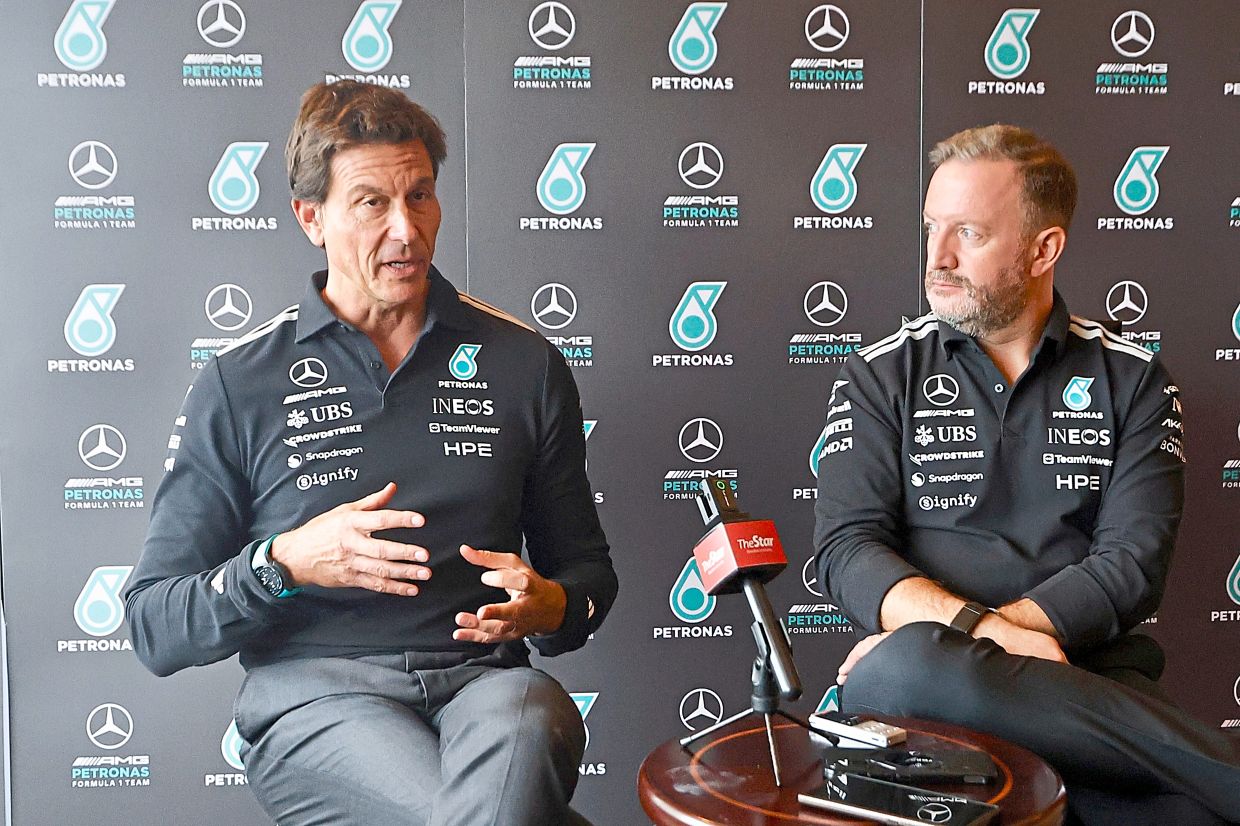
“This is not me praising ourselves, but this is me praising PETRONAS because we’ve always had the advantage on the fuel and lube sides.”
He also believes the sport’s shift toward sustainability and hybrid technology sends a message that extends far beyond motorsports.
“The energy transition is happening, whether you like EV or hybrid, or whether combustion cars are still going to have a larger share in the future, sustainable fuel is the way forward.
“And ours is the most sustainable and powerful fuel-and-engine combination ever done in the world.”
Inside ASF
Wolff called fuel “the lifeblood of the power unit”, and this season, the team runs on PETRONAS’ ASF, a 100% sustainable fuel.
Mercedes-AMG PETRONAS F1 deputy team principal Bradley Lord said the ambition for this “lifeblood” was clear from the start.
“We went into that project saying, we want to achieve everything and more than you would if you were developing a non-sustainable fuel,” he said.
“We did not see any reason that a sustainable fuel had to bring any sort of performance compromise, and we set super ambitious targets.
“It has really been a lot of work, and we cannot overstate how innovative the ASF is.”
Lord said developing the ASF was an enormous project, spanning up to three years of intensive research and development to put it into production.
“PETRONAS has come up with a sustainable fuel and the entire supply chain to deliver that fuel, from feedstock all the way through to the finished product.
“All of that had to be found, invested in, developed and brought on stream to be racing this season.”
He believes that this is where F1 excels, like the high-octane action on track, the sport fuels innovation at rapid speeds.
“What F1 is really good at doing is delivering very ambitious projects on very short time scales.
“We do a lot of learning very, very quickly, and quicker than other environments. So, you find the weaknesses of a technology or product very quickly. We’re very good at pushing the limits,” he said.
“Then, the ability and knowledge that you’ve gained allows you to turn that into products that are relevant for the road, rather than the track, and that can be delivered to customers.”
Lord also described the regulation changes as the biggest the sport has seen, and one that has shaken up the order.
He said the team knew for a long time that it was a major opportunity to return to the front.
That meant building the best integrated package between engine, fuel and chassis for the W17. So far, that approach has borne fruit.
“I think we’ve started the season a step ahead of our competition, and we have been able to defend that advantage, and in some cases build on it as well as the season has unfolded,” he said.
PETRONAS executive vice president and Downstream chief executive officer Datuk Seri Sazali Hamzah said the ASF is derived from renewable feedstock, waste materials and non-food biomass, making it a sustainable alternative.
“ASF is a drop-in fuel, so it works with any engine and we don’t need modifications. It is just like a normal fuel and can be replaced with normal fossil fuels. It has been developed by Malaysian fuel specialists, and I am really proud that they are homegrown,” he said.
He explained that to achieve the performance we are seeing today, the company had been developing ASF since 2022 in preparation for this season.
“It is a testament to what can be achieved when the fuel, power unit and vehicle technologies come together as one integrated package.
“It also demonstrates the performance that the close collaboration between Mercedes and PETRONAS delivers on the track.
“The team is, so far, leading at the front of the grid, maintaining a strong position in both the constructors’ and drivers’ championships.
“And we see that our involvement in F1 has the opportunity to push the boundaries of innovation while supporting a more sustainable fuel,” said Sazali.
Performance on the track
For the drivers, what matters is what they feel from the cockpit, and what they trust when the five red lights go out on the racetrack.
Speaking during a press conference held at the Malaysian Petroleum Club at the PETRONAS Twin Towers in KL, in the build-up to the Bahrain GP in Malaysia, which was hosted at the Sepang International Circuit, George Russell highlighted the team’s technical edge.
“We are very fortunate that we have the best chassis and power unit beneath us, which should give us the advantage over drivers who have been here before,” he said, having never raced at Sepang, as this year’s Bahrain GP was relocated to the Malaysian circuit.
Russell added that the team brings only a few upgrades each year, so timing them carefully is key to their impact over the rest of the season.
In a year of fine margins, the reliability of the fuel and engine underpins that approach.
Meanwhile, championship leader Kimi Antonelli previously said in an interview with The Star that working with technical partners like PETRONAS has helped him grow.
“After every race, I get more and more involved in the technical side, and this includes the fluid side. It’s very interesting and extremely important – it helps with the knowledge,” said the 20-year-old.
Antonelli described the reassurance that comes from the team’s support on race weekends.
“Also, on the track, we always have two people from PETRONAS who check after every session.
“They take a sample from the car and check that everything inside the engine is okay and that nothing is breaking up. It’s extremely important to know that the engine and all these components are fine.”
Beyond the racetrack
Away from the high-speed straights and sweeping chicanes of an F1 racetrack lies the “fastest laboratory in the world”, a proving ground where technologies are forged, not just for the sport, but for everyday use.
Sazali explained that F1 is a very high-stress environment and the lessons learned on track help improve fuel performance and the products that serve consumers and industry.
“Most of the products that are in the market now are actually developed from the technology derived from F1. And our products are subjected to some of the most demanding conditions in motorsport,” he said.
Sazali noted that other PETRONAS products like Primax 97 and Primax 95 petrol, Syntium lubricants and Tutela transmission fluids are also based on technologies developed for F1.
That same experience has supported solutions such as Iona, used for EVs, and Iona Tera, recently developed as a data centre cooling medium.
The next step, he said, is making that capability available to more people.
“F1 is a platform for innovation where we develop, test and validate our technology solutions, including fuel, lubricants and other functional fluids such as coolant,” said Sazali.
“There are a lot of opportunities for us to develop and enhance our fuel and its related applications.
“That gives us a lot of alternatives to translate that capability into daily use.
“The challenge is to make sure that it is affordable and provides quality for all its applications for the masses. That brings a lot of value.”
He added that the company is proud to continue this journey of innovation on and off the track with the Mercedes-AMG PETRONAS F1 team.
“At the heart of this effort is performance, teamwork and innovation – these are values that PETRONAS upholds.”