KUALA LUMPUR: Write-offs on unpaid federal loans will be limited to interest and restricted to insolvent companies, as Putrajaya tightens its lending rules in response to audit findings on poor loan collection, says Liew Chin Tong.
State governments and Minister of Finance Incorporated (MoF Inc) companies applying for new federal loans will also have to put up collateral, such as land, equal to the value of the loan, the Deputy Finance Minister said.
"For new loan applications involving state governments or MoF Inc companies, the government makes it compulsory to submit collateral, such as land assets, equivalent to the value of the loan so that a claim can be made in the event of a default," he said when winding up the debate on the Auditor-General's Report 2/2026 in the Dewan Rakyat on Wednesday (Oct 7).
Liew said a write-off would only be considered after all efforts to recover the loan, including legal action, had failed to yield results.
Only the interest would be considered for write-off, and only for companies confirmed insolvent based on a Companies Commission of Malaysia (SSM) report and after the Finance Ministry's legal division had given its views, he said.
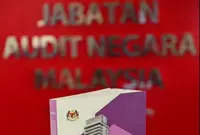
The Auditor-General's Report, tabled on Monday (Oct 5), found that only RM465mil, or 5%, of the RM9.273bil in loan arrears carried over from the previous year was collected in 2025.
It also showed that the government wrote off RM578.32mil in 2025, made up of RM127.33mil in principal and RM450.99mil in interest and late-payment interest, involving 23 loans.
Liew said loan arrears stood at RM8.084bil as of Dec 31, 2025, comprising RM5.709bil in principal and RM2.375bil in interest and late-payment interest.
He described the arrears rate of 15.67% as manageable, saying it was lower than the average of 21% recorded between 2020 and 2022.
Companies made up 62% of the arrears, followed by state governments at about 32%, he said.
He added that most of the overdue loans were for basic public infrastructure such as clean water supply, sewerage, low-cost public housing and public transport.
Liew said viability assessments would be made mandatory before any new loan is approved, with the amount capped at what the borrower can actually repay.
"If the borrower's capacity is limited, the balance of the project financing is proposed to be channelled in the form of grants," he said.
The ministry has also recommended that the Economy Ministry fund projects with social obligations through development expenditure as grants instead of commercial loans.
Liew said legal action would remain a last resort.
"Most borrowers are state governments, statutory bodies and companies carrying out social projects in the interest of the people and the nation," he said.