
PETALING JAYA: Processed shark and ray products sold online are raising concerns over species identification and traceability, with experts calling for stronger monitoring and clearer labelling.
President of Shark Savers Malaysia Abner Yap said online marketplaces clearly offered shark and ray products, but many listings used general descriptions such as “shark”, “shark fin”, or “rays”.
“Based on the images available at these online shops alone, we would not be able to identify if the product was from wedgefish, hammerhead or manta ray,” he said.
Yap said processed products were particularly difficult for ordinary consumers to identify, with only about 6% of shark listings and 20% of ray listings in the Traffic and WWF-Malaysia study identifiable to species level.
Traffic is a global non-governmental organisation working to ensure that trade in wild species remains sustainable.
He said the study also found that only 18% of shark listings and 31% of ray listings provided information on their origin.
“When something is simply advertised as ‘shark fin’ or ‘shark meat’, there is very little information for a consumer to make an informed decision,” he said.
Yap said platforms could strengthen seller verification, require clearer information on species and origin, and provide effective systems for questionable wildlife listings to be reported and reviewed.
He added that responsibility should not fall on platforms alone, with government agencies, researchers, conservation groups and consumers also having a role.
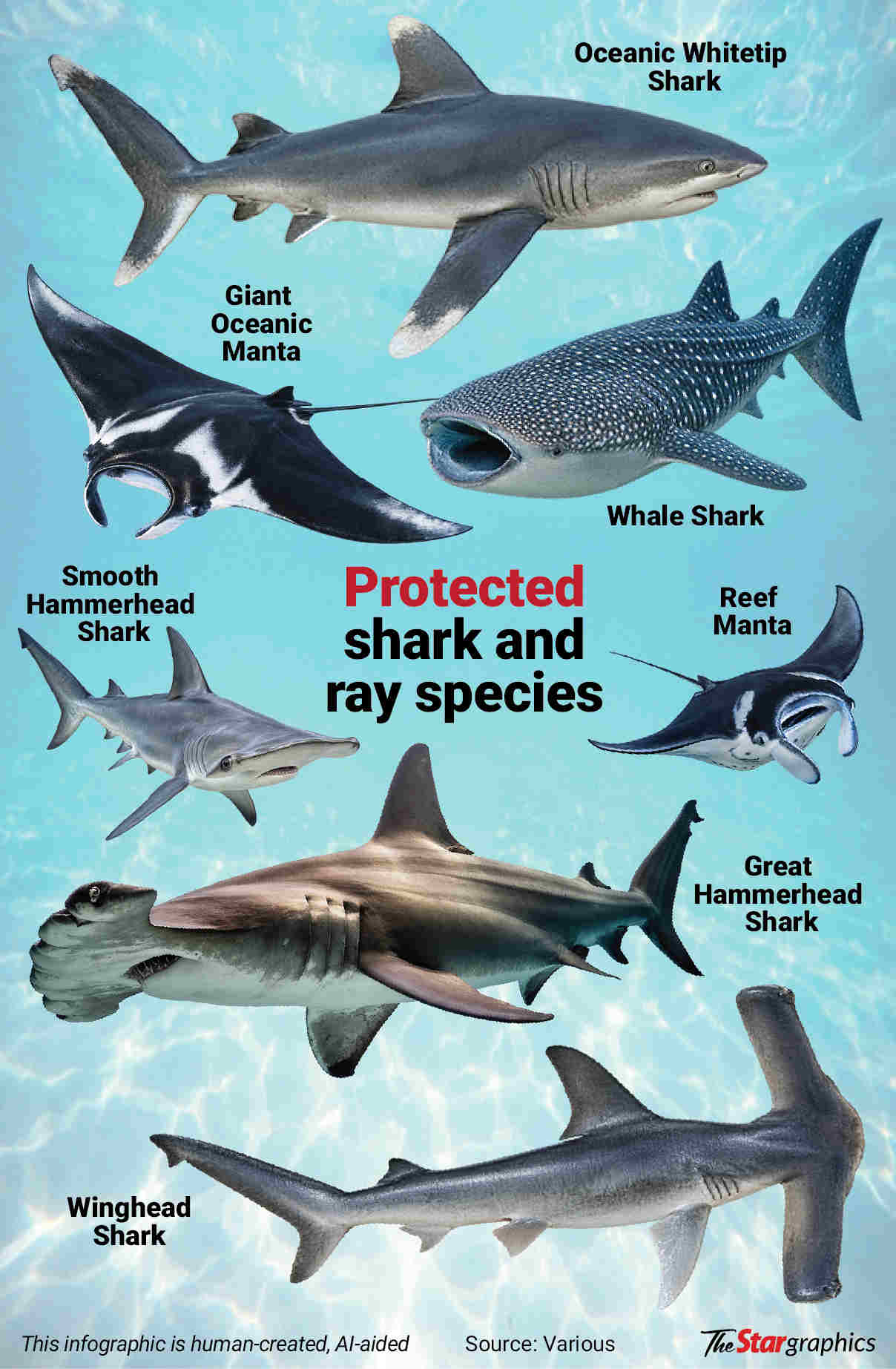
“Continued review of fisheries regulations according to the Convention on International Trade in Endangered Species of Wild Fauna and Flora (CITES) requirements, together with better traceability and species identification, could strengthen protection,” he said.
CITES is a global treaty that regulates international trade in threatened wild plants and animals.
Marine life expert Dr Muhammad Syafiq Musa said enforcement should combine DNA testing, stronger labelling and closer monitoring of digital platforms.
“DNA-based species identification should be one of the important tools available to enforcement agencies, particularly when products have been processed into fins, meat, skin, cartilage or other derivatives.
“However, DNA testing alone cannot solve the problem. It is more useful as part of a broader traceability system,” he said.
Syafiq said traders should, where practical, provide the scientific and common names of species, their origin and relevant permit or traceability information.
He said online platforms should also flag listings involving protected or CITES-listed species and require appropriate documentation from sellers.
“The bigger challenge is ensuring that these tools are connected and used consistently across the entire supply chain,” he said.
Syafiq said Malaysia should also remain alert to the possibility of becoming a consumer market or transit point for protected marine species, particularly through major ports and high-volume cargo entry points.
He cited a recent seizure of more than five tonnes of shark fins at Port Klang, which had been declared as fish skin, as an example of why physical verification remained important.
“Enforcement should also cover smaller consignments, courier deliveries and online transactions,” he said.
A Traffic and WWF-Malaysia study found that online listings recorded between October and December 2022 offered at least 5.25 million kg of shark and ray products, with an estimated value exceeding RM326mil.
Malaysia Fish Industries General Association president Chia Tian Hee said protection also begins at sea, with fishermen in his area releasing endangered species caught accidentally.
“We don’t take back the endangered fish because it’s a protected species,” he said, adding that such species were not commonly encountered.