
GEORGE TOWN: The winds of fortune have literally changed as Sabah and Sarawak see a respite from the severe haze that plagued the region earlier this month.
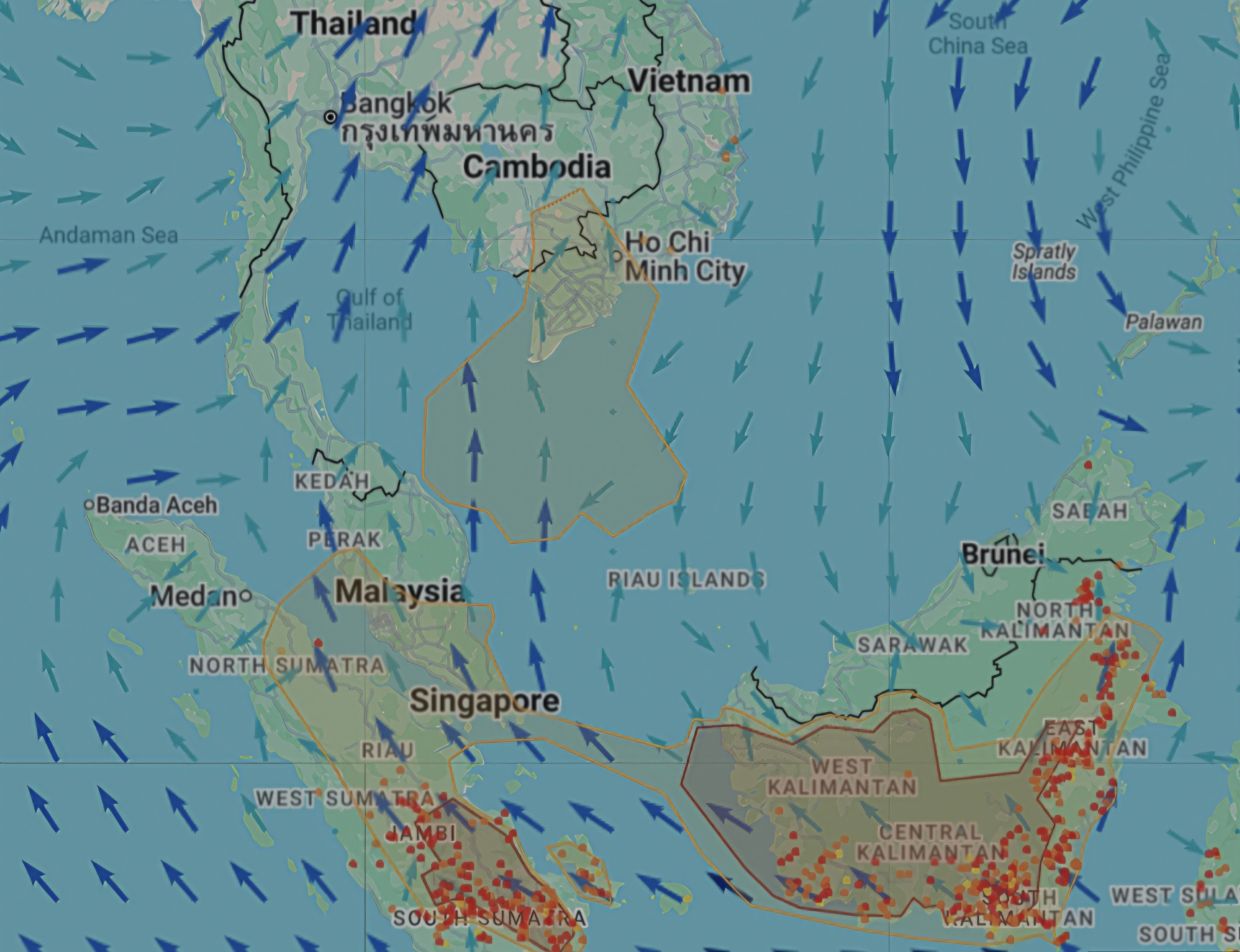
Prevailing winds blowing southwards from the South China Sea over parts of Borneo have carried smoke from hundreds of hotspots in Sumatra and Kalimantan towards Peninsular Malaysia.
Readings shown by the Environment Department's Air Pollutant Index Management System (APIMS) at about 8am on Wednesday (Sept 16) saw central Penang island recording an unhealthy Air Pollution Index (API) reading of 165, 163 in Balik Pulau, 161 in Seberang Jaya and 159 in Seberang Perai.
Sungai Petani in Kedah recorded 158.
The Klang Valley fared worse, with readings including 182 in Klang, 179 in Petaling Jaya, 178 in Putrajaya, 176 in Nilai and 172 at Batu Muda.
Along the east coast, readings included 164 in Kuala Terengganu, 163 in Pahang and several other locations between 152 and 159.
Meanwhile, API readings in Sabah and Sarawak now fall between 43 and 80.
API readings between zero and 50 indicate good air quality, 51 to 100 moderate, 101 to 200 unhealthy, 201 to 300 very unhealthy, while readings above 300 are categorised as hazardous.
The regional wind map from the Asean Specialised Meteorological Centre (ASMC) showed winds over much of the peninsula moving northwards, while winds over and east of Borneo were moving southwards from the South China Sea.
The unusual contrast comes while the region remains under the southwest monsoon, which normally produces prevailing low-level winds from the southeast or southwest.
ASMC expects the southwest monsoon to persist until early October before giving way to the inter-monsoon period, when winds generally become lighter and more variable.
The present wind pattern has brought some welcome relief to Sarawak, which bore the brunt of the haze only two weeks ago.
On Sept 1, six areas in Sarawak recorded hazardous API readings, with Serian reaching 408, Kuching 407, Samarahan 372, Sri Aman 361, Sarikei 333 and Sibu 309.
Conditions deteriorated further on Sept 4 when Serian's API soared to 518, while Kuching reached 310.
At the time, smoke from widespread forest and peatland fires in Kalimantan was being carried northwards into Sarawak. On Aug 29, 1,180 hotspots were detected in Kalimantan alone, with moderate to thick transboundary haze moving from West Kalimantan into western Sarawak.
The haze threat remains, and ASMC expects below-normal rainfall across much of the southern Asean region this month, with El Nino conditions increasing the likelihood of prolonged dry spells, fires and transboundary haze.