
A database of all local linguistic heritage in the works
PUTRAJAYA: Che Wong and Kensiu are languages people may have never heard about. Like Mah Meri, they are Orang Asli languages – and they are in danger of dying out.
However, there are other languages that are slowly dying too, like Melaka Portuguese, Baba Malay, Chitty Malay and Chinese dialects such as Kelantan Hokkien.
The government is now moving to save and protect all such languages, dialects and colloquial expressions.
They are being documented by the government to protect them for future generations to come, says Datuk Aaron Ago Dagang.
The National Unity Minister said creating a database of the hundreds of languages in Malaysia – from Orang Asli languages to the various state Malay dialects – is the first such effort of this scale.
“It will be publicly accessible in the future, but the National Archives of Malaysia is currently documenting all the languages, as there is a big volume.
“The languages are preserved not only in written form but also through videos showing how people speak.
“In future, if students want to learn various languages, they can refer to our database with the National Archive,” he said during an interview with The Star in conjunction with Malaysia Day today.
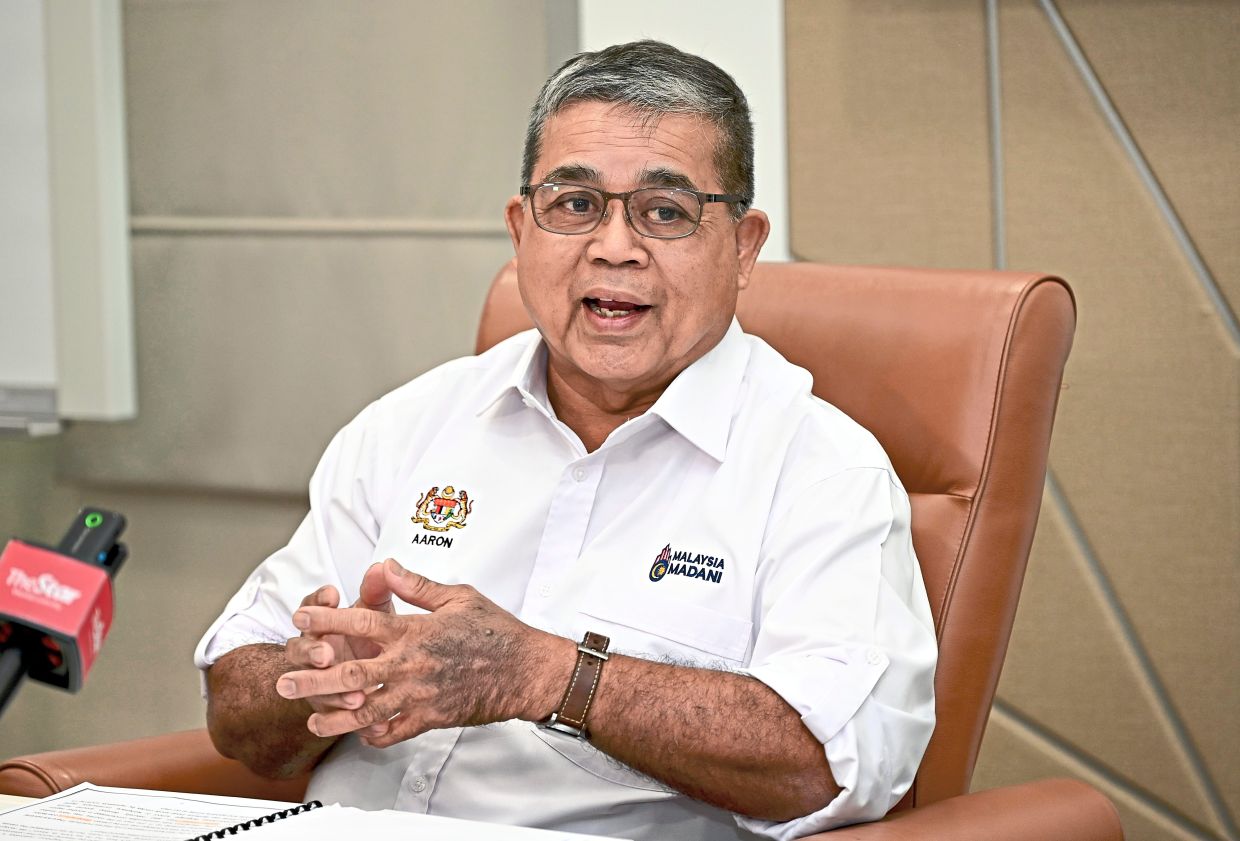
Aaron was asked to comment on how some languages seem to be disappearing from use, including Chinese dialects as well as the Melaka Portuguese language.
It was reported on Sunday that Malaysia has more than 130 languages, but many of them are fading from use due to the lack of formal lessons and weaker transmission in families.
Aaron said the government had completed the study on the Bahasa Kolokial initiative, which began in 2024, to record and document the languages, dialects and colloquial expressions used by our various communities.
“This is important because many expressions, pronunciations and ways of speaking are passed down orally and may never have been formally documented.
“Languages and traditions are more than forms of communication or cultural practices. They carry the history, memory and identity of a community.
“When a language or tradition disappears, we lose part of Malaysia’s collective heritage,” he said.
Aaron said his ministry had also started the Arkib Komuniti initiative, which is important in documenting and preserving the history, experiences, traditions and collective memories of Malaysia’s diverse communities.
“What we fail to document today may be impossible to recover tomorrow,” he added.
On other matters, Aaron said the coming Malaysia Museums Bill will be a major milestone and will provide a more coordinated national approach in regulating the country’s 200-odd museums.
“It will be the first federal legislation containing specific provisions relating to the establishment of museums and the regulation of museum activities in Malaysia.
“Our objective is to create a more systematic, professional and competitive museum ecosystem,” he said.
Malaysia has around 232 museums, but only 22 are under the Department of Museums Malaysia, an agency under the ministry.
The others are managed by state governments, other agencies, institutions and private entities.
“Moving forward, I would like our museums to increasingly become spaces of discovery and national understanding.
“A Malaysian should be able to enter a museum and discover not only the history of his or her own community, but also leave knowing something new about another Malaysian community,” added Aaron.
Media in Arms is a media alliance comprising five mainstream media outlets: Chinese newspaper Sin Chew Daily, Malay daily Sinar Harian, local news broadcaster Astro Awani, Tamil newspaper Malaysia Nanban and The Star – which formed this initiative in February 2022 to share resources and collaborate on diversified news content.