PETALING JAYA: With some 50% of medicines in the domestic market coming from local manufacturers, stakeholders say continuous development of the local pharmaceutical industry will be key to ensuring the country’s medicine security.
This includes the manufacturing of generic medicines, which are an alternative to originator drugs.
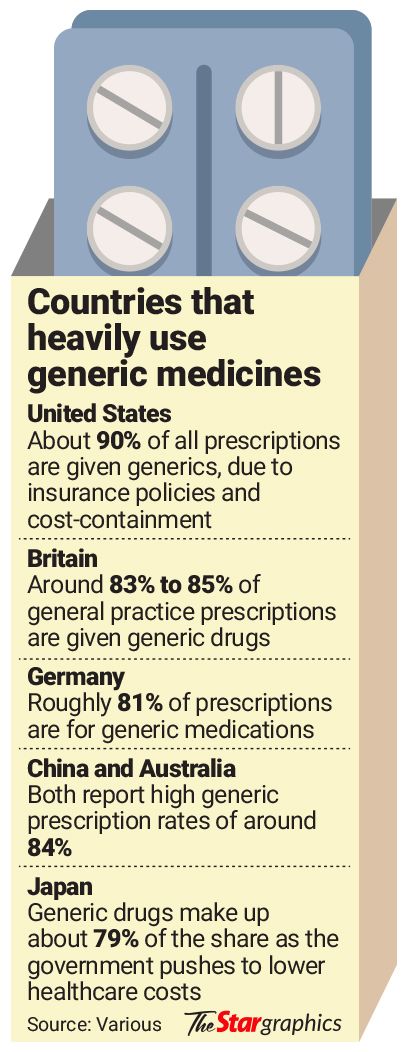
Malaysian Organisation of Pharmaceutical Industries president Ch’ng Kien Peng said generic medicines operated in a competitive market that helped to keep prices affordable.
“Generic medicines manufactured in Malaysia are produced to world-class quality standards.
“The National Pharmaceutical Regulatory Agency ensures that locally manufactured generic medicines comply with the internationally recognised Pharmaceutical Inspection Co-operation Scheme,” he said.
ALSO READ: Pharmacies choose which drugs to stock
“The aim should therefore be to ensure that Malaysians have access to quality and affordable locally manufactured generic medicines, supported by a reliable and continuous supply.”
Ch’ng said local manufacturers need to continue investing in product development, technology transfer, regulatory compliance and quality assurance in order to bring quality medicines to market.
“They also have an important role in strengthening domestic supply capability.
“While both imported and locally manufactured generics contribute to competition, local manufacturing provides an additional dimension of supply sustainability, particularly when international supply chains are disrupted.”
He said Malaysia has developed a strong local pharmaceutical manufacturing industry, with local manufacturers supplying more than 50% of medicines in the domestic market, therefore playing an important role in supporting the country’s healthcare needs.
“The government has also placed increasing emphasis on strengthening domestic pharmaceutical manufacturing as part of Malaysia’s broader industrial and economic development agenda, including under the 13th Malaysia Plan, New Industrial Master Plan 2030 and National Investment Aspirations,” he said.
“Going forward, continued development of the local industry will be important not only for competitiveness and investment, but also for strengthening medicine security, supply resilience and reliable access to medicines for Malaysians.”
The Health Ministry spent RM3.86bil on medicines last year. This was based on its records from three government procurement methods, namely, purchases made through the medical supply logistics services concession, central contracts and direct procurement by healthcare facilities.
The ministry said in July that of the 3,982 types of medicines procured, 3,170 were generics.
Valued at RM3.01bil, generics made up 77.88% of the medicines procured while innovators accounted for 22.12%, valued at RM850mil.
According to Datuk Zulkifli Jafar, managing director of Pharmaniaga Bhd which is a drug concessionaire to the Health Ministry, Malaysia’s medicine supply is quite secure despite recent geopolitical challenges.
“We keep enough buffer stock to sustain us until the end of the year,” he said.
In the Public Accounts Committee report released in June, then Health Ministry secretary-general Datuk Seri Suriani Ahmad told the committee in a February 2025 proceeding that the ministry planned to expand procurement beyond traditional suppliers.
It was also planning to outsource arrangements to secure more competitive pricing from India, China, Turkiye, Egypt, Thailand and Indonesia.