IPOH: Rare blood management requires accurate identification and matching to ensure patients who need transfusions get the correct supply, says a specialist.
Hospital Raja Permaisuri Bainun (HRPB) transfusion medicine specialist and Transfusion Medicine Department head Dr Sarah Mat Noh said blood is categorised as rare when its occurrence rate is around one in 1,000 individuals in a population.
She said rare blood does not mean that a person has health problems, but rather refers to a specific characteristic of antigens on the surface of red blood cells that are rarely found in certain populations.
ALSO READ: QuickCheck: Does 'golden blood' exist?
Rare blood types are more difficult to obtain when a patient needs a transfusion because the number of matching donors is limited.
Therefore, a registry of donors and patients is needed to facilitate the search for matching blood.
"The antigen characteristics on red blood cells are genetically determined and inherited from either the mother or father, causing a certain blood type to be considered rare in one population but more common in another," she said during a recent health programme with the media, organised by the Health Ministry.
Dr Sarah said that the ABO and Rhesus (Rh) blood groups are among the most commonly known, while there are 43 blood group systems identified worldwide.
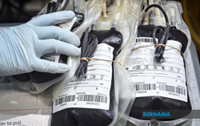
For rare types, donor red blood cells can be frozen at the National Blood Centre and stored for up to 10 years to be used when needed, either by the donor or by other patients with the same blood type.
In Perak, among the identified donors with rare blood types is Mohd Fazrey Erwan Mohd Rasidi, 35, who has the Opos, R1R1, KK phenotype, a combination of specific antigen characteristics.
ALSO READ: Trucker with Rh-negative has been donating rare blood for 33 years
Dr Sarah said that for Fazrey Erwan, the KK characteristic means he has a K antigen that is different from the antigen characteristics commonly found in most individuals.
Fazrey Erwan said he only found out he had that blood type at the end of last year after being contacted by a doctor after a test.
"I was quite surprised when I found out that my blood is rare. But I feel grateful and happy if my blood can help others," he said.
Fazrey Erwan has donated blood eight times since 2010, but he has never been specifically called for a patient who needs his rare type.
"Don't stop donating as long as your health permits. Our blood may be rare and for certain patients, it is very valuable and may save lives," he said.
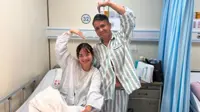
Two siblings, Wan Muhammad Faaiz Jazuli and Wan Muhammad Ashraf Jazuli, each have Parabombay A and Parabombay B blood types, which are also among the rare blood groups.
ALSO READ: Rare gift saves patient’s life
Wan Muhammad Faaiz said he discovered he had Parabombay A blood after there was a discrepancy in his blood test results, which initially showed group A, before the laboratory test indicated group O.
"In a family of five, only my brother and I have different blood types, while the others are (regular)," he said.
Wan Muhammad Faaiz said that blood donation for that group depends on the need because hospitals may not need it regularly, but donors can be called upon when there are patients who need matching blood.
In Perak, there have been four identified Bombay blood group patients so far, while five Parabombay patients have been recorded.
There are four identified Parabombay donors in the state, involving Parabombay groups A, B and O.
The HRPB Transfusion Medicine Department is the only blood processing and screening centre in Perak that manages the processes of donation, processing, screening, storage and stock management until the supply to hospitals.
The department provides at least 80 to 100 bags of blood daily for the hospital and up to 200 bags for the needs in the state, including private hospitals in Ipoh. – Bernama