PETALING JAYA: Food supply business owner GK Leong is among the smaller businesses now exempt from e-invoicing, but that does not mean he has stopped dealing with companies that are already using the system.
As a supplier, Leong continues to issue conventional invoices to his larger business customers that are e-invoice-ready.
At the same time, he also engages freelancers and other suppliers who are not required to issue e-invoices.
That initially left him wondering whether the absence of an e-invoice from his suppliers could affect his ability to claim business expenses.
ALSO READ: Clearer e-invoice rules needed, say businesses
“I used to worry because I thought that if my supplier could not issue an e-invoice, I would not be able to claim for advertising, marketing and other expenses.
“But then I realised it was okay after asking my business friends.
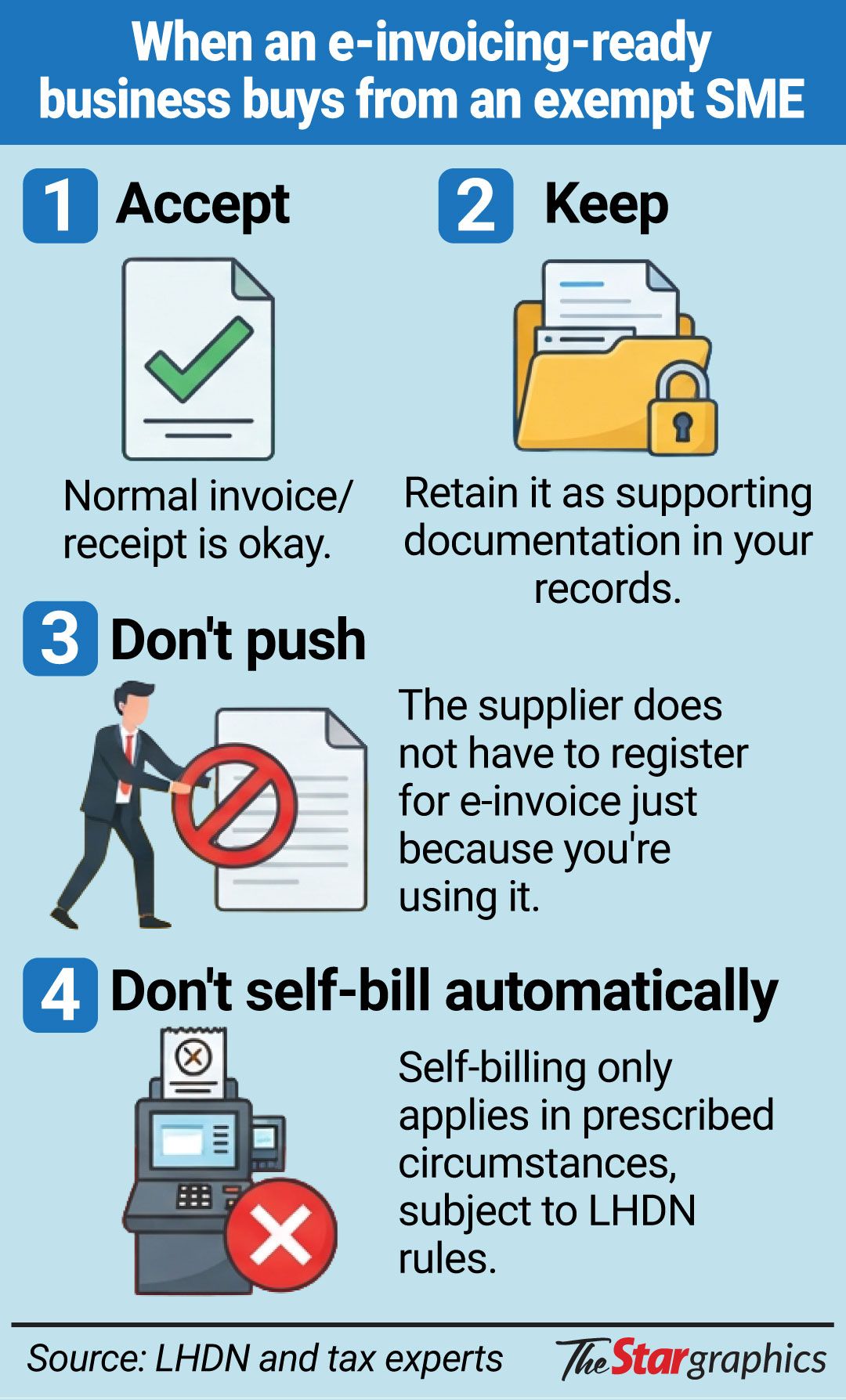
“Not everyone has to issue an e-invoice, so when dealing with an exempt or non-ready company, we can accept the normal invoice or receipt and keep it for documentation.
“It is still in my records and will still be entered into our accounting system. No worries, just let the accountant handle it,” he said.
For SMEs newly covered by the higher exemption threshold, Leong said the key was simply understanding what was required and keeping proper records.
A jeweller, who only wanted to be known as Hadee, whose business has been using e-invoice for more than a year, said this was already the case when dealing with freelancers engaged for gig work.
“We had the concern earlier because we hire freelancers a lot for gig work and they cannot issue us e-invoice.
“So in this case, it is actually okay. We just accept whatever invoice or bill they give us, and when we pay them, we get their MyKad number recorded for documentation also.
“You know, with e-invoicing, nobody can run away from being taxed,” he added.
According to the Inland Revenue Board (LHDN), the obligation to issue an e-invoice lies with the supplier, or the buyer in specific self-billing situations.
Its FAQ says that where a supplier has yet to implement e-invoice, taxpayers may use a normal bill, receipt or invoice to substantiate a transaction for tax purposes during the transition period.
LHDN also states that taxpayers can continue to claim tax deductions or personal tax relief using existing documentation, such as a normal receipt, bill or invoice issued by a supplier, until the relevant legislation is amended.
In another LHDN Q&A, a company asked whether it needed to issue a self-billed e-invoice where a contractor did not issue one.
LHDN said the buyer was not required to issue a self-billed e-invoice to substantiate the expense.
It said taxpayers should continue to retain the relevant invoices, receipts and other supporting documents for their records where the supplier is not required to issue an e-invoice.