THE nation’s artificial intelligence (AI) ambitions have so far focused on building the foundations of a digital economy through data centres, AI talent and software innovation.
But as AI becomes increasingly embedded in daily life, another question is emerging: How will ordinary Malaysians actually experience AI?
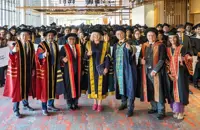
That question featured prominently at the recently held Kuala Lumpur Architecture Festival (KLAF) 2026, where architects, developers and technology companies explored how AI could reshape the homes and cities of the future.
Officiating the event, Housing and Local Government Minister Nga Kor Ming said architects
and civil servants had already begun incorporating AI into their work, adding that the technology was gradually becoming part of the industry’s day-to-day operations.
“AI is no longer a vision. It is now part of our mission. We are actually starting to implement it,” he said.
He added that Malaysia is well-positioned to embrace AI as it develops its sovereign AI capabilities while working with global technology partners.
For Malaysian Institute of Architects (PAM) president Dexter Koh, AI also represents a fundamental shift for the architectural profession.
“The future of architecture is no longer solely about physical space. It increasingly involves designing environments that are adaptive, responsive and capable of supporting human wellbeing through technology,” he said.
Rather than adding AI after buildings are completed, architects are beginning to consider how homes should be designed from the outset to accommodate intelligent systems that will continue evolving over the coming decades.
One example is AI Living @ i-City, the world’s first AI residence, where AI companions, robotics, wellness technologies and intelligent building systems are planned as part of a single residential ecosystem.
Instead of asking residents to adapt to technology, the concept explores how technology can quietly adapt to people – making homes easier, safer and more responsive to everyday life.
As Malaysia pursues its National AI Agenda, the success of AI will ultimately be measured not only by investment or technological breakthroughs, but also by whether ordinary Malaysians experience meaningful improvements in the places where they live.
Building an AI Nation, however, is not only about developing AI technologies; it also requires Malaysians to experience, understand and use AI in their everyday lives.