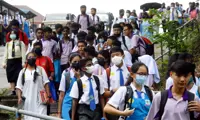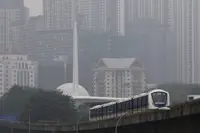
PETALING JAYA: Malaysians may have to wait until October for clearer skies when a seasonal shift in prevailing winds is expected to reduce the amount of smoke heading towards the country.
Universiti Malaya meteorologist Prof Datuk Dr Azizan Abu Samah said the current haze situation has some similarities to the major episode in 2019 when a change in seasonal wind patterns eventually improved conditions over Malaysia.
ALSO READ: Five areas in S’wak worst hit
“Just like in 2019, the likelihood of clear skies is in October when the wind is expected to be no longer south or south-westerly,” he said in an interview yesterday.
Azizan said Malaysia’s skies could clear even while fires continued to burn in Sumatra and Kalimantan, as a change in prevailing winds would alter the direction in which the smoke drifted.
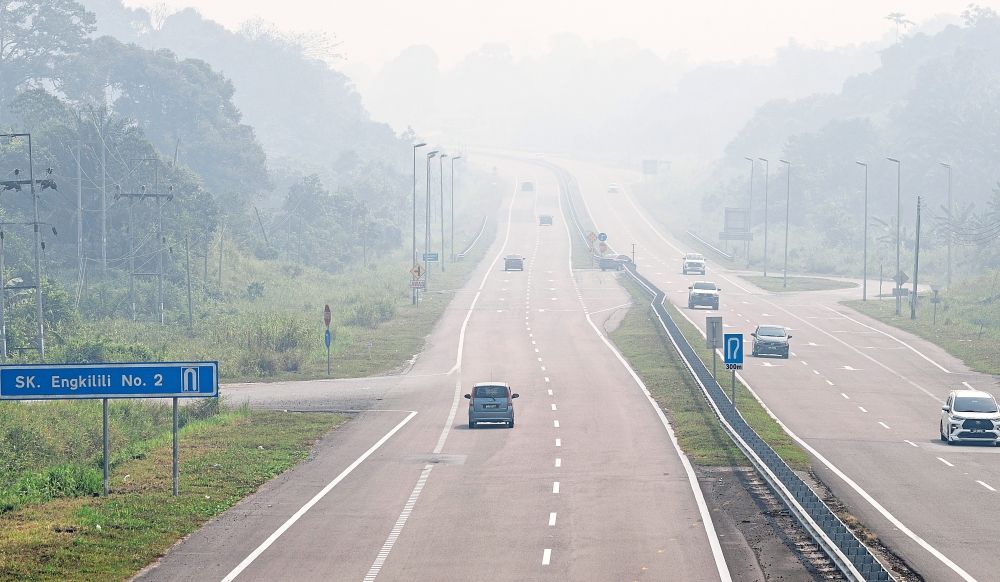
Malaysia is currently facing the south-west monsoon which lasts until September, followed by an inter-monsoon period and the north-east monsoon from November to March, according to MetMalaysia.
Azizan said the seasonal transition would bring a change in prevailing winds.
ALSO READ: ‘Pay attention to respiratory issues in pets’
“In meteorology, we use the direction of where the wind is blowing from, not the usual ‘blowing to’.”
The Asean Specialised Meteorological Centre (ASMC) recorded 15,652 hotspots in Kalimantan and Sumatra between Jan 1 and Aug 27, including 12,212 in Kalimantan and 3,440 in Sumatra.
ALSO READ: Scouts form war room to monitor haze threat
Kalimantan’s hotspots jumped from 1,339 in July to 9,849 this month.
ASMC said moderate to dense smoke haze from hotspot clusters in Kalimantan was drifting northwards from West Kalimantan, prompting it to activate Alert Level 3 for the southern Asean region on Aug 26.
MetMalaysia forecasts also showed that haze could persist despite the rain, with Kuala Lumpur expected to remain hazy for several days till early September despite isolated thunderstorms forecast today.
Azizan said dry conditions are an important factor behind the persistence of fires, particularly during El Nino.
ALSO READ: Animals and plants also affected by air pollution
“When El Nino sets in, our region is subjected to decreased rainfall and higher temperatures that contribute to higher fire risk,” he said.
“Open burning on drained peatland for oil palm causes the fire to persist longer because the peat beneath the surface can also burn, making it difficult to control and put out,” Azizan added.
ALSO READ: Poultry farms remain resilient despite conditions
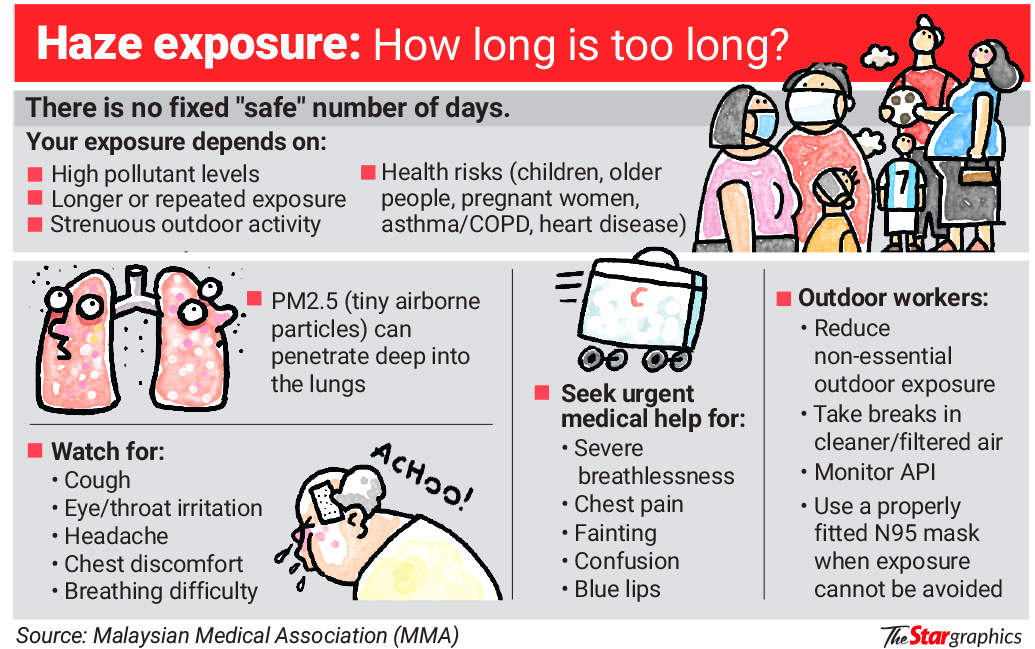
When contacted, Malaysian Medical Association president Datuk Dr Thirunavukarasu Rajoo said there was no scientifically established safe number of days for exposure to unhealthy air.
“The risk depends on the concentration of pollutants, duration and frequency of exposure, physical activity and an individual’s health.”
ALSO READ: Haze fuels respiratory health concerns
Dr Thirunavukarasu said fine particulate matter, particularly PM2.5 – tiny airborne particles 2.5 micrometres or smaller that can penetrate deep into the lungs – can trigger airway inflammation and cardiovascular responses.
“Some effects may occur during exposure, while others may only become apparent over the following days,” he said.
Dr Thirunavukarasu added that symptoms could persist even after air quality improved, particularly among people with existing medical conditions.