New govt initiatives in place to help makers expand markets, production
PETALING JAYA: Local batik could soon reach more buyers as the government helps artisans expand their markets, boost production, embrace new techniques and secure financing, says the Tourism, Arts and Culture Ministry (Motac).
Its deputy minister Chiew Choon Man said Motac, through the Malaysian Handicraft Development Corporation (Kraftangan Malaysia), was implementing strategic initiatives to strengthen marketing, broaden market access and support the industry.
“Some initiatives to boost market visibility include flagship regional events such as craft festivals held on the east coast, in the northern states, Sabah and Sarawak as well as Johor, alongside high-traffic shopping mall activations and international trade showcases.
“These platforms significantly elevate the profile of Malaysian batik among domestic consumers and foreign tourists, reinforcing its status as a premier heritage-based tourism product,” Chiew told The Star.
To support rural artisans, Kraftangan Malaysia also operates dedicated craft collection and sales centres through its state branches.
“This allows regional micro-entrepreneurs to expand their reach beyond local markets without relying exclusively on personal retail channels,” he added.
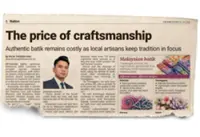
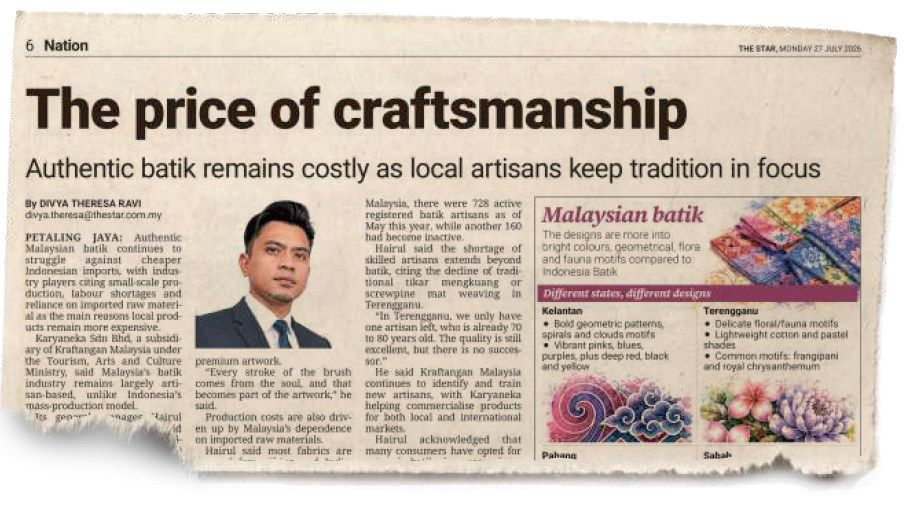
ALSO READ: The price of craftsmanship
Chiew said authentic Malaysian batik was also tapping the online market through platforms such as MyCraftShoppe and the CraftOnTheGo app, which functions as a digital map to help users discover nearby artisans and their products.
“On top of that, batik makers are building communities on social media, with networks such as the E-Kraf Bazar on Facebook giving them space to promote their work directly to the public,” he said.
“Collectively, these initiatives expand consumer access to authentic Malaysian batik, improve artisan livelihoods, increase commercial reach and preserve Malaysia’s cultural heritage for generations to come.”
Chiew said local batik was priced according to its fine craftsmanship, distinctive motifs, tailored designs and durability, which define the nation’s unique batik identity.
“Variations in batik product pricing depend on the type of fabric or material used, the level of production complexity, the intricacy of the design motifs and the crafting techniques employed by local artisans,” he said.
He said prices were partly driven by the cost of imported raw materials, including unbleached cotton (kain putih), threads and dyes.
“Additionally, support is also given through new design innovation, modern material adoption and alternative production techniques to ensure a wider variety of batik products are available at affordable price points, ultimately helping to mitigate price-driven market competition,” he said.
Separately, Chiew said Motac and the Entrepreneur and Cooperatives Development Ministry (Kuskop) were widening financing options for local craft entrepreneurs through initiatives such as the Craft Entrepreneur Financing Scheme.
“This scheme under Tekun Nasional allows local craft artisans to apply for financing of up to RM100,000 at a favourable profit rate of 2% per annum.
“It features a flexible repayment period of up to 10 years, helping artisans expand their businesses,” he said, adding that 35 craft entrepreneurs had benefited from the programme.
“This year, the same scheme was rebranded as the Diversified Tourism and Craft Financing Scheme (SPAK), still under Kuskop.
“It invites entrepreneurs operating tourism- and craft-related businesses to secure microfinancing of up to RM100,000 at a profit rate of 4% per annum, with flexible repayment terms of up to 10 years,” he said.