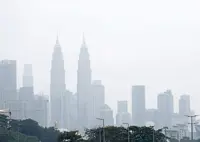
PETALING JAYA: Sarawak remains the hardest hit by the haze, but several states in the peninsula are also recording air conditions considered unhealthy or bordering on unhealthy.
Johan Setia and Shah Alam in Selangor recorded unhealthy Air Pollutant Index (API) readings of 154 and 109 respectively while an API reading of 141 was also recorded in Cheras in Kuala Lumpur.
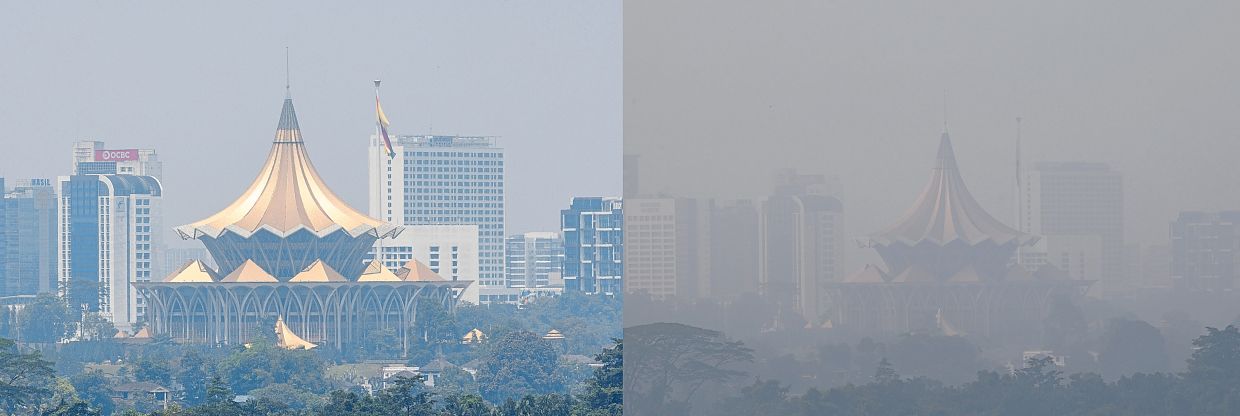
Readings between 101 and 200 are considered “unhealthy” while readings between 201 and 300 are classified as “very unhealthy”.
Six stations in the peninsula are also bordering on unhealthy air quality.
ALSO READ: Experts: Haze is more than a lung problem for older folk
They are Sungai Petani (98) in Kedah; Minden and Seberang Jaya (97 and 96) in Penang; Seri Manjung in Perak (97); Putrajaya (97); and Kuala Selangor (96).
Seven monitoring stations in Sarawak also recorded unhealthy air quality yesterday.
Serian is still the worst-hit with an API reading of 179 as at 5pm yesterday. The district had recorded an API of 204 on Wednesday, making it the first location in the country to breach “very unhealthy” levels since transboundary haze began affecting Malaysia on Aug 8.
Other areas in Sarawak that recorded unhealthy air quality were Samarahan (177); Kuching (175); Sri Aman (163); Sarikei (168); Mukah (152) and Sibu (150). Bintulu (97) was bordering on unhealthy.
ALSO READ: Serian schools to remain shut despite lower API reading
According to the Asean Specialised Meteorological Centre (ASMC), the southern Asean region is forecast to remain dry in the coming days, apart from northern parts of Peninsular Malaysia, Sumatra and Borneo where some showers are expected.
It said the haze situation may also escalate over fire-prone areas, with the risk of transboundary haze occurring, adding that dry weather prevailed over most of the southern Asean region on Wednesday night.
“Scattered hotspots were detected in Kalimantan and Sumatra while a few hotspots were detected in Peninsular Malaysia.
“Slight to moderate smoke plumes were also seen at hotspots in the southern parts of Sumatera and Kalimantan,” it said.
Meanwhile, Malaysian Meteorological Department said the haze situation across the country is not expected to improve over the next three to five days.
Its National Weather and Earthquake Operations Centre senior director Maqrun Fadzli Mohd Fahmi said although rain had been forecast in several places, it would not be sufficient to restore air quality on a large scale.
“Over the next few days, there will be a little rain compared to the current dry conditions, but if the air is very hazy, a little rain may not be able to remove the effects of the haze,” he said, according to Bernama.
Meanwhile, Deputy Prime Minister Datuk Seri Dr Ahmad Zahid Hamidi reminded the people to reduce outdoor activities between 11am and 4pm when ultraviolet radiation typically peaks, as the country experiences the southwest monsoon until September.
He said particular attention should be given to children, senior citizens and those who work outdoors amid hotter weather, less rainfall and clearer skies.
Ahmad Zahid, who is also chairman of the National Disaster Management Council, said in a Facebook post, as reported by Bernama, that besides limiting outdoor activities, people should take simple precautions such as using sunscreen with a sun protection factor of 30 or higher, wearing suitable clothing, a hat and UV-protection sunglasses, and drinking enough water.
Penang, meanwhile, may suspend certain outdoor activities, including those at schools, if the API reaches unhealthy levels, Chief Minister Chow Kon Yeow said.